
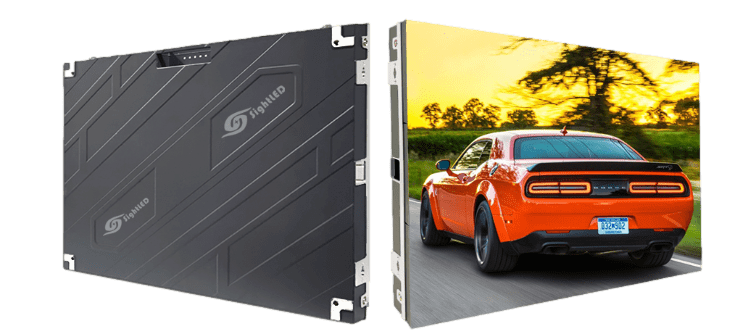

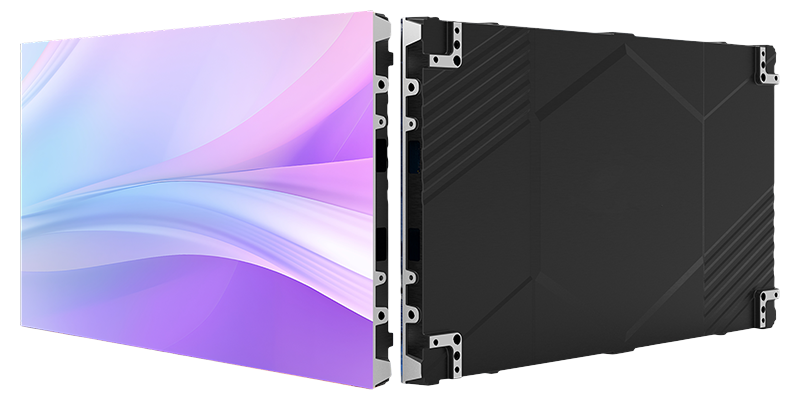


When it comes to investing in an LED display for indoor or outdoor use, you should consider several factors to ensure you make the right choice. The most common pixel pitches are P1.53, P1.86, P2.0 and P2.5 indoor LED displays. What are the differences between them? How to choose them? SightLED help you know these detail.
There’s no such thing as an absolute “highest definition” in LED displays. Clarity is a relative term that depends heavily on the intended use, the size of the display, and the viewing distance. A display that looks stunning from a distance might not be as sharp when viewed up close.
LED display resolution refers to the total number of pixels that make up the display screen. It is calculated by multiplying the horizontal pixel count by the vertical pixel count.
LED displays Resolution directly affects the quality of the displayed images. A higher resolution means that the display can render more pixels within the same screen area, resulting in finer details, smoother gradients, and a more immersive viewing experience. Conversely, a lower resolution display will have larger pixels, leading to a more pixelated and less refined image.
To better understand resolution, imagine an image as a large chessboard. Each square on the board represents a pixel, and the resolution of the image is determined by the total number of squares (or pixels) on the board. The more squares (pixels) there are, the higher the resolution and the more detailed the image will be.

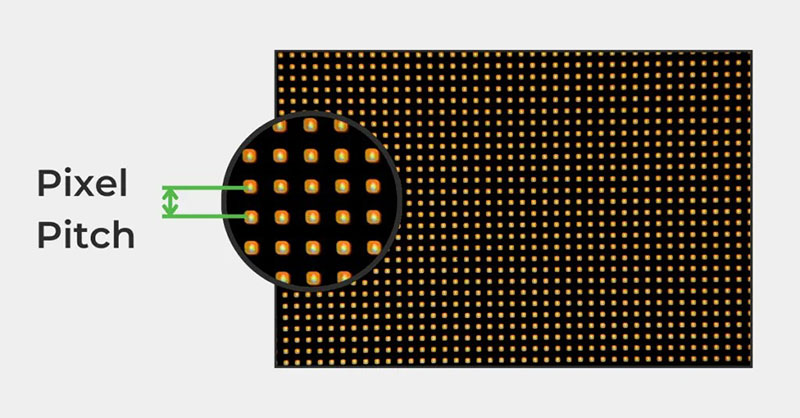
LED display models, such as 1.53, P1.86, P2.0,P2.5, P3, P4, and so on. They are typically classified based on their dot pitch. For example, P1.53 LED display:1.53mm pitch;
| Parameter | P1.53 | P1.86 | P2.0 | P2.5 |
|---|---|---|---|---|
| Pixel Pitch (mm) | 1.53 | 1.86 | 2.0 | 2.5 |
| Pixels per Square Meter | Approx. 423,729 | Approx. 288,000 | Approx. 250,000 | Approx. 160,000 |
| Suitable Viewing Distance (m) | 2–4 | 2–5 | 3–7 | 4–8 |
| Resolution Quality | Very High (Fine details) | High (Sharp images) | High (Good clarity) | Moderate (Balanced clarity) |
| Typical Applications | Conference rooms, control centers | Meeting rooms, showrooms | Conference rooms, retail | Shopping malls, stages |
| Cost Range (USD/m²) | $1,200–$2,000 | $1,000–$1,800 | $800–$1,500 | $600–$1,200 |
| Power Consumption (W/m²) | Approx. 250–300 | Approx. 200–250 | Approx. 180–220 | Approx. 150–200 |
Optimal viewing distances:
P1.53: It can offer clear images at closer ranges, such as 2-4 meters, due to its high resolution.
P1.86: We Recommended that the best viewing distance is around 2-5 meters.
P2.0: Typically advised for viewing within 3-7 meters.
P2.5: It is suitable for viewing distances of 4-8 meters or further.
LED display technology relies heavily on packaging methods to determine performance, durability, and visual quality.
There are three different packaging type, including COB, SMD and GOB technology.
It can influence the display’s characteristics, including brightness, contrast, durability, and cost. Below, we explore these three packaging types.
COB LED packaging involves mounting multiple LED chips directly onto a substrate to form a single module. Due to high pixel density and superior image quality, it is increasingly popular for fine-pitch displays like P1.53 and P1.86.
COB LEDs offer excellent contrast and color uniformity. They also provide better heat dissipation, which is critical for high-resolution displays that generate significant heat.
For P1.53 and P1.86, COB is ideal for indoor applications like control rooms or broadcast studios. However, for P2.0 and P2.5, COB is less common due to higher costs and the slightly lower resolution requirements of these pitches. COB’s main drawbacks are its complex manufacturing process and higher initial cost, though it offers long-term reliability.
SMD LED packaging is the most widely used in P1.53 to P2.5 displays. SMD uses individual LED chips (red, green, blue) to encapsulate into a single package, then mounted onto a circuit board. It allows for easier repairs and maintenance compared to COB.
SMD LEDs provide good brightness and viewing angles but are less durable than COB or GOB in harsh environments due to exposed components. For P2.0 and P2.5 LED display, SMD remains a cost-effective choice, though it may not match COB’s contrast and uniformity for ultra-fine pitches like P1.53.
GOB LED packaging is an enhanced version of SMD. It uses a transparent epoxy layer to apply over the SMD LEDs to protect them. Therefore, GOB displays have highly resistant to dust, moisture, and physical damage. It is ideal for outdoor or high-traffic environments.
For P1.86, P2.0, and P2.5, GOB is a popular choice for applications like digital billboards or rental displays. The protective layer also improves contrast by reducing glare, though it may slightly compromise brightness compared to standard SMD.
GOB is less common for P1.53 due to the added thickness of the epoxy, which can affect ultra-fine pixel clarity. GOB strikes a balance between SMD’s affordability and COB’s durability, making it a practical option for mid-range pixel pitches.
With a clear understanding of your needs, you can now start exploring different LED display models. Full-color LED displays are particularly popular due to their cost-effectiveness, energy efficiency, high brightness, and excellent display quality. However, there are several factors to consider when selecting a model:
Usage: What will the display be used for? Advertising, event displays, sports venues, or something else?
Aspect Ratio: Make sure the display’s aspect ratio matches your content or can be easily adapted.
Content Requirements: Will the content be still images, videos, or a mix of both?
Viewing Distance: As mentioned earlier, this will significantly impact the clarity and pixel pitch you need.
Budget: Set a realistic budget and stick to it. Remember, quality and durability should be your top priorities.
For the Hospitality Industry, Especially Hotels and Banquet Halls:
LED displays have become a staple in hotels, particularly for banquet halls. If the display is intended for rental purposes and needs to be easily assembled and disassembled, P3.91 or P4.81 models are popular choices. Both offer convenient 500mm x 500mm or 500mm x 1000mm module sizes.
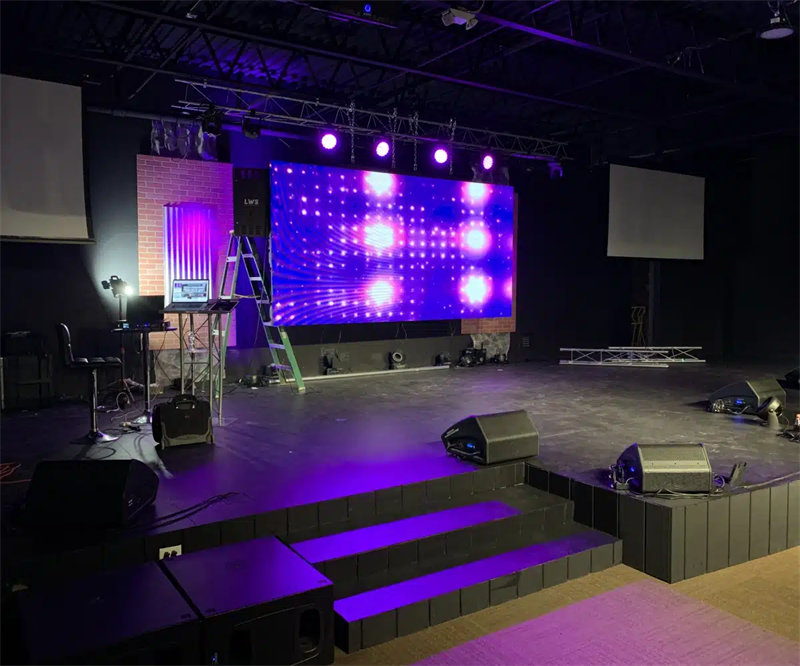
For permanent installations on stages, P3 or P4 LED displays are commonly selected. With the exact installation area varying significantly based on the size of the banquet hall, ranging from as small as 10m² to over 80m² for larger venues.
In the Surveillance and Security Industry:
While traditional surveillance systems often relied on LCDs, the advent of small-pitch LED displays has revolutionized the industry.
These displays, such as P1.53, P1.6 etc, offer unparalleled ultra-high definition. It is ideal for demanding video surveillance applications.
The cost of small-pitch LED displays has been decreasing rapidly, with prices for P1.667 displays now falling below $2,000 per square meter. This trend is expected to continue as technology advances and production costs decrease.
For the Education Sector:
LED displays have used for school report halls and auditoriums. For areas ranging from 30 to 100 square meters, P2, P2.5, P3, and P4 LED displays are popular choices, which offer a balance of resolution and cost-effectiveness.
In Exhibition Halls and Trade Shows:
Models like P1.53, P1.86, P2, and P2.5 are frequently used in exhibition halls. With the exact size tailored for most applications, a display area of 20 to 50 square meters is recommended.
For Reception Areas and Reception Halls:
With viewing distances typically ranging from 3 to 10 meters, P2.5 and P3 LED displays are popular choices. However, due to space constraints, the overall display area is often limited to 8 to 15 square meters.
These displays not only showcase important information but also contribute to company’s values and brand identity.
P1.53: Typically the most expensive due to its high pixel density and superior image quality. Costs can range from $1,200 to $2,500 per square meter.
P1.86: Slightly less expensive than P1.53, with prices ranging from $1,000 to $2,200 per square meter.
P2.0: More affordable, with prices generally between $800 and $1,800 per square meter.
P2.5: The least expensive option, with costs around $600 to $1,500 per square meter.
P1.53: Higher power consumption due to the smaller pixel pitch, typically around 250-300 watts per square meter.
P1.86: Slightly lower than P1.53, usually consuming about 220-280 watts per square meter.
P2.0: Power consumption averages around 200-250 watts per square meter.
P2.5: The most energy-efficient, with consumption generally between 180-220 watts per square meter.
When shopping for LED displays, you should require careful consideration of your specific needs, such as the intended use, and the available options. By balancing above factors, you can make an informed decision meet your requirements. If you want to know more difference between P1.53, P1.86, P2.0 and P2.5 LED display. You can contact us and we will help you find the ideal LED display for your needs.