If you’re planning to install an LED display, two critical questions will pop up: How much power does it use? And what size cable do you need? These aren’t just technical details. They directly affect your operating costs, safety, and the display’s lifespan. Let’s break down both calculations step by step.
Calculating LED Display Power Consumption
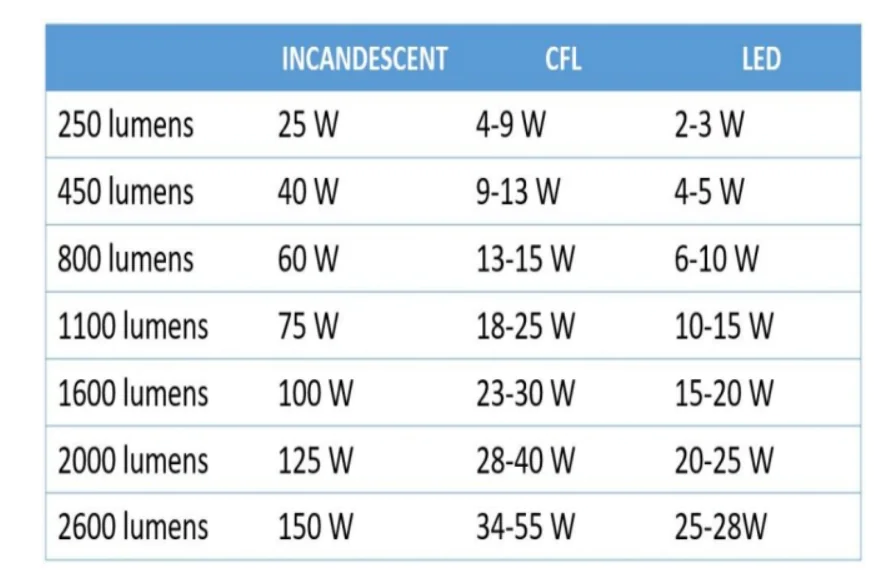
When talking about LED display power, you need to focus on two key values: maximum power consumption and average power consumption. They’re not the same, and mixing them up can lead to wrong decisions.
Maximum power consumption refers to the extreme electricity usage when the display is at full white and maximum brightness. This is the peak load it will ever draw. On the other hand, Average power consumption is the actual electricity used during daily operation. It is like when playing dynamic videos or images.
Why the difference? The core power supply and driver components of LED displays include numerous electronic parts, such as switching power supplies and driver chips. These components have inductive characteristics when working. Because of this, you need to multiply the total power by a power factor of 0.7 to 0.8 when calculating. This correction makes the result much closer to real-world usage.
Practical Example: Power Calculation for a 10㎡ Outdoor LED Display
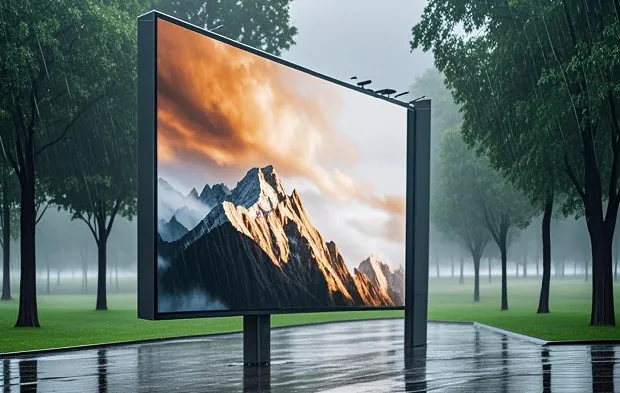
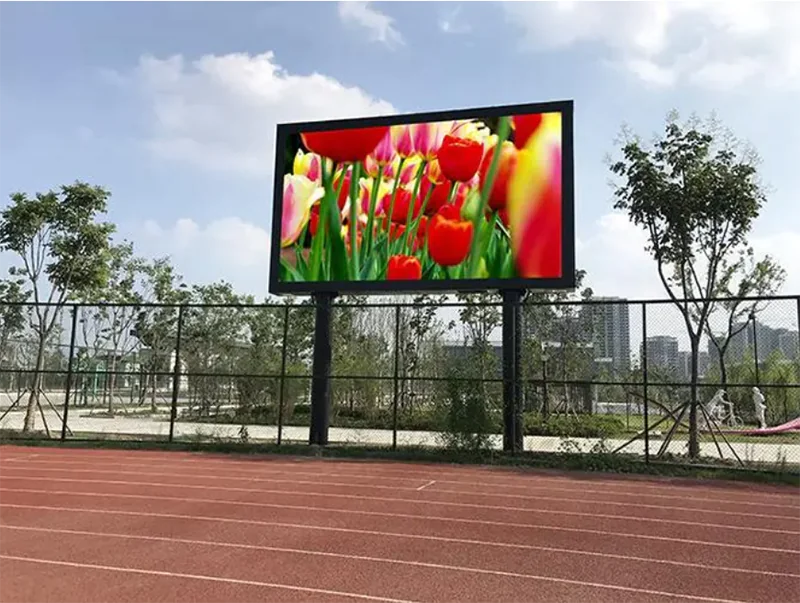
Let’s take a practical example to make this concrete. Suppose you’re installing a 10-square-meter outdoor LED display, and the maximum power consumption per square meter is 750W.
Step 1: Calculate the basic maximum power of the display. Multiply the area by the power per square meter: 10㎡ × 750W/㎡ = 7500W (or 7.5KW).
Step 2: Calculate the actual total power. You need to account for 10% power conversion loss. Plus, add the power of auxiliary equipment like air conditioners and fans. The final total power is about 8.5KW.
Note:
The daily usage will be much lower than the maximum. When playing dynamic videos, the power consumption is usually around 50% of the maximum, so that’s 3.75KW for this example.
Next: Choosing the Right Cable Size
Cable selection is just as important as power calculation. A cable that’s too small will overheat and trip the circuit breaker. A cable that’s too large is a waste of money. Let’s split this into two parts:
- Power cables : It is from the distribution cabinet to the main power supply of the LED display)
- Display power cables: It is used for zoned power supply of the display itself.
Power Cables
First, here’s the formula for calculating the cable cross-sectional area (in mm²):
Cable size (mm²) = Total power (W) ÷ Voltage (380V) ÷ 6A.
Quick tip:
For national standard copper wires, the safe current-carrying capacity per square millimeter is calculated at 6A. This is a stable and safe value to use.
Using our 8.5KW (8500W) total power example: Cable size = 8500W ÷ 380V ÷ 6A ≈ 3.73mm². When it comes to cable size, you always round up. So you should choose a copper wire of 4mm² or larger.
2.Display Power Cables
These cables are responsible for supplying power to different zones of the display. Normally, 2.5mm² copper wires are used here.
The formula for the number of power cables needed is: Number of cables = Total power (W) ÷ Voltage (220V) ÷ 6A ÷ 2.5.
Again, using the 8500W total power example:
Number of cables = 8500W ÷ 220V ÷ 6A ÷ 2.5 ≈ 2.58.
Just like with cable size, you round up the number of cables. So you’ll need 3 cables.
Recommendation:
Use a T-junction to supply power from the middle. This splits the current, reduces voltage drop, and keeps the performance close to the theoretical value.
Related:
Why Choose Common cathode outdoor energy-saving LED display?
Important Notes to Avoid Mistakes
There are a few key points you shouldn’t miss, especially if you’re new to this.
First, if the wiring distance exceeds 100 meters, you must increase the cable size appropriately. It can prevent insufficient voltage at the far end, which can cause the display to flicker.
Second, You should reserve a 20%-30% margin for the total power. Avoid running the equipment at full load for a long time. This extends its service life significantly.
Third, You should choose the right type of cable. For power cables, use national standard three-phase five-wire copper cables (such as YJV-4×10+1×6). For display power cables, you can use RVV sheathed cables. Never use non-standard products—they’re a major safety hazard.
Final Reminder
The power supply system is the core of a safely operating LED display. If you’re not sure about any of these calculations, don’t guess. You can contact us. We can create a customized plan based on your specific display size, installation environment, and usage needs.
Calculating power consumption and cable size doesn’t have to be complicated. By following these steps and examples, you can make informed decisions that keep your LED display running safely and efficiently.