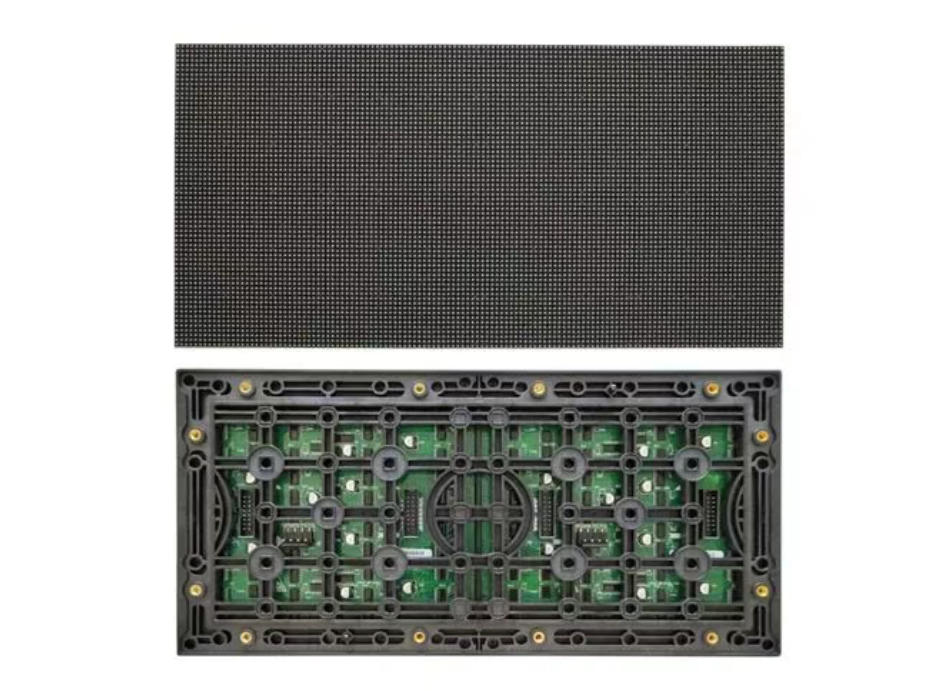
Cinema technology has come a long way from the days of simple flat screens. Today, audiences demand immersive experiences. It has gone far beyond traditional theaters.
Do you know dome theater or a spherical or full-dome cinema? Unlike conventional cinema screens, dome theaters surround the viewer with visuals projected onto a hemispherical surface. Therefore, viewers feel like they are part of the action rather than just watching it.
What Is a Dome Theater?
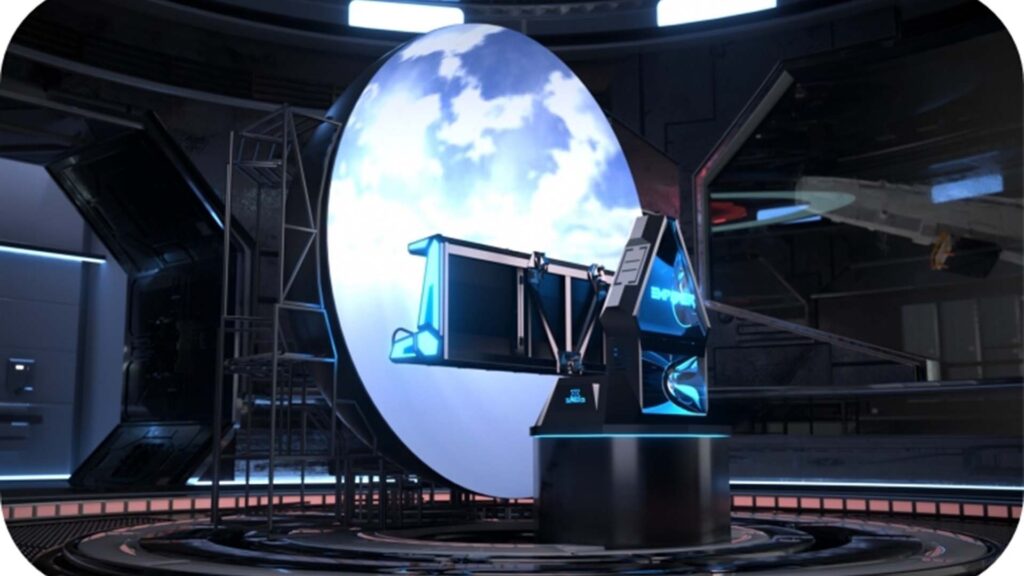
A dome theater, sometimes referred to as a spherical cinema or planetarium-style theater, uses a hemispherical screen to envelope the audience. Instead of sitting in front of a flat surface, the audience is placed beneath a curved dome that stretches across their field of vision. Therefore, the visuals appear all around and above them, creating an unmatched sense of immersion.
Unlike flat IMAX screens or curved cinemas, dome theaters give the impression of stepping into the movie. When paired with surround sound, motion seating, and even 4D effects such as wind, fog, or vibration, it will produces an unforgettable multisensory experience.
How Does a Dome Theater Work?
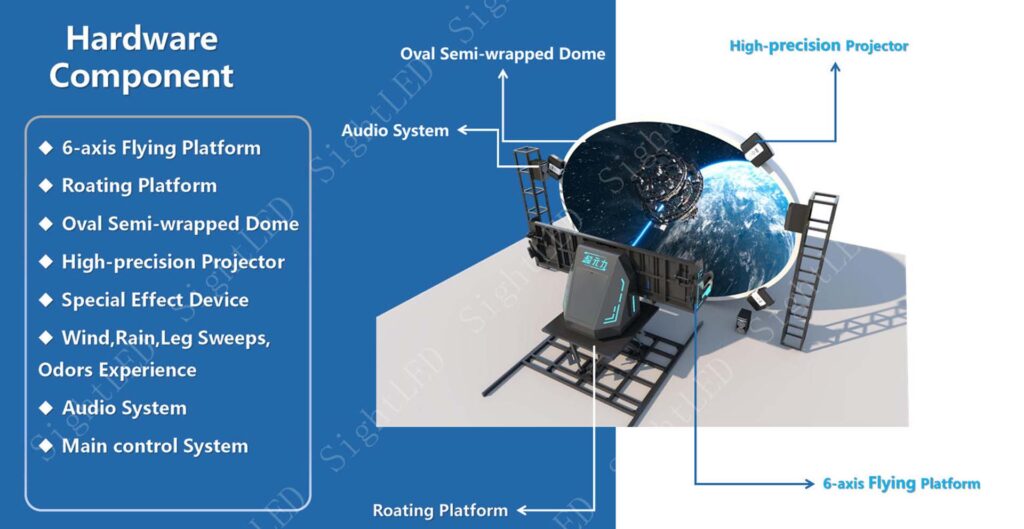
The core of a dome theater’s immersive power lies in its projection/LED and structural design.
The Screen
The dome is typically a hemisphere, with diameters ranging from 10 to 20 meters. It is constructed from specialized materials to reflect light evenly across its curved surface. The thickness of the dome is usually around 10 cm. It is enough to support projection yet lightweight enough for large-scale installations.
Audience Seating
Depending on the dome type, audiences will sit in reclining seats or stand on a central platform. viewers can comfortably gaze upward without neck strain. Capacity generally ranges from 50 to 200 people depending on dome size.
Projection
Both filming and playback use fisheye lenses. This distorts the image in a way that, when projected on the dome, restores the natural perspective across a wide field of view. Multiple projectors are used simultaneously, with their images carefully blended together through edge blending and warping software.
Sound and Effects
To enhance realism, dome theaters employ surround sound systems. It often has dozens of channels. Some theaters add 4D effects such as moving seats, fans, mist machines, or even artificial snow for full sensory immersion.
Types of Dome Theater Configurations
Not all dome theaters are the same. Over decades of development, several dome formats have emerged. They are suitable for different applications and audience experiences. Below are the most common types.
720° Full-Dome Theater

It has a full spherical screen, revolutionizing traditional cinema structures and viewing experiences. The screen is a complete sphere, with viewers positioned at the center for unrestricted 360° vertical and horizontal viewing. A suspended walkway is designed along the diameter for audience access. Viewers watch freely while standing. Projectors are installed at the two access points along the diameter to minimize disruption to the screen’s integrity. Either 8 or 16 projectors are used for image blending.
- A complete spherical theater
- Viewers stand or sit at the center of the dome.
- Provides both horizontal 360° and vertical 360° viewing.
- Projection system: 8–16 projectors installed only at entry and exit points to avoid blocking the visuals.
- Best suited for large-scale exhibitions and events.
360° or Extended Dome Projection
The screen covers at least half of the sphere, with the spherical cap parallel to the ground. The audience stands freely inside the sphere. It can be fully immersed in the visuals, which cover a wide field of view.
It is ideal for rich contextual video content. Projectors are hidden behind the screen, which requires perforations to allow light passage. Depending on the sphere’s size and resolution requirements, 7 or more projectors are used for blending.
- Covers half or more of the sphere.
- Audience stands freely inside the dome with visuals extending across their entire field of vision.
- Projection system: 7+ projectors, hidden behind the screen with small perforations for light passage.
- Ideal for rich storytelling, simulations, and theme parks.
Two-Thirds Dome Display
The display area can extend up to two-thirds of the sphere, positioned perpendicular to the ground. A platform extends into the sphere for the audience, providing an immersive experience with the widest possible field of view.
It requires over 10 projectors for blending. To avoid obstructing the central viewing area and minimize screen perforations, the projector installation and optical path layout are highly complex. Therefore, It is the most challenging type of dome theater for image blending.
- The dome extends up to two-thirds of a sphere.
- Audience sits or stands on a suspended platform inside the dome.
- Projection requires 10 or more projectors, arranged with extremely complex geometry to avoid shadows and overlap.
- Provides the widest field of view and is considered one of the most immersive configurations.
Inclined Half-Dome
The spherical cap is tilted at an angle (around 30 degrees) to the ground. viewers recline in seats, focusing their view upward. Typically, 6 digital projectors are spatially arranged to blend images across the screen, though some projects may use 8, 10, 12, or more for higher resolution.
- Dome tilted around 30°.
- Audience lies back in lounge-style reclining chairs, gazing upwards at an angle.
- Projection: 6–12 projectors blended across the dome surface.
- Comfortable for long-duration shows and widely used in educational and entertainment settings.
Planetarium Dome
They are Commonly found in planetariums. It has a full hemisphere screen with the spherical cap parallel to the ground, simulating the celestial sphere. viewers stand or sit beneath the dome, looking up as if observing the cosmos.
Originally using optical star projectors, digital planetariums with real-time software-based star projectors are now prevalent. Six or more projectors are arranged around the dome’s edge, projecting upward.
- Traditional dome setup used for astronomy education.
- Dome parallel to the ground;
- audience gazes upward at the simulated night sky.
- Projection system: 6 or more projectors around the rim.
- Early systems used optical star projectors, but today most employ digital real-time software systems for interactive astronomy shows.
Flying Dome Theater

They are Used in major theme parks for simulated flight experiences. It rotates the hemispherical screen 90 degrees to a vertical position. viewers are suspended inside the sphere, with the screen covering their entire forward field of view.
This aligns with normal viewing habits, and videos are typically shot with panoramic fisheye lenses to simulate flying. Six digital projectors are spatially arranged for full coverage.
- Commonly found in theme parks for virtual flight experiences.
- Dome rotated 90° into a vertical orientation.
- Audience suspended mid-air, looking forward into a screen that fills their natural field of vision.
- Projection: typically 6 projectors with panoramic fisheye footage.
- Creates the sensation of flying, gliding, or soaring through landscapes.
Related:
How Much Does The Dome Flying Theater System Cost?
Partial Bowl-Shaped Dome
This non-standard, bowl-shaped partial screen allows viewers to suspend inside, focusing downward to simulate an aerial view resembling that from an airplane. It provides a first-person perspective of flying over landscapes.
- Non-standard dome, more like a curved bowl with dual curvature.
- Audience suspended inside, looking downward at angled visuals.
- Simulates the view of looking down from an airplane or hovering above landscapes.
- Often used for aviation simulation and special attractions.
Hybrid Curved Dome
Similar to IMAX giant screens but it offers better visual immersion and a more encompassing experience.
Provides a greater sense of immersion than IMAX, but with more flexibility in design.
Applications: museums, high-end exhibitions, and theaters seeking deep visual impact.
Applications of Dome Theaters
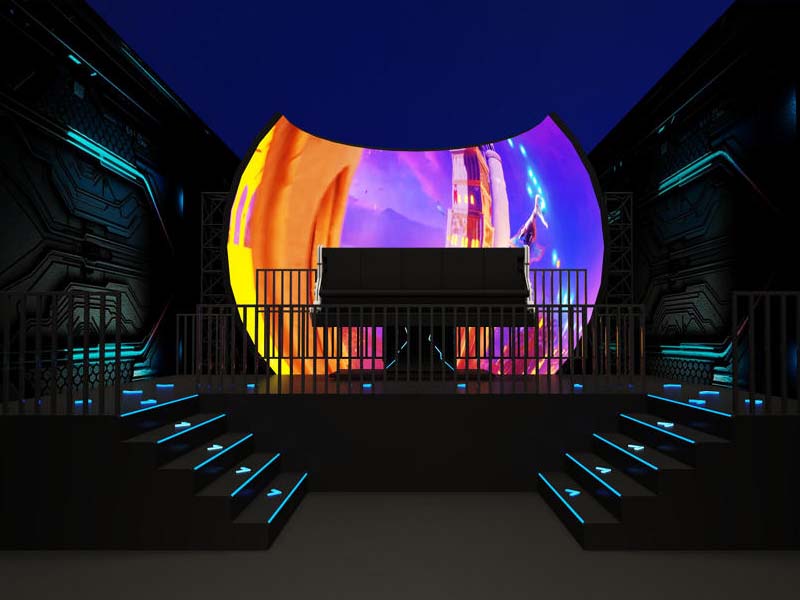
Dome theaters are versatile and have applications across industries:
Museums & Science Centers
Educational programs about space, nature, and history.
Planetariums & Observatories
Astronomy shows and real-time star simulations.
Theme Parks & Entertainment Venues Flying theaters, VR-like immersive rides, 4D attractions.
Expos & Exhibition Halls
Large-scale immersive presentations for cultural showcases.
Urban Planning & Architecture
Dynamic visualization of cityscapes, building models, and lighting simulations.
Command & Control Centers
For visualization of big data, military simulations, or training environments.
Corporate Events & Live Performances Concerts, theatrical productions, and interactive art installations.
Education & Research
Universities use domes for both teaching and industrial simulation.
Dome Theater System Components
To give seamless immersion, dome theaters require a highly integrated system.
Projection Screen
A hemispherical or partial dome surface, typically between 10–20 meters in diameter.
Projection System
Multiple high-resolution digital projectors with fisheye lenses.
Image Blending & Warping Processors To ensure images from different projectors merge seamlessly without distortion.
Playback & Control Systems
Dedicated servers running specialized dome projection software.
Central Control
Master control systems to synchronize visuals, lighting, audio, and effects.
Surround Sound System
Multi-channel speakers placed strategically around the dome for 3D audio immersion.
Motion Seats & 4D Effects
Optional features like moving chairs, fans, mist machines, bubble machines, snow generators, and artificial lightning for sensory enhancement.
The Technology Behind Dome Projection
Projection Challenges
Implementing a dome theater is not as simple as placing a projector at the center. Due to the curvature, you will face multiple challenges:
Geometric Distortion
Images must be warped digitally to appear correct on a curved surface.
Edge Blending
Overlapping projector areas must be blended smoothly so seams are invisible.
Brightness Uniformity
Even light distribution across the dome.
Resolution Scaling
Larger domes require higher-resolution content and more projectors.
Conclusion
Dome theaters are one of the most exciting frontiers in cinematic and immersive display technology. Combined with hemispherical or spherical structure, and cutting-edge projection/LED, sound, and even physical effects, they create impossible experience in traditional theaters. With the development of LED technology, more and more dome theaters will use LED technology instead of projection technology. If you are interested in dome theaters, please feel free to contact us.