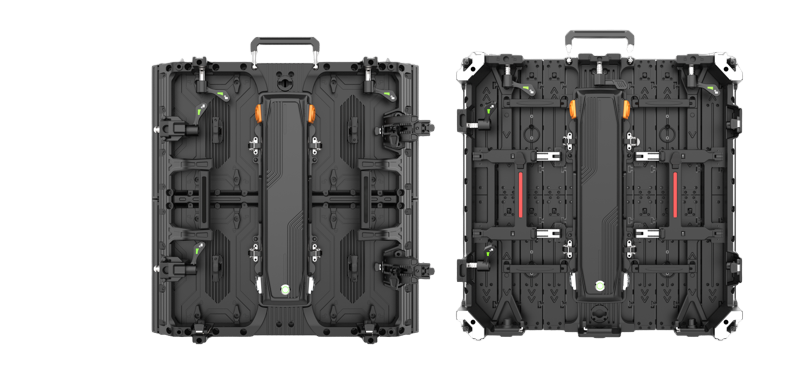
China accounts for 70% of the global LED video wall market. For US buyers, importing LED displays from China not only reduces procurement costs but also allows access to the latest display technologies.
However, cross-border procurement is not simple. Unlike e-commerce retail where you “order-pay-receive,” you face complex tariff policies, logistics, technology selection, and after-sales support. Therefore, many new buyers often feel lost. Today, SightLED will guide you the entire process of importing LED video walls from China.
Step-by-Step Process to Import LED Displays from China to the US
Below is a simplified step-by-step process used by most US buyers .
Step 1: Define Your LED Display Requirements
Before contacting suppliers, you should clearly define the technical requirements of your LED screen.
Important parameters include:
- Indoor or outdoor installation
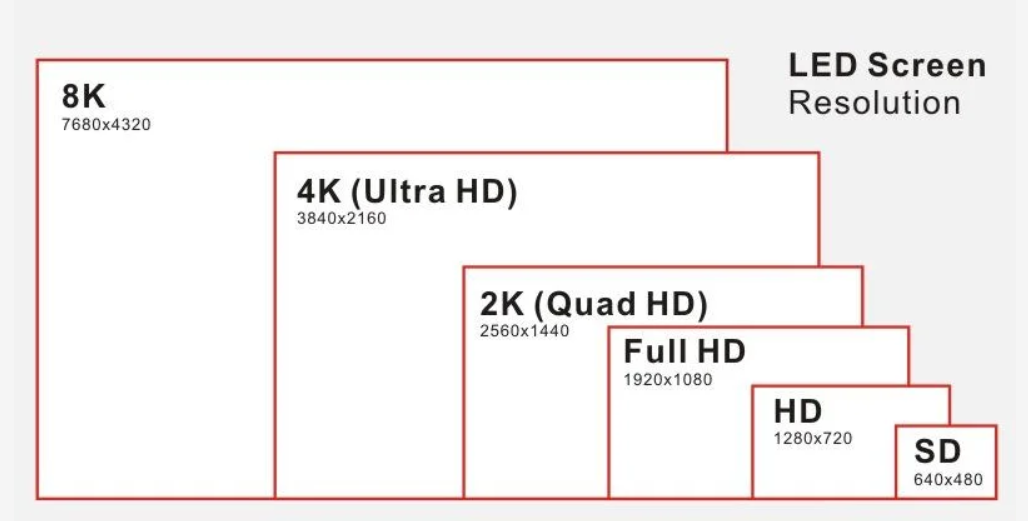
- Pixel pitch (P1.5, P2.5, P3.9, etc.)
- Screen size and aspect ratio
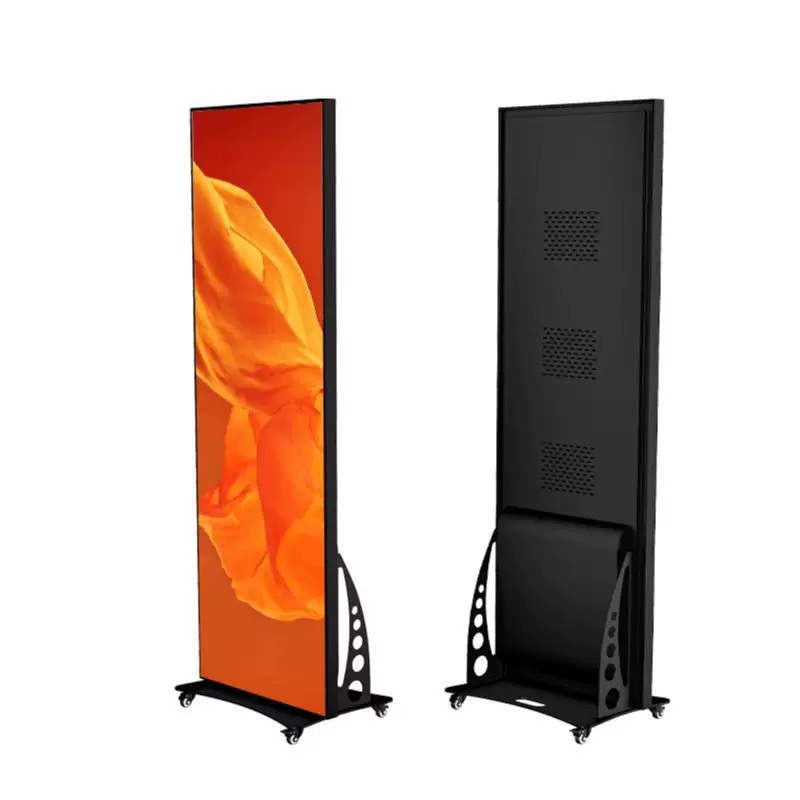
- Installation environment , suc as wall mounted, hanging, freestanding
- Viewing distance
Step 2: Search for Reliable LED Display Suppliers
You can find Chinese LED display manufacturers through several channels:
- Google search “LED display manufacturer China”
- Alibaba or Made-in-China platforms
- Industry exhibitions such as InfoComm or ISE
- Referrals from AV integrators
Step 3: Request Technical Proposal and Quotation
Once you contact suppliers, they will usually provide:
- LED display configuration proposal
- Screen layout drawing
- Control system recommendation
- Quotation including cabinet quantity and price
Step 4: Confirm Contract and Payment Terms
Typical payment terms when importing LED screens from China:
- 30% deposit before production
- 70% balance before shipment
Some long-term partners may negotiate better payment conditions.
Step 5: Production and Quality Testing
Production time normally ranges from 10 to 25 days, depending on the project size.
Before shipment, the manufacturer will usually perform:
- Aging tests (48–72 hours)
- Brightness and color calibration
- Full screen signal testing
Step 6: Shipping and Customs Clearance
After production, the goods will be shipped to the US via:
- Sea freight
- Air freight
- DDP logistics service
A licensed US customs broker can help handle customs clearance, duty payment, and documentation.
Step 7: Installation and Commissioning
Once the LED display arrives, installation typically involves:
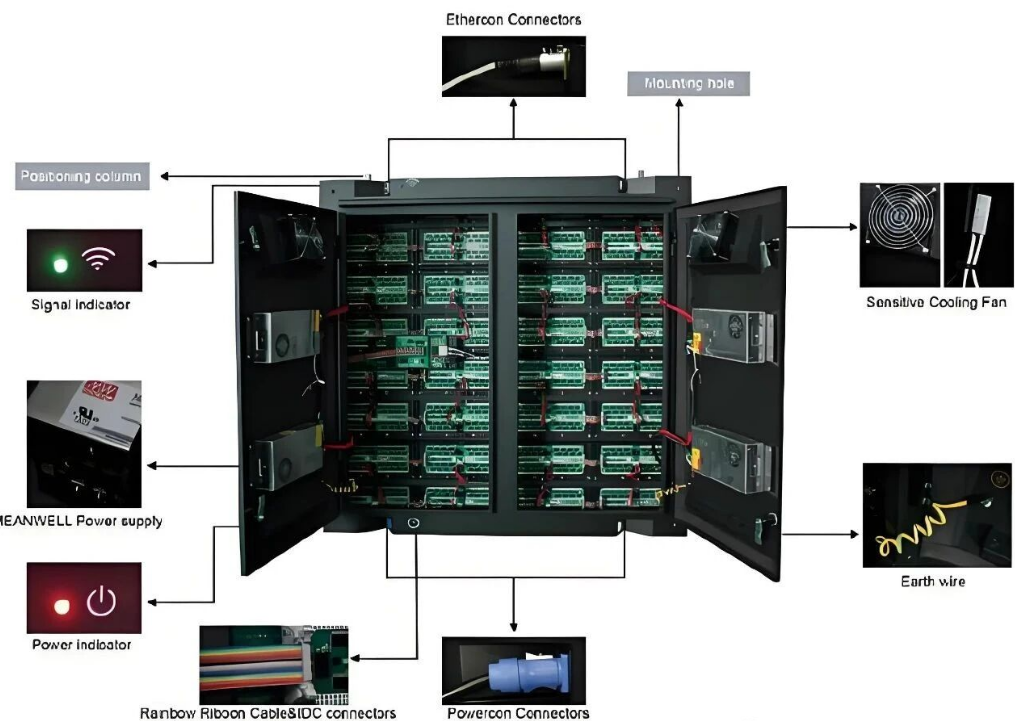
- Cabinet structure installation
- Signal cable connection
- Power distribution
- Control system configuration
Most Chinese manufacturers provide remote technical support to guide installation.
Understand Your Role: What Kind of Buyer Are You?
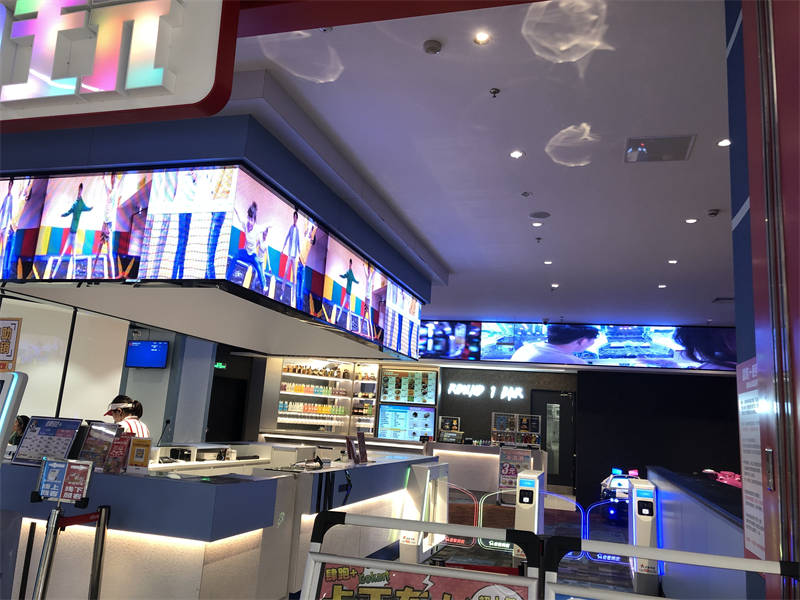
Before you start looking for suppliers, you must first clarify your position in the industry chain. Different roles determine your procurement model, focus, and cooperation needs.
1) End Customer (One-Time Purchase)
If you are the owner of a school, church, corporate lobby, or retail store, and plan to purchase an LED screen for daily information display…
Characteristics:
- Typically involves single, small-batch purchases.
- Limited understanding of product technical parameters.
- Primarily concerned with final display quality, ease of installation, and after-sales support.
Recommendation:
You need to find LED display suppliers who can provide turnkey services or local US installers. If importing directly from China, inquire with the supplier about detailed installation instructions, plug-and-play control solutions, or local installer recommendations. Due to the lack of long-term orders or small order sizes, logistics costs are relatively high. We recommend finding Chinese brands with US warehouses and having them ship directly from the US.
Startup Distributors (Preparing to Resell):
You see the potential in the commercial display market. You are preparing to build inventory to sell LED screens to local small integrators or businesses.
Characteristics:
- Focus on product versatility, price advantages, and stable supply capabilities.
- You need a “partner” supplier who can support your growth.
Recommendation:
We suggest finding suppliers willing to offer regional protection, price support, and product certification. Of course, you’ll also need to establish stable supply channels and begin learning how to manage inventory and handle common after-sales issues.
3) Engineering Contractors (AV Integrators, occasionally requiring LED displays)
You primarily undertake audiovisual integration projects, such as control rooms, conference rooms, or performances. LED displays are just one part of your solution.
Characteristics:
- Requires project-based procurement
- Neutral demands are not fixed, but require high levels of customization (e.g., irregularly shaped screens, specific sizes)
- Highly demanding response times for technical support and on-site service.
Recommendation:
We recommend finding Chinese manufacturers with strong technical backgrounds and high cooperation rates. They can conduct detailed design based on your drawings and understand your needs. In addition, They should also can remotely or send personnel assist in resolving complex technical issues.
How to Find a Reliable LED Display Partner?
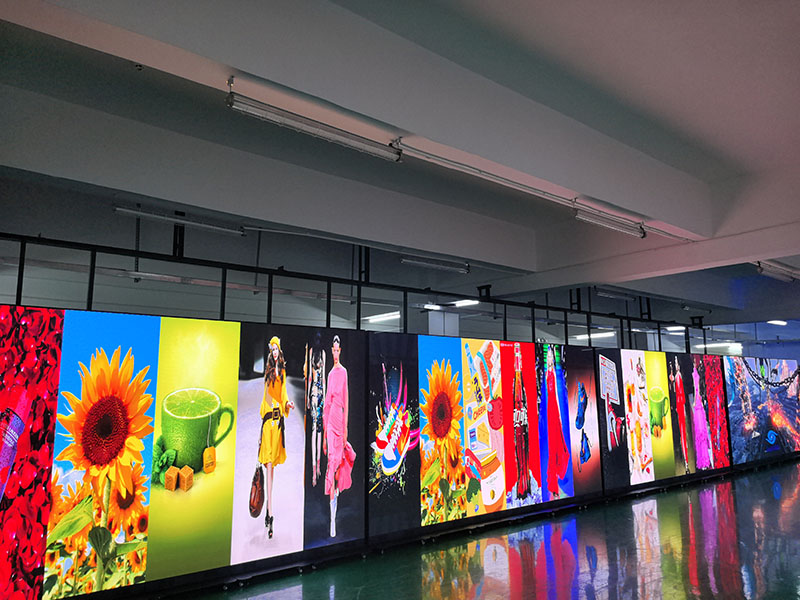
Once you’ve determined your positioning, you can begin looking for reliable suppliers. Here are some screening strategies using reputable Chinese LED display manufacturer in the industry as examples.
Example: SightLED and other major Chinese LED suppliers
While I cannot endorse any company, a reliable LED display partner typically possesses the following characteristics:
Professional Manufacturing Qualifications: ISO9001 quality management system certification; products are CE, RoHS, and other international certifications.
Extensive Export Experience: Familiar with export processes and knows how to safely transport goods to the US. Furthermore, they can provide voltage (110V) compatible solutions and English instruction manuals for the US market.
Clear Communication Skills: Not only are their sales staff fluent in English, but their technical staff can also participate in pre-sales communication. They can prepare solutions to meet your project requirements, such as brightness, refresh rate, protection rating, etc.
Transparent Pricing: Quotations should clearly distinguish between product price, packaging costs, shipping costs, and insurance costs, rather than a vague fixed price.
Customer Cases: Can they provide real installation cases in the US or similar North American markets for your reference?
What are the import duties on LED displays from China to the US?
This is the most important question for all US buyers. Import duties not only affect costs but also directly impact your final pricing and profit margins. The US tariff policy on LED displays made in China has changed in recent years, mainly including regular tariffs and Section 301 additional tariffs.
Core Concept:
LED displays are typically classified under HTSUS code 8528.52.00.
Tax Rate Components: Base tariff rate + Section 301 additional tariff.
Detailed Example Calculation: Assume you import a shipment of P2.5 indoor LED video walls from China worth $50,000 (FOB Shenzhen price), with freight and insurance totaling $2,000.
Step 1: Determine the Entered Value
CIF Value = Product Price + International Freight + Insurance = $50,000 + $2,000 = $52,000.
US Customs typically uses CIF value as the basis for calculating tariffs.
Step 2: Check Current Tax Rates (Taking common situations in 2024-2025 as an example, the specific rate is subject to customs announcements)
Basic Tariff Rate: For 8528.52.00, the basic tariff is usually 5%.
Section 301 Additional Tariff: For LED displays made in China, an additional tariff of 25% is currently usually levied. Of course, policies change frequently, and you can confirm with your supplier.
Total Tariff Rate: 5% + 25% = 30%.
Step 3: Calculate Total Tariff
Tariff Payable = CIF Value × Total Tariff Rate = $52,000 × 30% = $15,600 USD.
Step 4: Final Total Import Cost
Total CIF Cost = CIF Value + Tariff = $52,000 + $15,600 = $67,600 USD.
Additional Costs Reminder: Besides customs duties, you will also need to pay the following upon arrival at the port:
Port Handling Fee (HMF): Generally 0.125% of the cargo value.
Cargo Handling Fee (MPF): Minimum $26.22 for informal customs declarations, generally 0.3464% of the cargo value (with a cap).
Customs Broker Service Fee: Typically $100-$200 USD per shipment.
Summary: When calculating costs, be sure to include the current approximately 30% total customs duty in your budget; otherwise, you are highly likely to incur losses.
Inland Transportation Costs within the US: From the port to your warehouse.
Shipping Options for LED Displays from China
Below are the three most common logistics options.
1. Sea Freight (Most Common)
Sea freight is the most economical way to ship LED video walls.
Typical transit time:
20–35 days from China to the US
Advantages:
- Lowest shipping cost
- Suitable for large LED wall projects
- Disadvantages:
- Longer delivery time
Most LED display projects use 20GP or 40HQ containers.
2. Air Freight
Air freight is ideal for urgent projects.
Typical transit time:
- 5–8 days
- Advantages:
- Fast delivery
- Lower risk of shipping delays
Disadvantages:
- Shipping cost is significantly higher
- Air freight is usually used for small LED screens or spare parts.
3. DDP Shipping (Door-to-Door Service)
DDP stands for Delivered Duty Paid.
The supplier handles:
- export
- shipping
- customs clearance
- import duty
- final delivery
Advantages:
- Simplified process for beginners
- Predictable total cost
Disadvantages:
- Slightly higher overall logistics cost.
How much profit margin is more competitive in the US market?
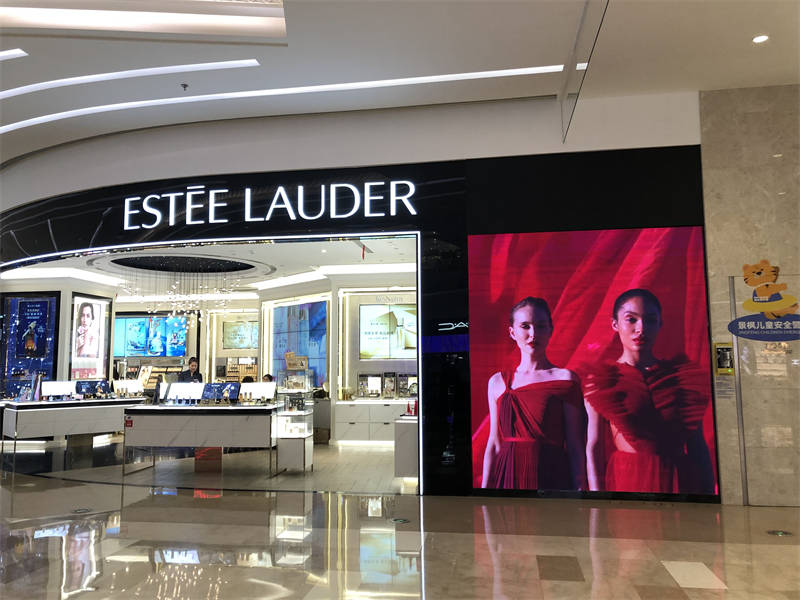
Regarding your final selling strategy, we recommend considering your market role and the added value you provide.
For start-up distributors:
You primarily act as a “middleman,” selling standard products to downstream customers. Considering shipping damage, inventory costs, and limited after-sales capabilities, we recommend maintaining a gross profit margin of 30%-40%.
By initially quoting this profit margin, you have room to offer customers small discounts while covering potential after-sales parts replacement costs, thus maintaining a competitive price.
For engineering/integrators:
You provide high-value-added services such as solution design, installation, commissioning, and on-site maintenance. Your customers are buying a “solution,” not just “hardware.”
Therefore, your target gross margin should be set at 50% or higher. Don’t try to compete on hardware prices with Chinese suppliers. You need to reflect the value of your professional services in the turnkey price, generating profit through a “hardware cost + service fee” model.
Core Competency: Price wars are never-ending. Your competitiveness comes from:
Understanding Local Needs:
Customers want UL-certified power supplies or components, not just the cheapest modules.
Response Speed: You can respond to customers within 1 hour and provide on-site service within 24 hours when problems arise.
Technical Solutions: You can help customers solve complex signal transmission and structural load-bearing issues.
Real Example of Importing an LED Screen
Case Study: Importing a P3.9 LED Video Wall for a event
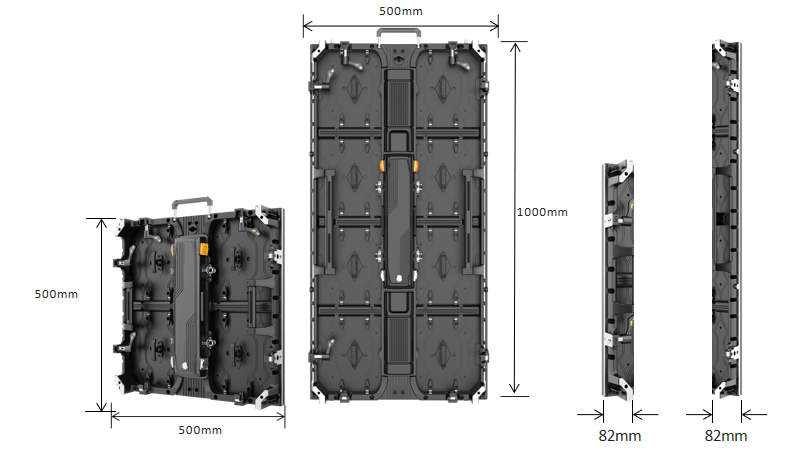
To better understand the financial structure of importing LED displays from China, let’s look at a real example.
Project details:
Screen size: 12 square meters
Pixel pitch: P3.9 indoor LED display
Application: advertising event background wall
- LED display product price:$18,000
- Shipping cost:$2,000
- CIF value:$20,000
- Import duty (30%):$6,000
- Customs clearance + logistics:$1,000
- Total landed cost$27,000
Typical US market selling price
LED video wall installation projects of this size typically sell for:
$40,000 – $50,000
Estimated profit margin
Approximately:
35% – 45%
This is why importing LED screens from China remains highly attractive for US distributors and AV integrators.
How to handle after-sales service for different roles in the LED display industry?
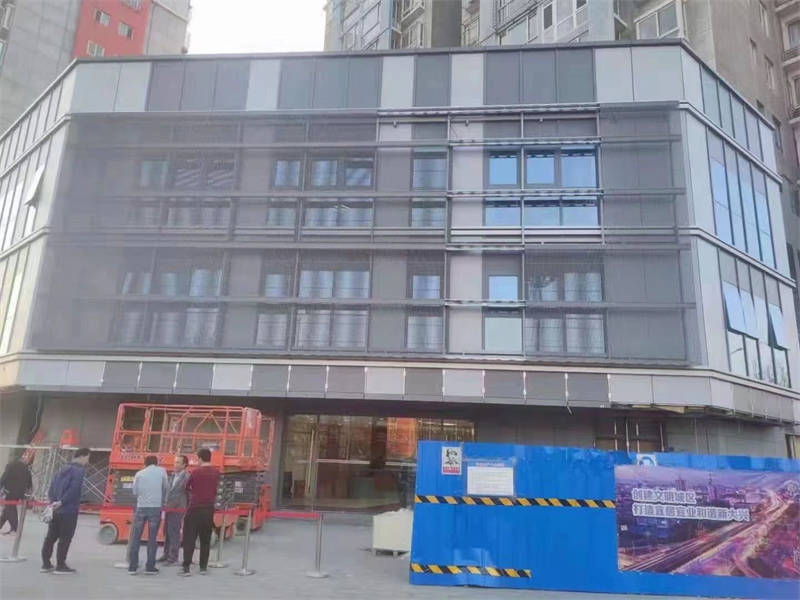
Of course, after-sales service is the most challenging aspect of the LED display industry. A LED screen consists of thousands of LEDs and electronic components, making it susceptible to issues like dead LEDs, color differences, or power failures.
After-sales strategy for end customers:
Relying on suppliers:
You can specify the warranty period in the purchase contract,such as 1-3 years. Additionally, you can request suppliers to provide 5%-10% of spare parts, such as modules, power supplies, and receiver cards. In case of problems, local electricians or technicians can replace them according to video instructions.
Local support: Look for Chinese brands with after-sales teams or partner repair centers in the US.
After-sales strategy for distributors:
Establishing a spare parts inventory: When sourcing from China, you can order 10%-15% more critical spare parts. This provides a solid foundation for your service.
You need to train an employee with basic technical knowledge. Most LED screen failures, such as power supply burnout or loose cables, are simple module replacement issues. You can perform initial diagnosis and repair, responding promptly to customer needs. When only the core control system malfunctions and cannot be resolved, you can seek original manufacturer support.
Return and Exchange Policy: For non-human-caused damage within the warranty period, the manufacturer provides free replacement parts, but shipping costs are payable upon delivery or shared equally by both parties.
After-Sales Strategy for Engineering Contractors:
Remote Assistance: You can request remote desktop assistance from the Chinese supplier. Generally, issues not caused by hardware can be resolved through software debugging of the control system.
On-site Service: For large and complex projects, this should be stipulated in the contract. If the problem cannot be resolved on-site, the contractor must pay for the manufacturer’s engineer’s travel expenses to the US, including visa, airfare, and accommodation.
Conclusion:
Importing LED video walls from China to the US is not actually that complicated. You need to clarify your role to adopt different strategies.
Regarding partner selection, finding a professional, experienced, and cooperative long-term partner like SightLED. It is more important than simply comparing prices.
If you are planning your next LED video wall project, feel free to us.
FAQs:
Q1: Is customs clearance complicated when importing LED screens directly from China to the US?
A: The process is standardized. If this is your first time importing, we recommend hiring a licensed US customs broker. They can help you accurately classify HS codes, calculate tariffs, and handle potential FDA or FCC inspections, avoiding high demurrage fees due to cargo being held up at ports.
Q2: China’s voltage is 220V, and the US voltage is 110V. Can the screen be used?
A: Yes. For the US market, LED display power supplies are typically wide-voltage designs, 110V-240V, or 110V. When purchasing, you only need to inform the supplier that the shipment is to the US, and they will default to configuring a 110V input power cord or terminal block to ensure plug-and-play functionality.
Q3: How do I choose the pixel pitch for an LED screen?
A: The pitch, such as P2.5, P3.9 represents the distance between pixels. The smaller the P-value, the higher the resolution, but the higher the price. The closer the viewing distance, the smaller the P-value needs to be.
P1.2 – P2.5: Suitable for close-range viewing in conference rooms, control rooms, etc.
P2.9 – P3.9: Suitable for medium-distance viewing in retail stores, lobbies, showrooms, etc.
P5 and above: Suitable for long-distance viewing in outdoor LED billboards, stadiums LED display, etc.
Q4: Ocean freight rates have fluctuated greatly recently. How can I control logistics costs?
A: You can adopt the following strategies:
Ship during the off-season: Avoid the peak shipping periods before Christmas and after Chinese New Year.
Consolidate orders: Try to fill a full container (20GP or 40HQ). LCL shipments are usually more expensive.