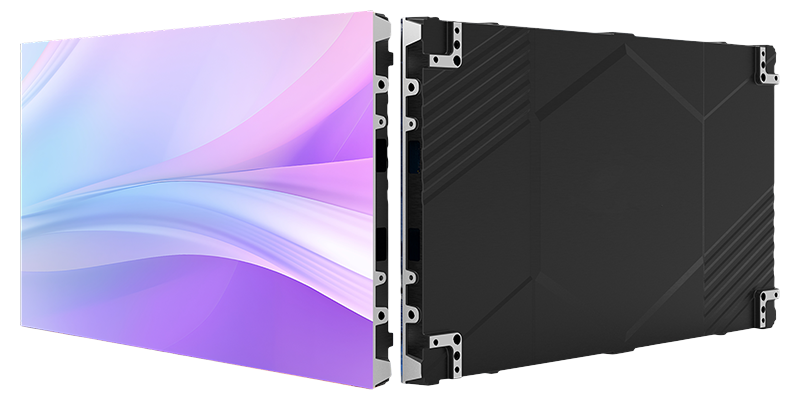
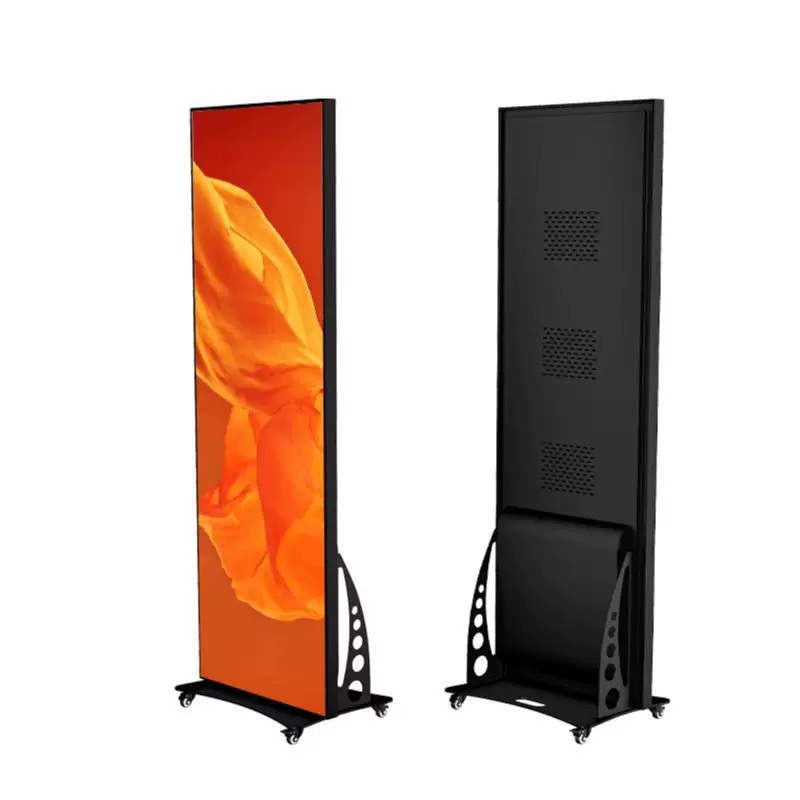
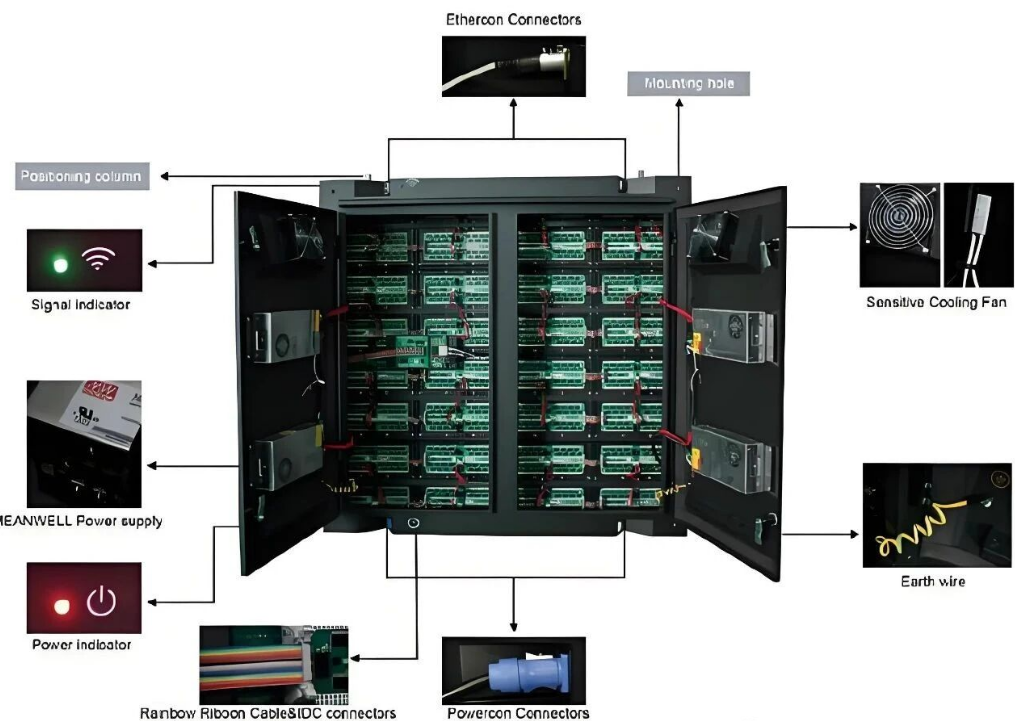
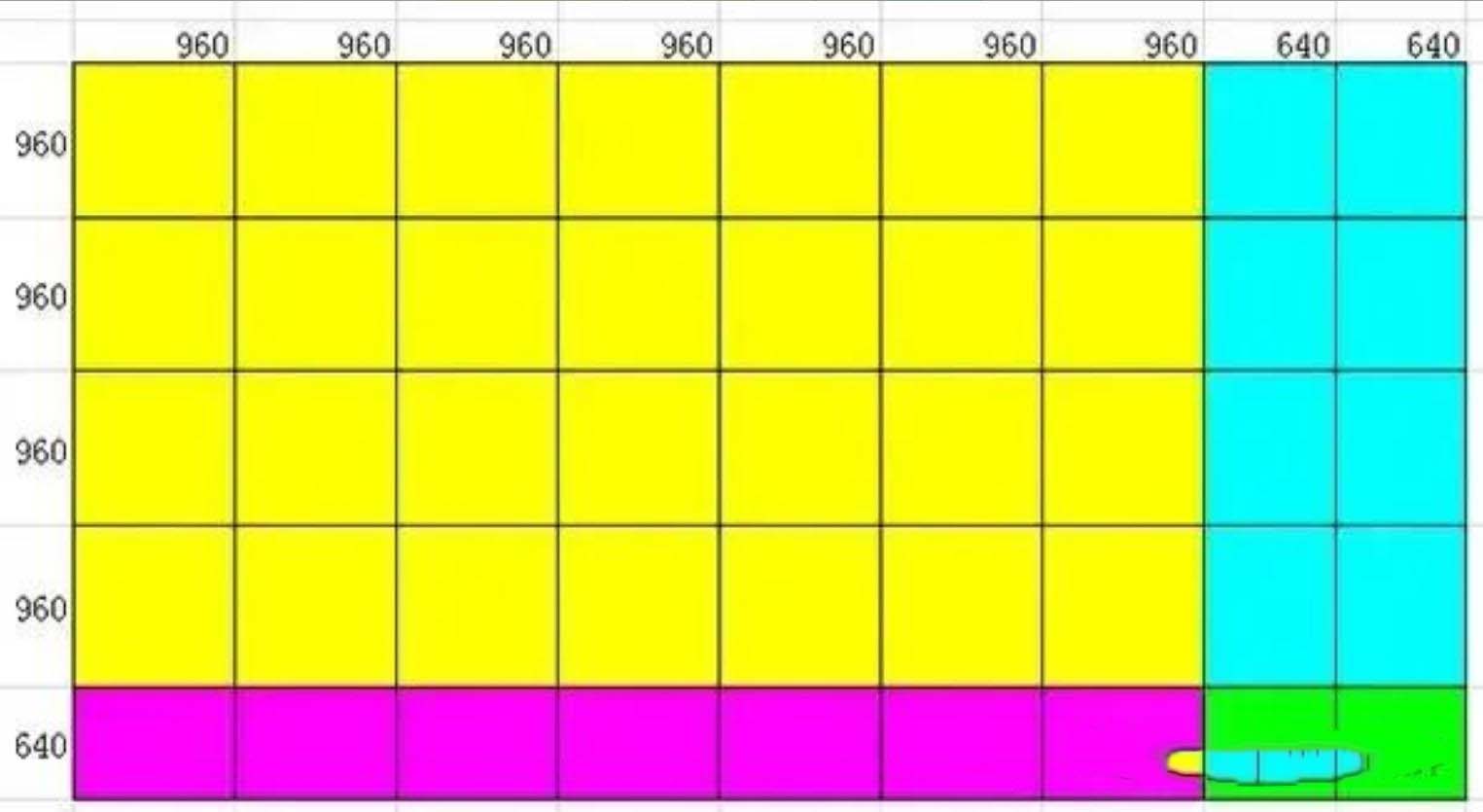
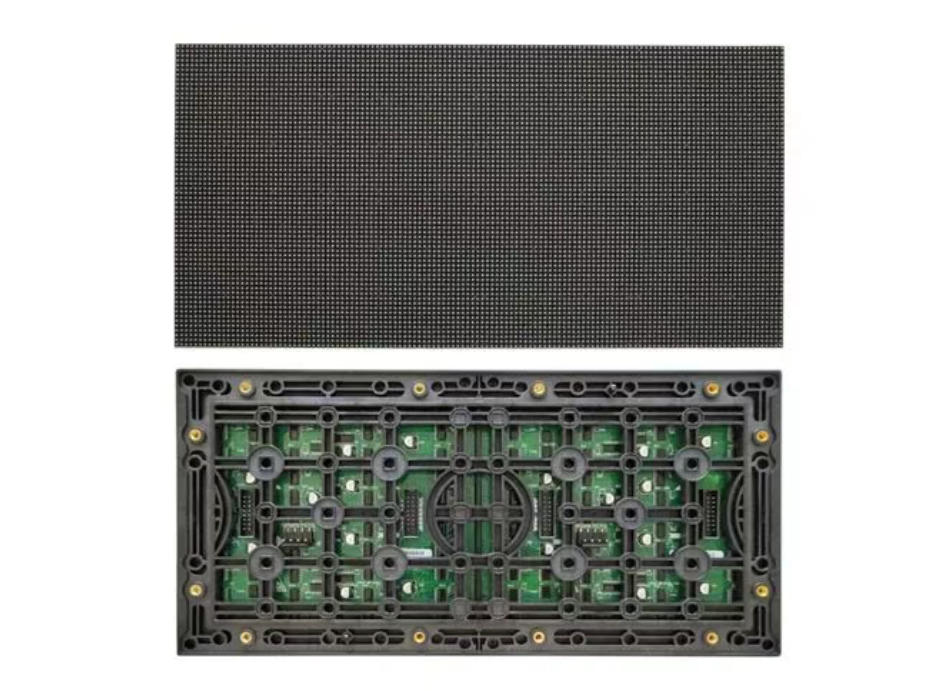
As display technology continues to evolve rapidly, LED foldable screens have emerged as a promising innovation, gradually become popular. While traditional LED displays have long been the reliable choice for many applications, these two types of LED screens have their own strengths and weaknesses. Do you know these differences?
Today, we will comprehensively compare the details.
Foldable LED Screens vs. Traditional Displays
Display Performance
LED Foldable Screens
Foldable screens can offer exceptional visual quality. So, they are a compelling choice for dynamic applications. They can achieve high contrast ratios, often exceeding 3000:1. In addition, by precisely controlling each pixel’s brightness, it can display deep blacks and vibrant colors, vivid imagery with clear details even in dark scenes.
Moreover, these screens support wide color gamut technology, typically covering over 90% of the DCI-P3 color space. Therefore, it can reproduce rich, lifelike colors for creative exhibitions or high-end presentations.
Additionally, LED foldable displays have high refresh rates, often reaching 3840Hz or higher. You will get smooth visuals during fast-moving content, such as sports broadcasts or action-packed videos, minimizing motion blur and ghosting.
However, foldable screens are not without flaws. The crease at the folding point can cause slight pixel misalignment, leading to uneven color or brightness in certain scenarios, particularly with solid-color backgrounds. While LED display manufacturers have improved crease-resistant technologies, the issue persists in some models. Furthermore, when viewed from extreme angles, these screens may exhibit minor color shifts or brightness loss.
Traditional Displays
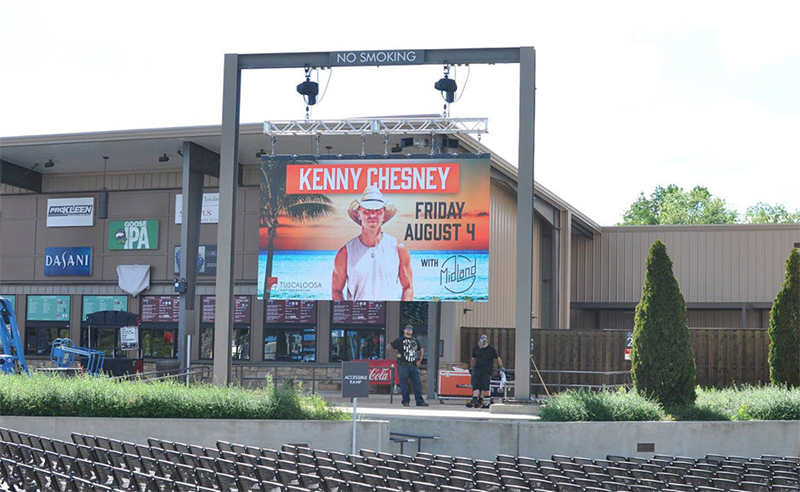
Traditional LCD or fixed LED displays have good consistent and reliable visual performance. Thanks to decades of refinement, they offer uniform color and brightness across the screen. With no noticeable shifts within standard viewing angles, it can provide dependable experience for viewers in conference room or public square.
These displays also dominate in large-scale applications. They easily support ultra-high resolutions like 4K or 8K display. Therefore, it is ideal for expansive venues such as stadiums or auditoriums.
On the downside, older traditional displays often struggle with refresh rates, typically capped at 60Hz to 120Hz for standard models. Upgrading to higher refresh rates, such as 240Hz, you require costly system overhauls. There are some challengs to achieve smooth motion for fast-paced content. Because this limitation will cause noticeable motion blur during dynamic scenes, detracting from the viewing experience.
Physical Characteristics
LED Foldable Screens
Foldable displays have good flexibility. You can bend or fold them to create unique shapes, such as curved or cylindrical displays. It is no exaggeration to say you can unlock endless creative possibilities for exhibitions or artistic installations. For instance, a foldable pillar display can create an immersive 360° display, captivating audiences in ways traditional screens cannot.
With lightweight and compact design, it can further enhance portability. It is easy to transport for events like trade shows or mobile advertising campaigns.
However, durability remains a concern. Frequent folding can stress the screen’s materials, potentially causing pixel failures or localized display issues over time. The hinge mechanism is also prone to wear. Some models showe looseness or damage after 20,000 folds. Additionally, to maintain their slim profile, foldable screens often compromise on protective features. They offer limited resistance to dust and water compared to traditional displays. So, you require careful handle in harsh environments.
Traditional Displays
Traditional displays prioritize durability and robustness. Constructed with rigid materials like reinforced glass or metal frames, they withstand impacts and environmental stress effectively. A typical outdoor LED display can endure heavy foot traffic or accidental bumps. It is suitable for busy locations like train stations or shopping malls.
Many traditional displays also have high IP ratings, such as IP65 or IP67. So they can be used for outdoor use, even in challenging conditions like rain or extreme heat.
However, their fixed rectangular shape limits flexibility. You cannot bend or reshape them to fit unconventional spaces or creative setups, restricting their use in innovative display scenarios. Additionally, large traditional displays can weigh 50 kg or more. It will increase shipping costs and setup time.
Installation and Maintenance
LED Foldable Screens
You can mount them on walls, hang them from ceilings, or even attach them to irregular surfaces like curved walls or columns. For example, a foldable LED display can be magnetically attached to a metal surface, eliminating the need for complex mounting hardware.
Many foldable screens also are front-access maintenance designs. Technicians can service the screen from the front, accessing internal components without dismantling surrounding structures, such as retail displays or indoor events, where rear access is limited.
However, due to the complex structure, foldable screens can lead to higher maintenance costs. If damaging pixels or hinges, you often require specialized repairs, and replacement parts. There is less readily available due to the technology’s novelty.
Traditional Displays
Traditional displays benefit from mature installation processes. You can train technicians to install them efficiently with minimal errors. For instance, installing a 100-inch LCD in a conference room typically takes a few hours with basic tools.
Due to simplicity and widespread use. traditional displays maintenance costs are generally lower. Thanks to established supply chains, you can easily get spare parts, such as LED modules or power supplies. In addition, with robust design, it also have fewer failures, reducing the frequency of repairs.
However, large traditional displays require significant installation space. A 30 SQM outdoor LED screen needs a sturdy wall or a dedicated support structure. In space-constrained environments, rear maintenance can pose challenges, requiring additional structural modifications.
Cost Considerations

LED Foldable Screens
They offer cost advantages in specific scenarios. Due to portability and ease of installation, they can reduce transportation and setup expenses. Therefore, it is economical for temporary events like pop-up exhibitions or mobile marketing campaigns.
However, their initial purchase price is often higher. The P3 foldable display per SQM will cost $1,200-$2,000. Additionally, repair costs for foldable screens can be quite high, especially if the hinge or flexible substrate is damaged.
Traditional Displays
Traditional displays are generally more cost-effective upfront. You can get lower purchase prices. A similar P3 traditional display will cost $800-$1,500. Moreover, various brands offer competitive options to suit different budgets.
In requiring frequent relocation or creative layouts scenarios, traditional displays will incur higher shipping costs.
Our Flexible LED Mesh Curtain
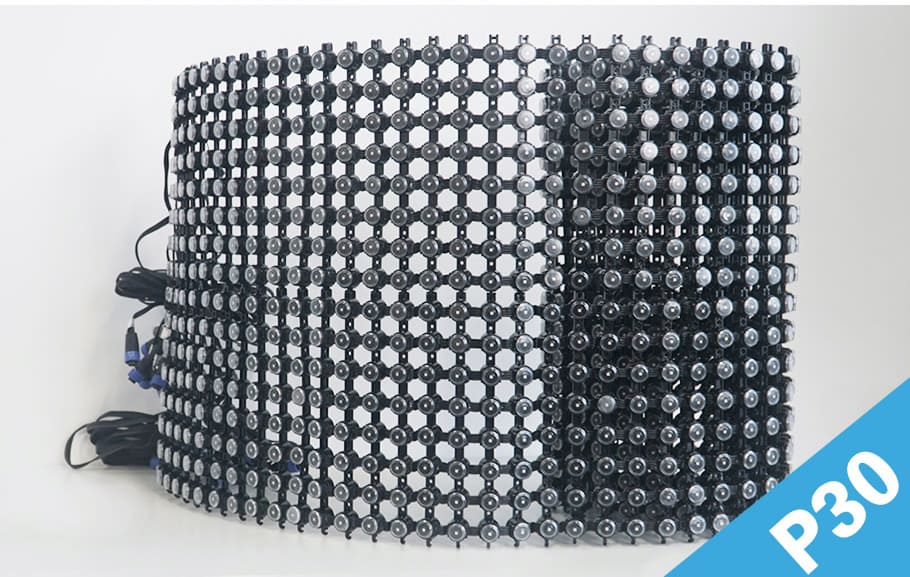
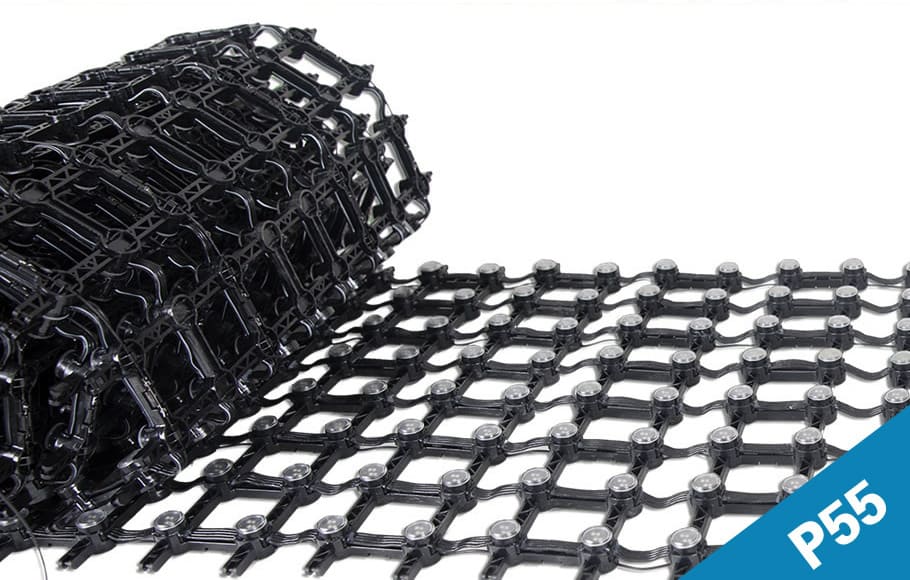
The Flexible LED Mesh Curtain is an innovative, ultra-lightweight, and highly foldable LED display for outdoor applications. With its ultra-flexible structure, the curtain display can be effortlessly shaped into curves, arches, circles, and waves. It is perfect for architectural facades, stage backgrounds, and artistic installations.
Moreover, It offers impressive transparency up to 75%, allowing lighting effects, fog, and lasers to pass through seamlessly without obstructing the background.
Built to withstand harsh weather, this display has IP66/IP67 rated, UV-resistant, and functions reliably. We use premium Nationstar LEDs that can bring exceptional energy efficiency and a long operational lifespan. The 16-bit color processing and high refresh rate guarantee vivid imagery and smooth video playback.
In addition, thanks to modular design and front-service capability, Installation and maintenance are simple and cost-effective. You can custom pixel pitches, panel sizes, and brightness levels for various project needs and budget levels.
Key Features:
- Up to 75% transparency
- IP66/IP67 waterproof and UV resistant
- Flexible design for creative shapes
- Wide temperature operation: -40℃ to +60℃
- Front-serviceable modular structure
- Energy-efficient Nationstar LEDs
- 16-bit grayscale for vivid visuals
Conclusion
In summary, foldable LED display screens have innovative display quality, flexibility, and portability. It is ideal for creative, mobile, or space-constrained applications. Traditional displays offer reliability, durability, and cost-effectiveness. They are suitable for large-scale, fixed installations like stadiums or public spaces.
When choosing between the two, you should weigh your priorities. For dynamic, portable displays, foldable screens are the way to go. For stable, large-scale, or outdoor applications, traditional displays remain a trusted choice.