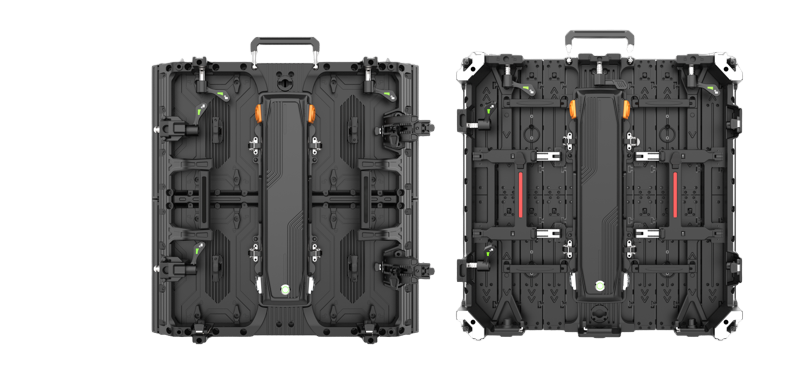
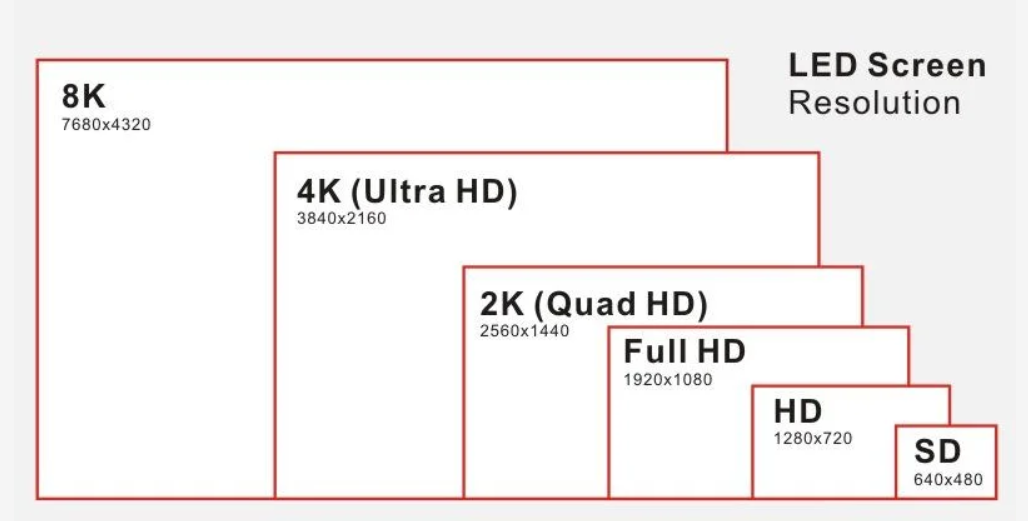
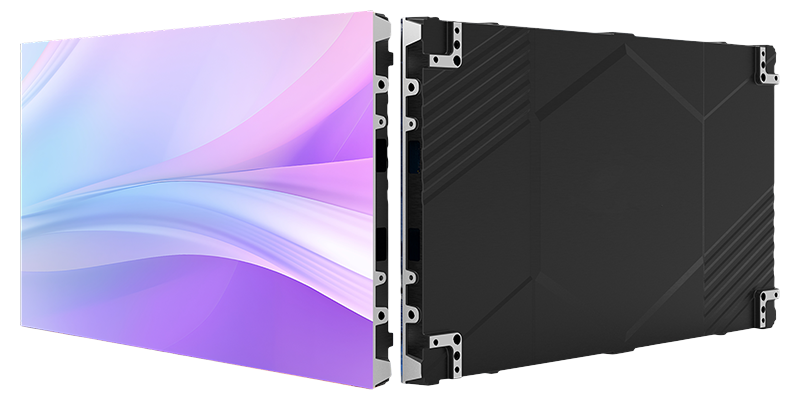
A P4 LED display is a type of small-pitch LED screen where the pixel pitch is 4mm. This 4mm pitch can provide crisp, high-definition images at relatively close viewing distances. Therefore, P4 screens are a popular choice for both indoor and outdoor applications.
The “P” stands for pixel pitch, so P4 means 4mm between pixels. With a pixel density of 62,500 pixels per square meter, P4 displays deliver sharp visuals with excellent color reproduction and wide viewing angles. In short, P4 LED displays bridge the gap between fine-pitch indoor screens and traditional outdoor displays.
General Specifications of P4 LED Displays

While specifications will vary between manufacturers, here are the typical parameters for a standard P4 LED display:
Key Features of P4 LED Displays
High Definition & Image Clarity
With 62,500 pixels per m², P4 screens high-quality SMD SMD2121 or SMD1921 to ensure excellent contrast and uniformity.
Wide Viewing Angle
Horizontal and vertical viewing angles up to 160°. So, the content remains visible and consistent from almost any position.
Energy Efficiency
P4 displays utilize energy-saving LED drivers and power supplies. Compared to older technologies, they consume less power while delivering higher brightness.
Lightweight & Slim Design
P4 panels use Die-cast aluminum cabinets. It is lightweight around 30kg per cabinet)and thin, simplifying transportation and installation.
Easy Maintenance
Most P4 cabinets support both front and rear service. Front access can be used for wall-mounted installations where rear space is limited, while rear access is convenient for freestanding screens.
High Refresh Rate & Grayscale
With refresh rates up to 3840Hz, P4 screens eliminate flicker in camera recordings. Grayscale levels of 14–16 bits ensure smooth color gradients.
Durability (Outdoor Models)
Outdoor P4 displays have IP65 weatherproofing, high brightness to combat sunlight. In addition, it has robust cooling systems for 24/7 operation.
Applications of P4 LED Displays
- Indoor Advertising: Shopping malls, retail stores, lobbies, and airports.
- Outdoor Billboards: High-traffic areas, building facades, and digital signage.
- Sports Stadiums: Scoreboards, perimeter advertising, and replay screens.
- Rental & Staging: Concerts, conferences, exhibitions, and temporary events.
- Control Rooms: Video walls for monitoring and command centers.
- Corporate Lobbies: Branding and information displays.
- Education: Lecture halls and auditoriums.
P4 LED Display Price: How Much Does It Cost?
The price of a P4 LED screen depends on several factors including configuration, quality, and purchase volume. Below are reference price ranges to help you budget.
| Type | Low-End ($/m²) | Mid-Range ($/m²) | High-End ($/m²) |
|---|---|---|---|
| Indoor P4 | 450 – 600 | 600 – 900 | 900 – 1,300 |
| Outdoor P4 | 700 – 950 | 950 – 1,400 | 1,400 – 2,000 |
| Rental P4 | 800 – 1,200 | 1,200 – 1,800 | 1,800 – 2,500 |
Note: Prices are for LED modules/cabinets only. Complete system costs include controllers, cables, installation, and structure.
Influence P4 LED Screen Cost Factors
- LED Brand: Top-tier brands like Nichia, Cree, or Epistar cost more but offer better brightness, color consistency, and lifespan.
- Cabinet Material: Die-cast aluminum is lighter and more durable than steel or iron, but more expensive.
- Brightness Level: Outdoor screens with 5000+ nits require more expensive LEDs and drivers.
- IP Rating: Waterproofing (IP65) adds to manufacturing cost.
- Refresh Rate & Driver IC: High-refresh drivers (PWM) cost more than common drivers.
- Control System: Advanced sending cards (e.g., NovaStar, Colorlight) with features like HDR, 3D, or 4K support increase price.
- Quantity Discounts: Bulk orders (≥50m²) typically get 5–15% discounts.
- Warranty: Extended warranties (3–5 years) may increase upfront cost but reduce long-term risk.
12m² Indoor P4 LED Video Wall Real-World Cost & Specification
You can estimate the total cost of a 12m² indoor P4 LED video wall using mid-range components, including hardware, control systems, installation, shipping, and ongoing operational costs.
1. Core Technical Parameters
Display Type: Indoor P4 LED video wall
Overall Dimensions: 4m (W) × 3m (H)
Total Area: 12m²
Configuration: Mid-range components
Application Scenario: Indoor fixed installation, no direct sunlight, standard temperature and humidity environment
Step-by-Step Cost Calculation
2.1 Hardware Cost (Core Display Modules)
LED display modules are the most expensive component; all other hardware supports their function.
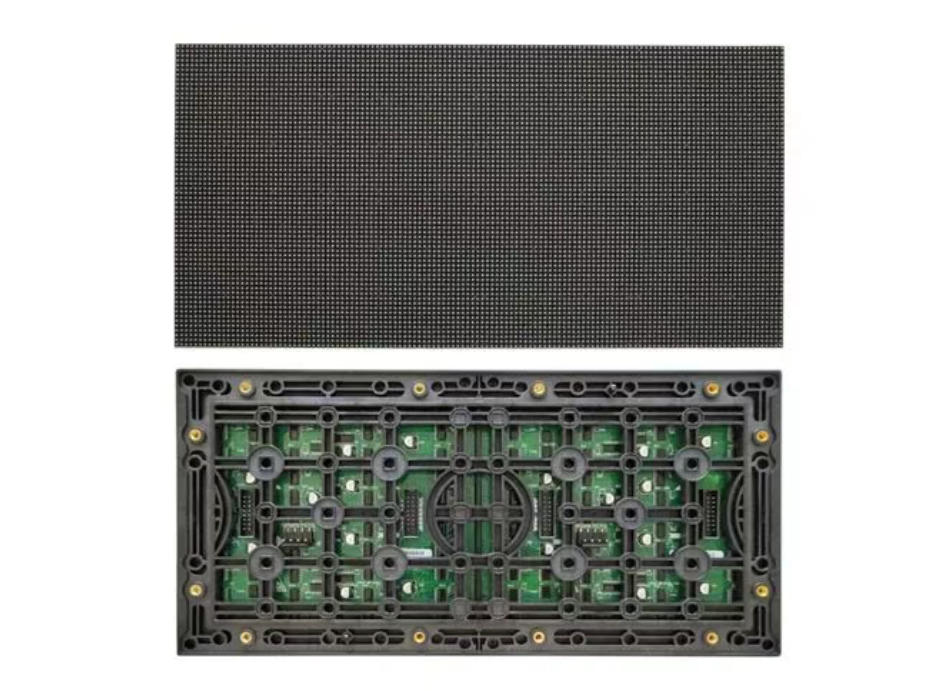
Module Specification: Single module size = 320mm (W) × 160mm (H), single module area = 0.32m × 0.16m = 0.0512m²
Number of Modules Required: Total screen area ÷ Single module area = 12m² ÷ 0.0512m²/module ≈ 235 modules (rounded up to the nearest whole number)
Module Price: Mid-range indoor P4 modules average $700/m²
Total Module Cost: 12m² × $700/m² = $8,400
Supplementary Hardware Accessories
Power Supplies: 235 modules require 4× mid-range 5kW switching power supplies = 4 × $80 = $320
Heat Dissipation: Basic heat dissipation pads and module-integrated cooling = $150
Consumables: Terminal blocks, screws, and moisture-proof adhesive = $230
Total Supplementary Hardware Cost: $320 + $150 + $230 = $700
Total Hardware Cost
Modules + Supplementary Accessories = $8,400 + $700 = $9,100
2.2 Control System Cost
The control system is the “brain” of the LED wall,. It is responsible for signal processing and transmission.
Sending Card: Mid-range NovaStar MCTRL600 = $350
Receiving Cards: 1 receiving card drives ~8 modules; 235 modules require 30 receiving cards = 30 × $45 = $1,350
Signal Converters: HDMI/DP to DVI converters = $200
Cables & Wiring Accessories:
- Cat6 Ethernet cables (signal transmission): 150m × $2/m = $300
- Power cables (2.5mm² copper core): 80m × $3/m = $240
- Control boxes (dustproof and anti-interference): 2 × $150 = $300
- Total Cable & Accessory Cost: $300 + $240 + $300 = $840
Total Control System Cost
| Cost Category | Amount (USD) |
|---|---|
| Hardware | 9,100 |
| Control System | 2,740 |
| Installation & Structure | 3,500 |
| Shipping & Duties | 2,440 |
| Grand Total | 17,780 |
Sending Card + Receiving Cards + Converters + Cables & Accessories = $350 + $1,350 + $200 + $840 = $2,740
Installation & Structural Cost
Includes custom steel frame, labor, and power distribution wiring.
- Steel Frame: Custom Q235 carbon steel frame = $800
- Installation Labor: 2 professional installers × 3 days × $300/day + tool rental = $1,800 + $200 = $2,000
- Power Distribution & Cabling: Indoor waterproof distribution box + wiring labor = $700
Total Installation & Structural Cost
Steel Frame + Labor + Power Distribution = $800 + $2,000 + $700 = $3,500
Shipping, Customs & Duties
For domestic cross-border procurement; domestic local delivery excludes this section.
Shipping: Sea freight + last-mile delivery = $1,200
Customs Duties: 10% tariff on hardware cost = $9,100 × 10% = $910
Customs Clearance Fees: Inspection and documentation charges = $330
Total Shipping & Duties Cost
Shipping + Duties + Clearance Fees = $1,200 + $910 + $330 = $2,440
Total Project Cost Summary
All-in Cost per m²: Total Project Cost ÷ Total Area = $17,780 ÷ 12 ≈ $1,482/m²
Power Consumption & Operational Cost
Operational costs are primarily electricity consumption, directly related to usage time and power rating.
- Average Power Consumption: 200W/m² (indoor P4 standard)
- Peak Power Consumption: 500W/m² (full-brightness mode)
- Daily Consumption (12 hours/day): 12m² × 200W × 12h = 28.8 kWh
- Monthly Consumption (30 days): 28.8 kWh × 30 = 864 kWh
- Monthly Electricity Cost: 864 kWh × $0.15/kWh = $129.6
- Annual Electricity Cost: $129.6 × 12 = $1,555.2
Note: Costs double if running 24/7; adjust based on local electricity tariffs.
Lifespan of P4 LED Displays
A well-maintained indoor P4 LED screen has a lifespan of 8–12 years (80,000–100,000 operating hours). Key influencing factors:
- LED Chip Quality: High-end imported chips (e.g., Nichia, Cree) last >100,000 hours; mid-range domestic chips ~80,000 hours.
- Operating Environment: Ideal conditions: 20–25°C, 40–60% humidity; dust, humidity, and extreme temperatures accelerate aging.
- Usage Pattern: 24/7 full-brightness operation accelerates degradation; intermittent use and brightness adjustment extend lifespan.
- Maintenance: Regular dust cleaning, timely replacement of faulty power supplies/receiving cards, and component repairs prolong service life.
Essential Auxiliary Equipment:
Complete operation requires the following supporting equipment:
Signal Processing Equipment
- Video Processor: Scales, switches, and processes input signals (HDMI, DVI, DP); mid-range: $800–$1,500.
- Signal Input Devices: Computer host, HD media player, and HDMI/DP data cables.
- Signal Splitter: Ensures synchronized display across multiple screens.
- Power Protection Equipment
- Power Distribution Cabinet: With surge protection, leakage switches, and lightning protection; ~$500.
- Voltage Stabilizer: For areas with unstable grid power; ~$300.
Installation & Heat Dissipation Equipment
Mounting Brackets: Wall-mounted, floor-standing, or ceiling-mounted brackets ($200–$500).
Cooling Fans: For high-density installations; ~$100 per unit.
Maintenance Tools
- Cleaning supplies , such as lint-free cloths, specialized cleaners, vacuum cleaners.
- Testing tools , such as multimeter, signal detector.
- Spare parts , such as backup power supplies, receiving cards, and modules.
Cost Notes & Optimization Suggestions
Cost Fluctuation Factors: Exchange rates, supplier pricing, and customization (e.g., higher brightness, higher resolution) can cause 10–20% cost variation.
Cost Optimization:
- Source from domestic suppliers to eliminate cross-border shipping and duties.
- Reduce runtime and adjust brightness to lower operational costs.
- Use mid-range domestic components instead of high-end imported ones . It can reduce hardware costs by ~30%.
- Long-Term Value: Despite high initial investment, LED displays have a long lifespan and low maintenance costs, making them more cost-effective than traditional projectors or LCD screens long-term.
Conclusion
P4 LED displays offer good resolution, brightness, and affordability for a wide range of applications. Whether you need an indoor advertising screen, an outdoor billboard, or a rental panel for events, you can make informed decisions and avoid unexpected expenses. Remember that the cheapest option may not always be the best value, You can consider Sight LED. We have higher LED quality, warranty, and after-sales support when comparing quotes. Ready to start your P4 LED project? Contact us today for a free.
FAQs:
1. What is the average price of a P4 LED display per square meter?
Indoor P4 LED display averages $600–$1,000/m² for modules; outdoor P4 averages $900–$1,600/m². Complete installed systems range from $1,200–$2,500/m² depending on complexity.
2. How much does a complete 10m² P4 LED screen cost installed?
A 10m² indoor P4 wall costs between $12,000 and $18,000. Outdoor installations are higher, around $15,000–$25,000.
3. Are P4 LED displays suitable for close viewing?
Yes. With 4mm pixel pitch, the minimum viewing distance for sharp images is about 4m, but it can be seen from 2–3m. For under 2m, you can consider finer pitches like P2.5 or P1.8.
4. What is the difference in price between indoor and outdoor P4 screens?
Outdoor P4 costs 30–50% more due to higher brightness LEDs, waterproofing, and robust cooling.
5. How much power does a P4 LED display use?
Indoor models average 150–250 W/m², outdoor models 250–350 W/m². Peak consumption can be double these values.
6. Can I install a P4 LED screen myself?
Basic assembly of modules is possible, but we recommended professional installation for structural safety, cabling, and calibration.
7. What warranty should I expect?
Standard warranties are 2–3 years on parts.
8. Do I need a special video processor for P4 displays?
Yes. The processor must support the screen’s native resolution and refresh rate. For large screens, you need a 4K or multi-sender setup.
9. How long does shipping take for P4 LED screens?
Sea freight from China takes 20–40 days; air freight 5–10 days. Production time adds 10–20 days for custom orders.
10. What are the ongoing maintenance costs?
Annual maintenance typically runs 3–5% of the hardware cost.
11. Can I use a P4 LED screen outdoors in direct sunlight?
Yes, but only if it’s an outdoor-rated model with at least 5,000 nits brightness and proper ventilation.
12. How do I calculate the total resolution of my P4 screen?
For a 320×160mm module with 80×40 pixels, multiply modules horizontally × 80 by modules vertically × 40. Example: 10 modules wide × 8 modules high = 800 × 320 pixels.
13. What is the best LED brand for P4 displays?
Nichia and Cree are top-tier; Epistar and Kinglight offer good quality at lower cost. For budget projects, domestic Chinese LEDs are common.
14. Are there any hidden costs when buying from overseas?
Yes. You need to Consider import duties, customs clearance, local taxes, shipping insurance, and bank transfer fees.
15. How often should I calibrate my P4 LED screen?
We recommended Color and brightness calibration annually or after 10,000 hours of use to maintain uniformity.
16. Can I rent a P4 LED screen instead of buying?
Yes. Rental rates vary by location and duration, typically $100–$300 per m² per day, including installation and technical support.
17. What is the minimum order quantity for custom P4 screens?
Many manufacturers accept orders as low as 5–10 m², but pricing improves significantly above 20–30 m².