With the rapid development of digital advertising, LED Poster has become an important tool in the commercial display. From shopping guides to indoor public information release, LED advertising posters are popular due to high brightness, flexibility and visual impact advantages.
However, facing the two mainstream technical routes of SMD Poster and GOB Poster on the market, many users are often confused when purchasing:
- What is the core difference between SMD and GOB?
- How do different dot pitch specifications affect the display effect?
- How to choose them for commercial scenarios?
Sight LED will deeply analyze the difference between the two posters.
What is LED Poster?
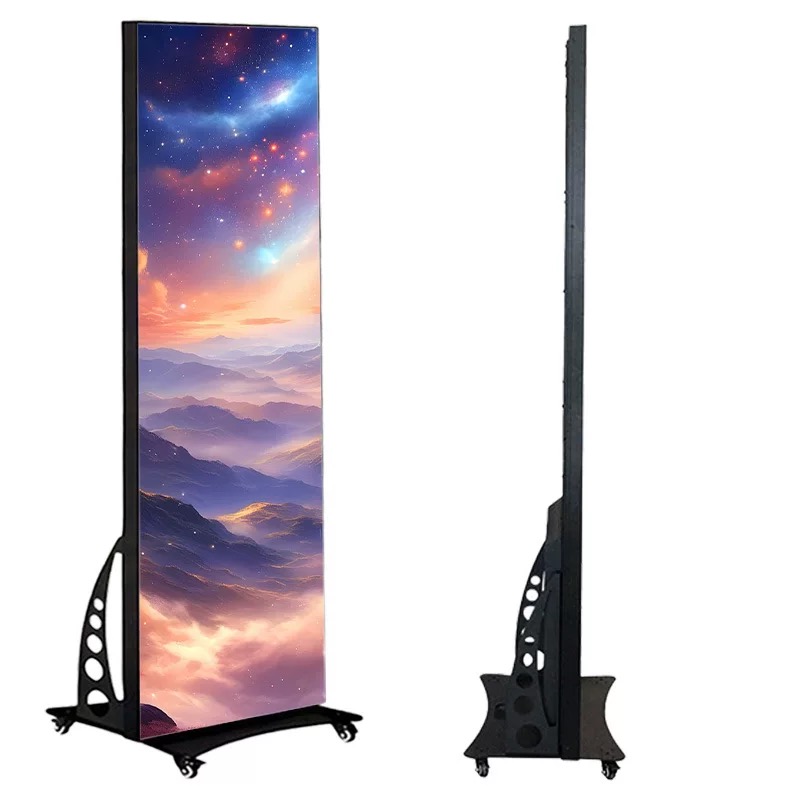
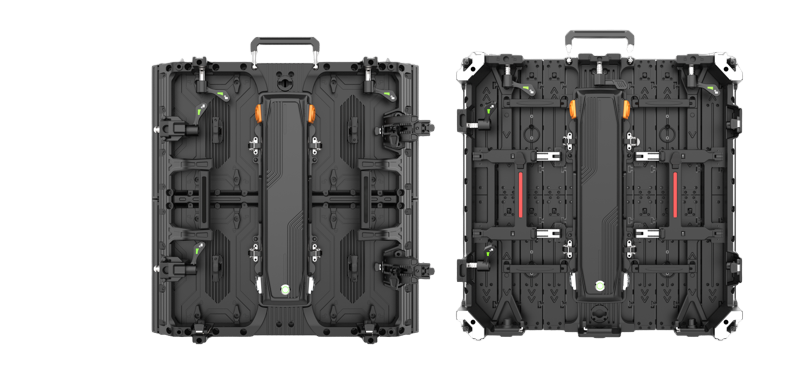
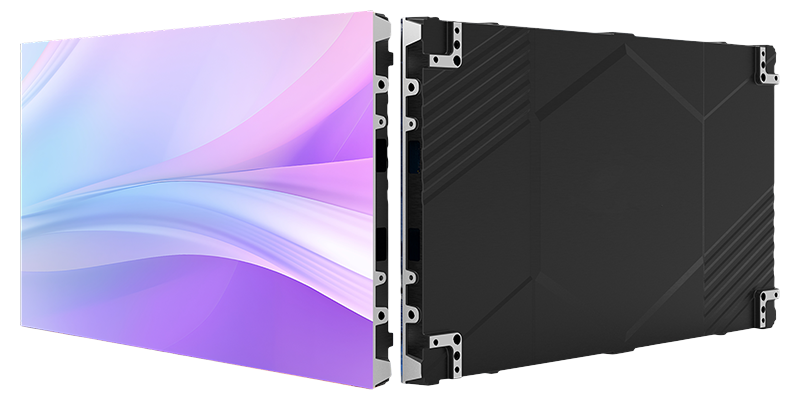
LED dislay Poster is a flat display device composed of LED pixel arrays. Its core features include:
- Modular design: spliced by standard size boxes, support any size customization
- High brightness display: indoor poster 600-1200nit adjustable
- Seamless splicing: eliminate the gap between traditional LCD splicing to achieve complete picture presentation
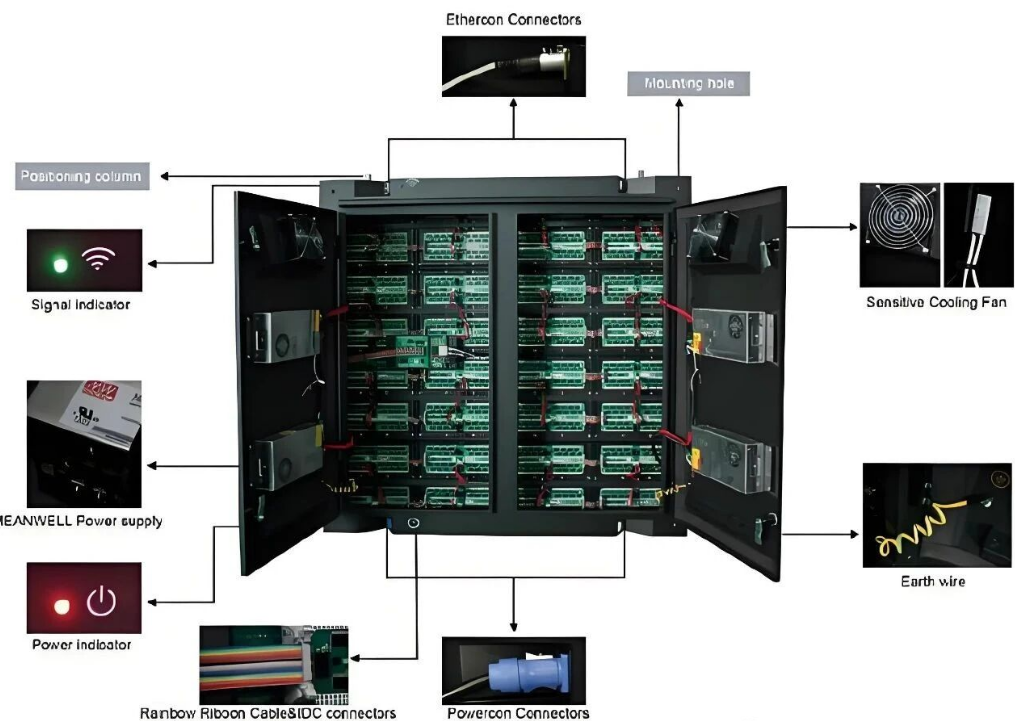
- Intelligent control: support remote cluster management, split-screen playback, timed power on and off and other functions
Application:
- Commercial advertising
- Public information release
- Exhibition display
- Sports events:
Key technical indicators
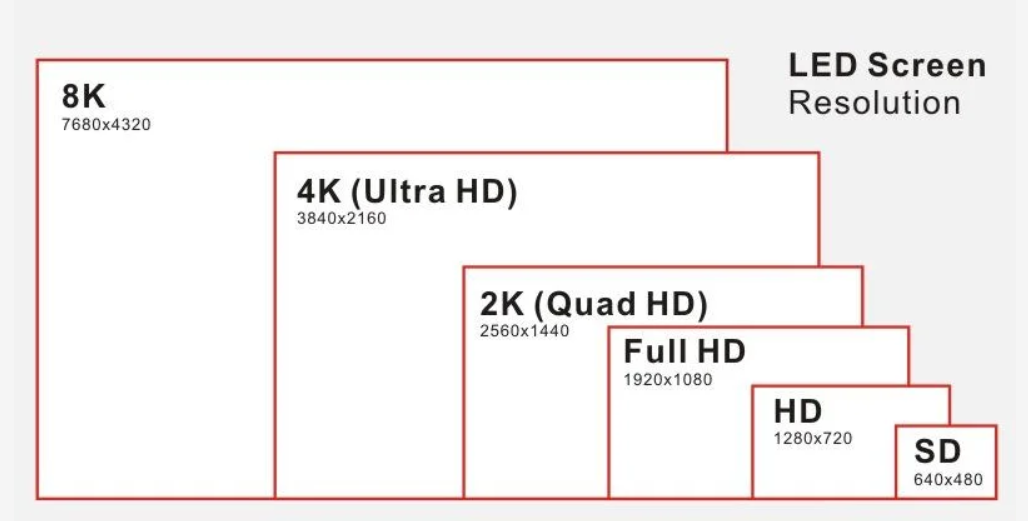
When you evaluate the performance of LED Poster, you can focus on the following parameters:
SMD vs GOB LED poster comparison
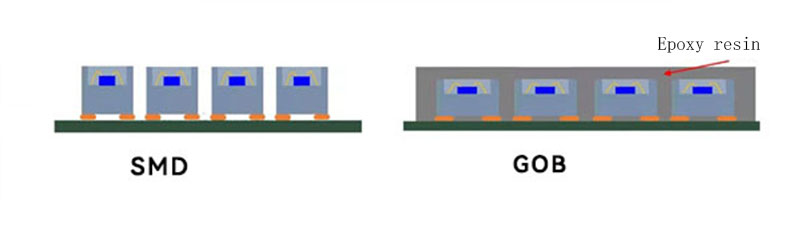
SMD packaging technology
SMD LED packaging technology is to directly mount LED chips on PCB. Electrical connection is achieved through wire bonding or flip-chip soldering, and then the LED chip and its connection parts are wrapped with packaging materials such as epoxy resin to form an independent light-emitting unit.
SMD LED packaging technology has the advantages of small size, light weight, good heat dissipation and high brightness. It is also one of the most widely used technologies in the field of LED display screens.
Process characteristics:
The red, green and blue LED chips are individually packaged into lamp beads → fixed on the PCB board by a high-speed placement machine → the surface is covered with a mask
Technical advantages:
✅ Supported by a mature industrial chain, the cost is controllable
✅ Pixel density can reach P0.9 (pitch 0.9mm)
✅ Easy maintenance, support single-point maintenance
Limitations:
❌ Exposed lamp beads are easily damaged by external forces
❌ Waterproof and dustproof require additional treatment
GOB packaging technology
GOB (Glue on Board) is an innovative process that has emerged in recent years. GOB technology is chip packaging glue technology on the board. It is based on SMD LED packaging, and further coats a layer of special transparent glue on the surface of the LED display module to form a protective film.
This layer of glue can not only effectively prevent the LED chip from being damaged by the external environment (such as water vapor, dust, impact, etc.), but also improve the overall strength and stability of the module and extend its service life.
Process innovation:
After completing the SMD patch →cover with special optical glue layer →vacuum curing to form a protective layer
Technical breakthrough:
✅Surface hardness reaches 3H, impact resistance increased by 300%
✅Achieve IP65 dust and water resistance
✅Eliminate moiré and improve visual consistency
Application restrictions:
❌ The glue layer affects heat dissipation and needs to optimize the structural design
❌Rework requires replacement of the entire module
In-depth comparison: SMD Poster and GOB Poster
Physical property comparison
| Comparison Dimension | SMD Poster | GOB Poster |
|---|---|---|
| Surface Treatment | Exposed LEDs + mask | Fully covered with optical glue layer |
| Protection Rating | IP43 (requires extra protection) | IP65 (built-in protection) |
| Compression Strength | 500N/cm² | 1500N/cm² |
| Operating Temperature | -20℃ to 50℃ | -40℃ to 60℃ |
Display performance comparison
Comparison through laboratory measured data (taking P1.86 as an example):
Viewing angle difference:
SMD horizontal viewing angle 140° vs GOB 160° (glue layer refraction expands viewing angle)
Color consistency:
GOB’s ΔE<1.5 (color difference is not discernible to the naked eye), better than SMD’s ΔE<2.5
Contrast performance:
GOB 5000:1 vs SMD 3000:1 (glue layer reduces ambient light reflection)
Economic analysis
| Cost Item | SMD Solution | GOB Solution |
|---|---|---|
| Initial Investment | $1500/m² (P1.86) | $2200/m² (same specification) |
| Average Annual Maintenance Cost | 8%–12% of equipment value | 3%–5% of equipment value |
| Lifespan | 50,000 hours (at 70% brightness) | 80,000 hours (same brightness decay rate) |
Related:
COB Vs. GOB LED Display:How Much Does GOB LED Screen Cost?
How to choose SMD Poster and GOB Poster?
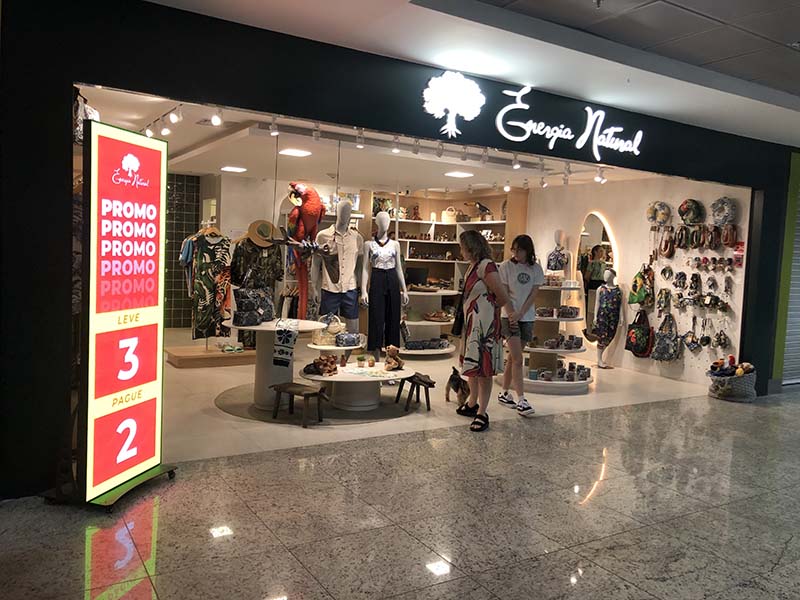
How to choose SMD or GOB poster, you can refer to the following introduction.
Analysis of key selection factors
Environmental condition assessment
If it is an outdoor/semi-outdoor scene or other high-risk environment, we recommend giving priority to GOB Poster:
✅ IP65 protection level, dustproof, waterproof, and salt spray-proof
✅ Strong impact resistance (surface hardness above 3H)
✅ Adapt to extreme temperatures of -40℃~60℃
Typical applications:
- digital signage at subway stations
- airport square screens
If it is a stable low-risk environment indoors, you are more concerned about cost performance, you can choose SMD Poster:
✅ 20%-40% lower cost
✅ Easy maintenance
✅ More suitable for high-density display (micro-pitch below P1.25)
Typical applications:
- conference room introduction information screen,
- shopping mall guide screen,
- exhibition hall advertising screen
Physical interaction risk
If it is a high-traffic or easily accessible area, we recommend that you use GOB Poster:
✅ Optical adhesive layer prevents human scratches (such as interactive screens in shopping malls, children’s activity areas)
✅ Eliminate static adsorption of dust (clean scenes such as hospitals and laboratories)
If it is installed in a closed area, you can choose SMD Poster:
✅ No contact risk, lower initial investment
✅ Lightweight design (15% lighter than GOB with the same specification)
Budget and cost
If your initial investment budget is limited, you can consider SMD poster
SMD Poster:
✅ Low hardware cost (P1.86 is about $1500/m²)
✅ Low installation cost (simple structure)
GOB Poster:
❌ 30%-50% premium (same dot spacing specification)
❌ Special installation tools are required (explosion-proof treatment of glue layer)
If you have a sufficient budget and pay attention to long-term operation and maintenance costs, then choose GOB poster
SMD Poster:
❌ Annual maintenance fee 5%-8% (lamp bead damage, mask aging)
❌ Service life 5-7 years (brightness decays to 70%)
GOB Poster:
✅ Annual maintenance fee 3%-5% (modular replacement)
✅ Service life 8-10 years (same attenuation standard)
Therefore, you can quickly judge based on the following logic:
- Is the environment humid/dusty/temperature difference large? → Yes → Choose GOB
- Is it likely to be touched/damaged by humans? → Yes → Choose GOB
- Is the budget tight (<$2000/m²)? → Yes → Choose SMD
LED poster dot pitch selection and scene matching
How to choose the pixel pitch of the LED poster mainly depends on the visual distance:
Combined with the viewing distance formula: Minimum viewing distance (meter) = dot pitch (mm) × 1000 / (0.3~0.8)
(Coefficient selection: 0.3 for text display, 0.8 for video)
| Pixel Pitch | Optimal Viewing Distance | Applicable Technology | Typical Application Scenarios |
|---|---|---|---|
| 1.25mm | 1.5–4m | SMD (Indoor Fine Pitch) | Luxury store |
| 1.53mm | 2–5m | GOB (Interactive Mid-range) | Bank ATM ads, airport check-in screens |
| 1.86mm | 2.5–6m | Both (SMD & GOB applicable) | Corporate showroom poster, conference room all-in-one displays |
| 2.5mm | 3–10m | GOB (Outdoor/Semi-outdoor) | Gas station ads poster, stadium ribbon door poster |
Ultimate selection suggestion
Choose SMD Poster in the case of:
✅ Budget less than $1800/m²
✅ The temperature and humidity of the installation environment are stable (such as air-conditioned conference rooms)
✅ No contact is required and the viewing distance is >2m
✅ The project cycle is shorter than 3 years (such as temporary events)
GOB Poster options:
✅ Outdoor/high humidity environment (such as coastal city advertising screens)
✅ Frequent human-computer interaction (such as touch screens in educational institutions)
✅ 7×24 hours of continuous operation is required (such as traffic control centers)
✅ Pursuit of long-term low failure rate (such as brand flagship store image screens)
SightLED LED display poster solution
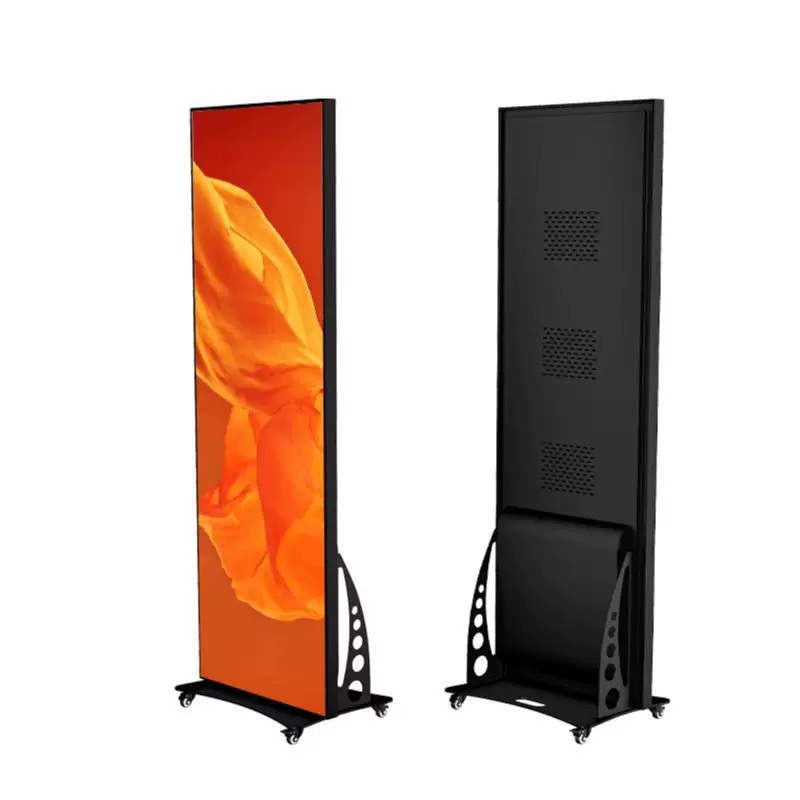
SightLED is a professiona LED display manufacturer focusing on the research and development and production of LED display technology. We provide two technical solutions covering SMD and GOB display.
SightLED LED display poster solution also has the following features:
- Intelligent control: support remote control and content management.
- Energy saving and environmental protection: use high-efficiency LED light sources and intelligent energy-saving technology to reduce energy consumption.
- Multi-screen splicing: support 6 advertising postersto become a large screen.
- Customized service: Provide customized services of size, resolution, brightness and other parameters according to customer needs to meet the needs of different application scenarios.
Click here to know more poster produts
Conclusion
SMD Poster and GOB LED screen Poster have their own advantages and disadvantages. They are suitable for different application. SMD display Poster has excellent display effect and low cost, and it dominates in indoor and semi-outdoor environments with good protection conditions; while GOB Poster has excellent protection performance and low maintenance cost. It is more competitive in outdoor environments with high protection requirements. We can provide 2 solutions. If you need, you can contact us at will.
FAQs:
What’s the core technical difference between SMD and GOB LED Posters?
SMD technology mounts individual LED chips directly onto a PCB via wire bonding or flip-chip soldering, then adds a thin surface mask for basic coverage. GOB builds on SMD. After the SMD patching process, it coats the entire module with a special optical glue, which is cured under vacuum to form a rigid, integrated protective layer. This extra glue layer is the key technical distinction.
How do SMD and GOB differ in protection ratings?
SMD Posters typically have an IP43 rating. They offer only basic dust resistance and no reliable water protection. Thanks to full-coverage glue layer, GOB Posters achieve an IP65 rating. they’re fully dust-tight and can withstand low-pressure water jets, so It is good for most outdoor or high-humidity scenarios.
Why does GOB technology bring a wider viewing angle than SMD?
GOB’s optical glue layer has light-refracting properties that diffuse LED light more evenly, expanding the visible range. In laboratory tests using P1.86 dot pitch, SMD Posters have a horizontal viewing angle of 140°, while GOB Posters reach 160° horizontally.
How do SMD and GOB compare in terms of color consistency?
Color consistency is measured by ΔE (color difference value). Lower ΔE means less visible color variation. GOB Posters have a ΔE < 1.5, a level where the human eye can’t detect color differences, even across large display areas. SMD Posters have a ΔE < 2.5, which is still acceptable but may show slight color variance in high-detail or large-scale installations.
Which technology offers better contrast, and why?
Compared to 3000:1 SMD Posters, GOB Posters have superior contrast up to 5000:1. The reason is GOB’s glue layer. it reduces reflection of ambient light off the display surface, minimizing glare and making dark areas of the screen appear deeper.
What’s the initial cost gap between SMD and GOB for the same specifications?
For a common specification like P1.86 dot pitch, SMD Posters cost approximately $1500 per square meter. At the same dot pitch cost,GOB Posters cost around $2200 per square meter.
How do annual maintenance costs differ between SMD and GOB?
SMD Posters have higher annual maintenance costs, typically 8–12% of the equipment’s total value.
Which has a longer lifespan, and by how much?
At 70% brightness, SMD Posters last about 50,000 hours . It is roughly 5–7 years with daily use. GOB Posters last 80,000 hours (about 8–10 years) because the glue layer shields LED chips from environmental wear, slowing brightness decay.
How do SMD and GOB tolerate extreme temperatures?
SMD Posters operate reliably between -20℃ and 50℃, which works for most controlled indoor environments. GOB Posters have a wider temperature range: -40℃ to 60℃. The glue layer helps insulate components from temperature fluctuations. Therefore, GOB is suitable for outdoor use in cold winters or hot summers.
Can SMD Posters be repaired with single-point maintenance?
Yes. SMD technology supports single-point maintenance. if a single lamp bead fails, technicians can replace that specific bead without removing the entire module. however, GOB Posters require full module replacement if a component fails since the glue layer is integrated, individual parts can’t be accessed for repair.
Does GOB eliminate moiré, and why?
Yes. Moiré often occurs in SMD displays when fine details interact with pixel arrays. GOB’s glue layer diffuses light slightly, softening the edges of individual pixels and breaking up the pattern that causes moiré.
How do you choose the right dot pitch for SMD or GOB Posters?
You can Use the industry-standard formula: Minimum viewing distance (in meters) = Dot pitch (in mm) × 1000 ÷ (0.3–0.8). The coefficient depends on content: 0.3 for text and 0.8 for video . For example, P1.25 SMD display works for 1.5–4m viewing distances, while P2.5 GOB poster is ideal for 3–10m .
When should you choose GOB over SMD, and vice versa?
You can Choose GOB if the display is outdoors/semi-outdoor, in a humid/dusty space, in high-traffic areas, or needs 7×24 continuous operation.
You can Choose SMD if your budget is tight like under $2000/m², the installation is in a stable indoor environment.