If you’re in the LED rental business, you’ve probably heard the terms “public mold” and “private mold”. At first glance, they might look similar,after all, both are rental LED panels used for events, exhibitions, and performances. But dig a little deeper, and you’ll find that the gap between them goes far beyond appearance. So, which one is right for my business? Is the cheaper public mold the best bet for beginners, or is the more expensive private mold a worthwhile long-term investment?
What Are Public Mold Rental LED Screens?
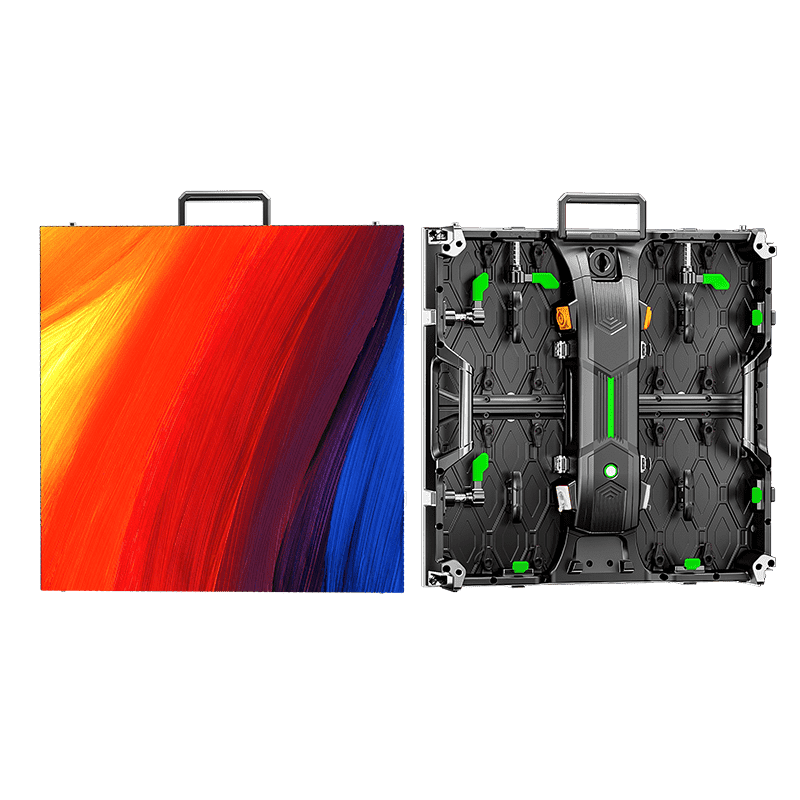
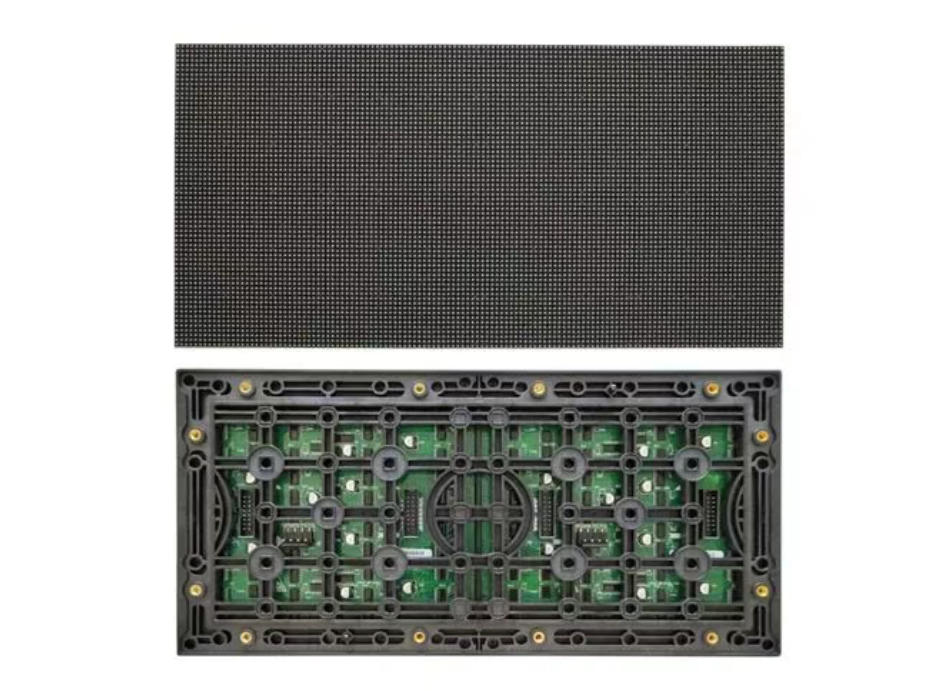
Public mold ,also known as “common mold” rental LED display are industry-standard panels. They use a universal design shared by hundreds of LED display manufacturers. You can think of them as the plain white T-shirts of the LED rental , sam shape, same materials, and no unique features to set them apart. There’s no patent protection on the design, which means any LED display factory can purchase the mold, source the basic components, and produce identical panels.
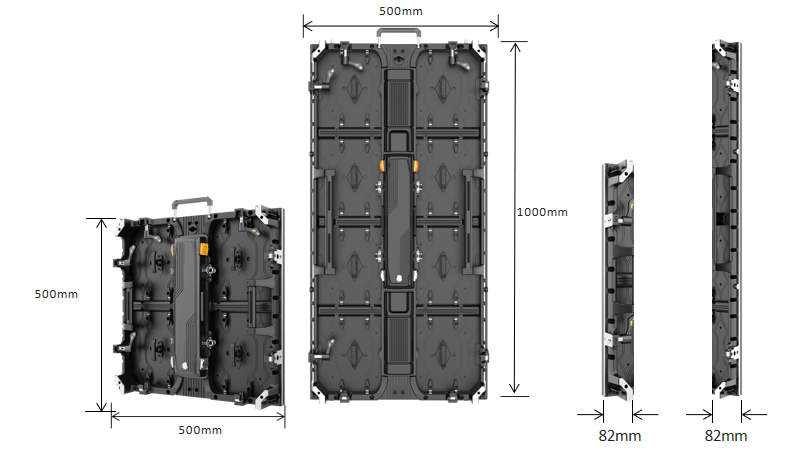
The most common size for public mold rental screens is 500×500mm, though some LED display manufacturers may offer slight variations ,like 500×1000mm, but the core design remains the same.
This universality is both a strength and a weakness. On the one hand, it means public mold screens are widely available. You can easily find suppliers, replace broken panels, or expand your inventory without worrying about compatibility issues. On the other hand, this lack of uniqueness means you’ll be competing with dozens of other rental companies.
Public mold screens are built to a budget. LED display Manufacturers cut costs by using low-cost materials and basic components: plastic handles, thin metal frames, and generic LED chips. The focus is on producing as many panels as possible at the lowest price point, precision, or performance. For small rental businesses, it is a good choice.
What Are Private Mold LED Rental Screens?
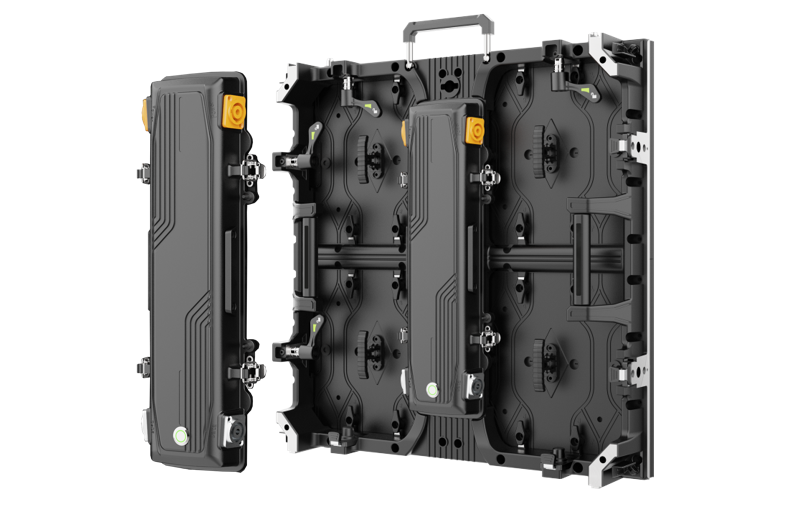
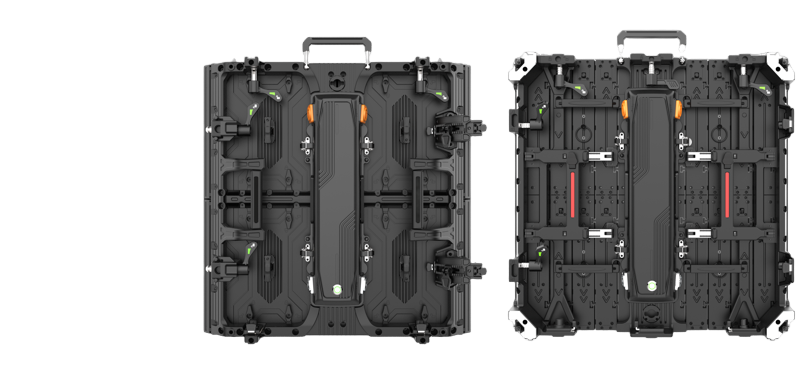
Private mold rental LED screens are the opposite of public mold. They’re designed and developed entirely by a single brand, with no shared design elements with other manufacturers. Brands invest heavily in R&D to create a unique mold. From the shape of the cabinet and the design of the locks to the position of the ports and the layout of the LED chips, you will find many difference.
You can think of private mold screens as high-end custom clothing. It is tailored to perfection, with unique details that set them apart from off-the-rack options. Every aspect of the panel is designed with a specific purpose: better stability, easier installation, faster maintenance, or superior image quality.
For example, some private mold cabinets feature a curved design to seamless splicing into arc or irregular shapes, while others have reinforced handles and locks built to withstand frequent transportation and installation.
Private mold screens are built for quality, not just quantity. LED display Manufacturers use high-grade materials, such as thick stainless steel, cast aluminum, and premium LED chips to ensure durability and performance.
The focus is on creating a product that can withstand the rigors of rental work ,while delivering consistent, high-quality visuals. It comes with a higher price, but it also offers benefits to help rental businesses win bigger clients and reduce long-term costs.
Key Differences Between Public Mold and Private Mold LED Rental Screens
Now that we’ve defined both types, let’s dive into the specific differences. These differences affect everything from installation time and maintenance costs.
Cabinet Precision and Splicing Effect
One of the most noticeable differences between public and private mold screens is the precision of the cabinet and the quality of the splicing. Public mold cabinets are mass-produced with minimal quality control, so the dimensions are often inconsistent. When you splice multiple public mold panels together, gaps between the cabinets are common. Sometimes large enough to fit a small piece of paper. These gaps cause “bright and dark lines”on the screen, which are distracting and unprofessional. For clients hosting high-end events ,like concerts or corporate, this can be a dealbreaker.
on the other hand, Private mold cabinets are precision-engineered with tight tolerances. The cabinets are machined to exact specifications, so when you splice them together, the gap is controlled to less than 0.1mm. It is barely visible to the naked eye. This seamless splicing creates a single, uniform display. For critical events ,like fashion shows, sports events, or large-scale conferences, this precision is non-negotiable.
Durability and Component Quality
Rental screens take a beating. They’re loaded and unloaded from trucks, carried up stairs, set up and broken down multiple times per week, and exposed to dust, moisture, and occasional impacts. The durability of the components directly affects how often you’ll need to repair or replace panels, and how much money you’ll spend on maintenance.
Public mold screens use cheap, low-quality components to keep costs down. Plastic handles often break with a little force, locks become loose after 20-30 uses, and the solder pads are fragile. Even a small bump during transportation can cause them to fall off. Repairing a broken handle or a loose lock might take an hour or two, but fixing a damaged solder pad can take half a day or more, so, you may miss a rental deadline or lose a client.
Private mold screens use high-quality, reinforced components. Handles are made of thick stainless steel or cast aluminum. They can be pulled hard without breaking. Locks are designed to withstand repeated use and impacts, so they stay tight even after hundreds of events. Solder pads are protected with an anti-collision design, so even if an LED chip falls off, the solder pad remains intact. Therefore, repairs can be done in as little as two minutes.
Cost:
Cost is often the first factor rental business owners consider. Public mold screens are significantly cheaper upfront. It is usually 20%-50% less expensive than private mold screens. For mainstream models like P3.91 or P4.81, the price difference is typically 30%-40%. For small-pitch screens ,like P2.6 or custom designs, the gap can be 50% or more.
But upfront cost is only part of the story. Public mold screens have much higher long-term maintenance costs. On average, annual maintenance costs for public mold screens account for 15%-20% of the original purchase price. Broken handles, loose locks, damaged solder pads, and failed LED chips add up quickly. Sometimes, the cost of repairing a few panels is enough to buy a new small screen. Over time, these maintenance costs can eat into your profits.
Private mold screens, while more expensive upfront, are much cheaper to maintain. durable components mean fewer breakdowns, and when repairs are needed, they’re faster and less costly. Annual maintenance costs for private mold screens are usually less than 5% of the original purchase price. They also last longer. The public mold screens typically last 2-3 years with heavy use, while private mold screens can last 5-6 years or more. When you calculate the total cost of ownership , private mold screens are often more cost-effective in the long run.
Total Cost of Ownership: Public vs Private Mold LED Screens
When comparing public mold and private mold LED screens, the upfront price is only part of the investment. A more accurate way to evaluate your purchase is to consider the total cost of ownership (TCO) over time.
- Public Mold Screen:
- Initial Cost: Lower (20%–50% cheaper)
- Annual Maintenance Cost: 15%–20%
- Lifespan: 2–3 years
- Downtime Risk: Higher
- Private Mold Screen:
- Initial Cost: Higher
- Annual Maintenance Cost: Less than 5%
- Lifespan: 5–6 years
- Downtime Risk: Lower
Over a 3–5 year period, many rental companies find that private mold LED screens actually have a lower total cost and better return on investment.
Customization and Versatility
Public mold screens are one-size-fits-all. There’s no room for customization. They come in standard sizes and configurations, so you’re limited to using them for basic, flat displays. If a client asks for a curved screen, an irregular shape, or a custom size, you’ll be out of luck with public mold panels.
Private mold screens are designed for customization. Brands can tailor the cabinet design to meet specific needs, such as curved cabinets for arc displays, modular designs for irregular shapes, or custom sizes for unique event spaces. Therefore, you can take on more complex projects that public mold screens can’t handle. It also lets you differentiate your services from competitors.
| Feature | Public Mold | Private Mold |
|---|---|---|
| Price | Lower | Higher |
| Cabinet Precision | Medium | High |
| Splicing Effect | Possible visible gaps | Seamless |
| Durability | Medium | High |
| Maintenance Cost | High | Low |
| Lifespan | 2-3 years | 5-6 years |
| Customization | None | Flexible |
| Target Market | Entry-level | High-end rental |
Which Should You Choose? Public Mold or Private Mold?
The answer depends on your business stage, budget, and client base. There’s no “one-size-fits-all”solution. Both public and private mold screens have their place in the LED rental industry:
Choose Public Mold If:
• You’re a new rental business just starting out. If you have a tight budget and need to build your inventory quickly, you can choose public mold screens. They are a great entry point. They’re affordable, widely available, and suitable for small-scale events.
• You focus on small, low-budget events. If your clients are mostly small businesses, local exhibitions, store events, or township performances, public mold screens will meet their needs. These clients are often more concerned about price than image quality, so the lower upfront cost can help you win their business.
• You’re testing the market. If you’re not sure if the LED rental business is right for you, public mold screens let you test without a large investment. You can start small, learn the ropes, and scale up later if the business takes off.
Choose Private Mold If:
• You’re an established rental business with a steady client base. If you’re ready to move beyond small events and take on larger, higher-budget projects, you should use private mold screens. They’ll help you deliver better quality, win more high-end clients, and build a reputation for professionalism.
• You specialize in high-end events. If you work on concerts, sports events, corporate, fashion shows, or large-scale conferences, private mold screens are non-negotiable. These clients demand seamless visuals and reliable performance, and private mold screens deliver both.
• You want to differentiate your business. In a crowded market, private mold screens let you stand out from competitors. Your ability to offer custom designs and superior image quality. It will help you charge premium prices and increase your profits.
• You’re thinking long-term. If you want to minimize maintenance costs, reduce downtime, and get the most out of your investment, private mold screens are the better choice.
Final Thoughts:
Public and private mold LED rental screens isn’t just about upfront cost, it’s about long-term value. Public mold screens are great for beginners, but they come with higher maintenance costs and limited versatility. Private mold screens are a bigger investment upfront, but they offer better durability, superior performance, and more customization options.
As a rental business owner, your goal is to make money, so you should choose the right tools for the job. If you’re just starting out, public mold screens can help you get started. But as your business grows, investing in private mold screens will be one of the best decisions you make. They’ll help you win bigger clients, reduce stress, and build a sustainable business that thrives for years to come.
FAQs:
Q1: Are public mold LED screens compatible with other brands’ public mold panels?
A: Yes, most public mold panels use the same cabinet,but the module is different.
Q2: Can private mold screens be repaired by any technician?
A: While basic repairs can be done by any technician, more complex repairs may require brand-specific parts or expertise.
Q3: How much does a public mold P3.91 LED rental screen cost?
A: Prices vary by LED display manufacturer, but a public mold indoor P3.91 panel typically costs $600-$800 per square meter, while a private mold P3.91 panel costs $800-$950 per square meter.
Q4: Do private mold screens come with a warranty?
A: Yes, It comes with a 2-3 year warranty, while public mold screens usually have a 1-year warranty .
Q5: Can public mold screens be used for outdoor events?
A: Yes, they are outdoor screens. For frequent outdoor use, private mold is better.
Q6: How long do public mold screens last?
A: With heavy rental use, public mold screens typically last 2-3 years before needing significant repairs or replacement.
Q7: Can private mold screens be customized to any size?
A: We offer custom sizes for private mold screens.
Q8: Are private mold screens heavier than public mold screens?
A: Sometimes. Private mold screens use thicker, more durable materials, so they may be slightly heavier. But the difference is usually minimal about 1-2kg per panel.
Q9: Do public mold screens have worse image quality?
A: Not necessarily. image quality depends on the LED chips. But public mold screens often use lower-grade chips, so they may have lower brightness or color accuracy than private mold screens.
Q10: Can I mix public and private mold screens in a single display?
A: It’s not recommended. Public and private mold screens have different cabinet sizes and splicing precision, which will cause gaps and uneven visuals.
Q11: Is it worth upgrading from public to private mold screens?
A: Yes, if you’re taking on higher-budget events or want to reduce maintenance costs. The upgrade will pay for itself in better client retention and lower long-term expenses.
Q12: Where can I buy public or private mold LED rental screens?
A: Public mold screens are available from most LED manufacturers and wholesalers. You can buy private mold screens from us.