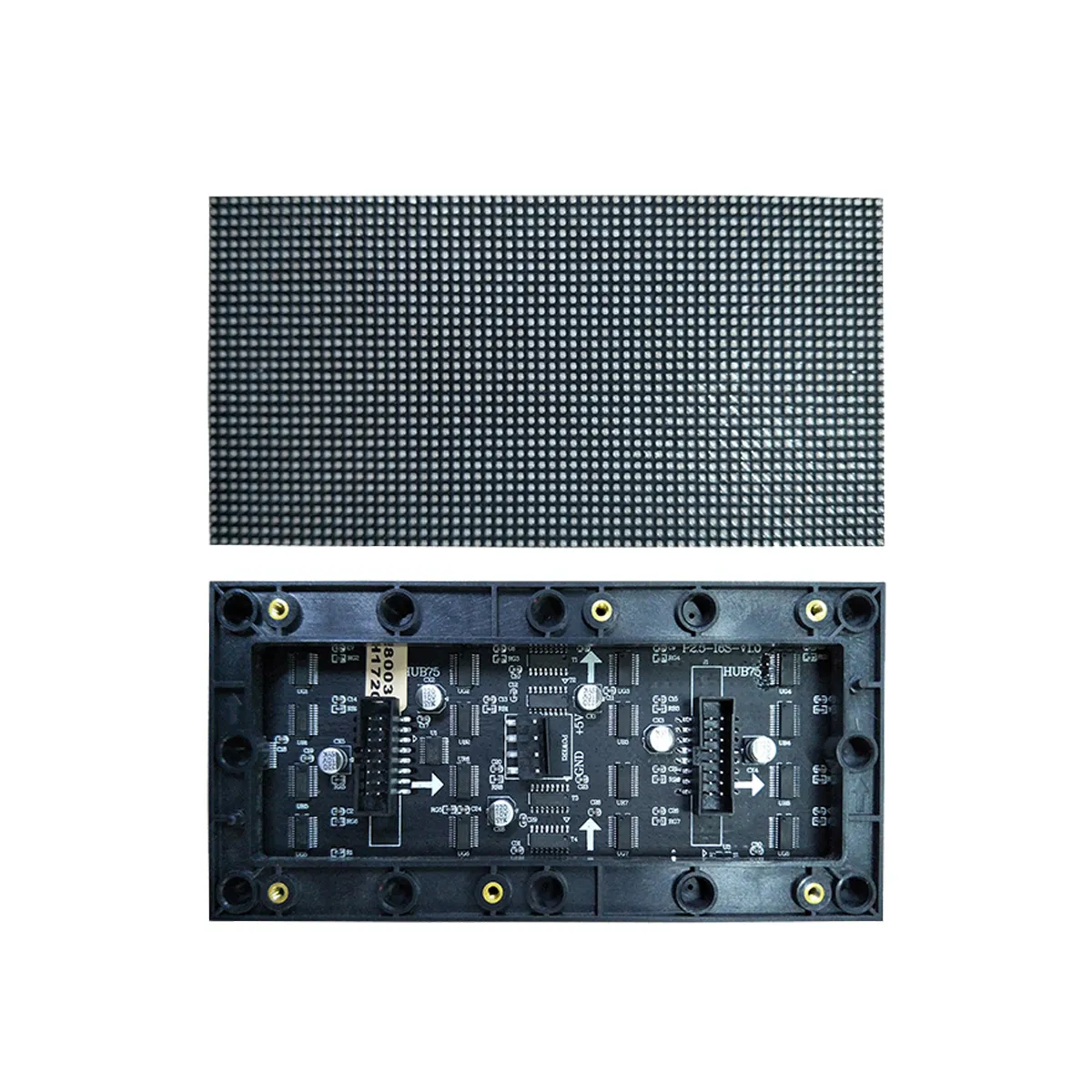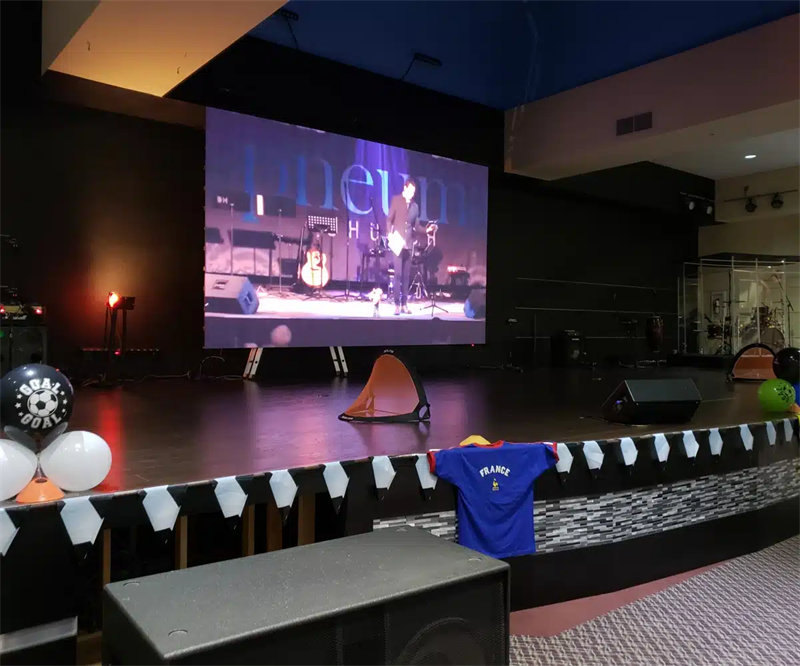
If you’re looking for seamless 4K/8K resolutions in compact spaces, you can consider a P0.9 indoor LED display. However, the price can be daunting. P0.9 panels vary wildly from $3,000 to over $12,000 per square meter. And just like with any fine-pitch LED, the panel cost is only the beginning. Many buyers underestimate the additional expenses for control systems, precision installation, and long-term maintenance, leading to budget overruns of 40% or more. Today, we’ll will guide you the real 2026 price for P0.9 displays.
2026 P0.9 Indoor LED Display Core Price Reference

The table below summarizes the latest P0.9 panels (screen only, FOB China). Prices are heavily influenced by packaging technology, driver ICs, and cabinet precision.
| Configuration Level | Core Components (LED / IC / Cabinet) | Estimated Unit Price (USD/sqm) | Typical Applications |
|---|---|---|---|
| Economic (Standard) | Domestic LEDs + Standard Refresh IC + Steel / Basic Die-Cast Cabinet | 3,000–4,500 | Digital art displays, hotel lobbies, basic corporate lobbies |
| Professional (Pro) | Gold-wire LEDs + High-refresh Driver IC (3840Hz+) + Ultra-Precision Die-Cast Cabinet | 5,000–7,500 | Broadcast studios, control rooms, luxury retail, corporate boardrooms |
| Flagship (Elite) | COB / Flip-Chip COB + 7680Hz Refresh + Energy-Saving Common Cathode + Micro-Adjustment | 8,000–12,000+ | XR virtual production, military command centers, high-end museums, 8K home theaters |
Note: Prices above are for the display panels only. They do not include control systems, structural installation, shipping, or taxes. The together can add 35~50% to your total project cost.
Five Technical Dimensions affect P0.9 LED screen price
Here’s what you’re paying for and why it matters.
LED Packaging:
- SMD: At P0.9, traditional SMD is extremely challenging to manufacture with high yield. It’s rarely used in new premium projects.
- COB : The industry standard for P0.9. LEDs are directly mounted on the PCB and encapsulated as a whole. It can offer superior protection, heat dissipation, and contrast. Adds 30–50% over SMD but is essential for reliability at this pitch.
- Flip-Chip COB: An advanced COB variant with no bonding wires, even better thermal performance, and ultra-high reliability. Adds another 20–30% but is the choice for mission-critical 24/7 operations.
Driver IC & Refresh Rate:
- 3840Hz: Sufficient for most indoor LED display applications, including corporate and retail.
- 7680Hz: Eliminates any visible scan lines, even under high-speed cameras. For broadcast studios, XR stages, or any environment where the screen will be filmed. Adds $500–$800 per sqm. It is a worthwhile investment for professional video production.
Cabinet Precision & Flatness
For 0.9mm pitch, even micron-level misalignments cause visible seams. Premium cabinets feature:
- CNC-machined die-cast aluminum with ±0.1mm flatness tolerance.
- Six-axis adjustment systems for micro-alignment between cabinets.
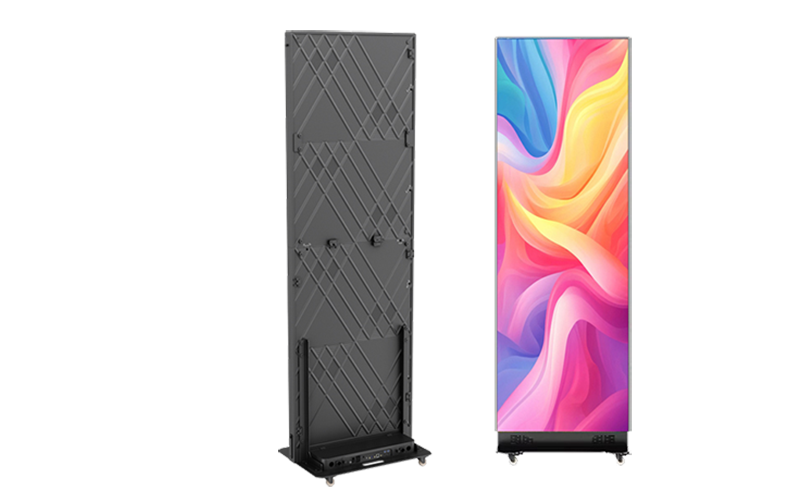
- Ultra-thin profiles (as slim as 30mm) to blend into high-end interiors.
- Cost impact: Precision cabinets add 20–30% over standard designs, but without them, your expensive P0.9 screen will look like a patchwork of tiles.
Common Cathode Energy–Saving Technology
P0.9 LED walls pack millions of LEDs into a small area. It can generate significant heat. Common cathode driving reduces power consumption by 25~40% and lowers operating temperatures, extending LED life. Adds 10–15% upfront. However, For large installations, the electricity savings often recoup the extra cost within two years.
LEDs Wire
At P0.9, copper wire bonding is simply not reliable enough. As a Reputable LED display manufacturers, SightLED use 100% gold wire or, in flip-chip COB to eliminate wires entirely. Any attempt to cut costs here will lead to premature failures and expensive module replacements.
How to Calculate the Total Cost of a P0.9 LED Video Wall
The price per square meter provides only a rough estimate. If you want to konw the total project budget, you also consider screen size, system configuration, and installation requirements. Below are two examples.
Example 1: Executive Boardroom LED Wall
Screen size:2.7m × 1.5m
Total area:4.05 sqm
Total estimated cost: $19,800 – $34,900
| Item | Estimated Cost |
|---|---|
| P1.5 LED panels | $4,000 – $7,000 |
| Control system | $500 – $1,000 |
| Installation structure | $400 – $800 |
| Cables and accessories | $200 – $400 |
Example 2: 4K P0.9 LED Video Wall
A true 4K resolution LED wall requires about 3840 × 2160 pixels.
For a P0.9 pixel pitch, the typical screen size required is approximately:3.46m × 1.94m
Total area:6.7 sqm
Total project budget:$33,800 – $62,000
| Item | Estimated Cost |
|---|---|
| P1.5 LED panels | $28,000 – $45,000 |
| Video processor | $1,500 – $2,500 |
| Control system | $800 – $1,200 |
| Installation structure | $3,000 – $5,000 |
LED Screen Size & Resolution Calculation for P0.9 Displays
When planning a P0.9 LED video wall, many buyers want to know:
- How large should the screen be?
- How many square meters are needed for 4K?
- How is LED resolution calculated?
Below is a simple explanation used by most LED engineers.
LED Display Resolution Formula
The resolution of an LED display depends on the pixel pitch and screen size.
Basic calculation formula:
- Resolution Width = Screen Width ÷ Pixel Pitch
- Resolution Height = Screen Height ÷ Pixel Pitch
For example, with a P0.9 LED display:
Pixel pitch = 0.9 mm (0.0009 m)
Example: 4K P0.9 LED Display Size
To achieve 4K resolution (3840 × 2160 pixels):
- Screen width calculation:3840 × 0.9 mm= 3456 mm= 3.456 meters
- Screen height calculation:2160 × 0.9 mm= 1944 mm= 1.944 meters
Final screen size:3.46 m × 1.94 m
Total area:≈ 6.7 sqm
This means a 4K P0.9 LED video wall usually requires about 6–7 square meters.
Example: 8K P0.9 LED Display Size
For 8K resolution (7680 × 4320 pixels):
- Screen width:7680 × 0.9 mm= 6.91 meters
- Screen height:4320 × 0.9 mm= 3.89 meters
Total area:≈ 26.9 sqm
Real-World Budget Guide : A 15㎡ P0.9 Project Example
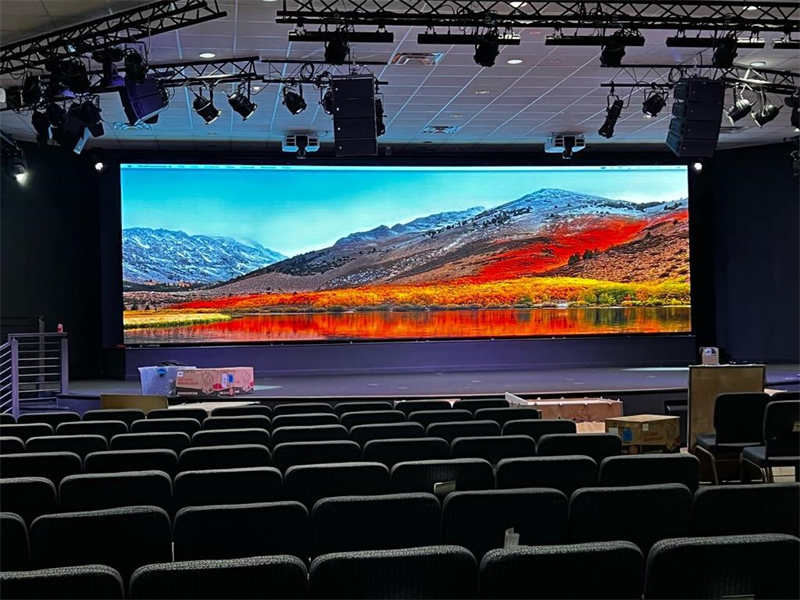
Let’s put theory into practice. Imagine you need a 15㎡ P0.9 screen for a corporate boardroom. Below is a complete line-item budget based on actual 2026 quotes for a professional-grade system.
| Item | Description | Cost (USD) |
|---|---|---|
| LED Panels | 15㎡ × $6,500 (Pro COB, 7680Hz, common cathode) | $97,500 |
| Control System | Sending card + receiving cards (Novastar H series, supports 8K input) | $6,500 |
| Video Processor | 8K multi‑window processor with HDR and 3D LUT | $4,500 |
| Installation Structure | Precision wall mount with micro‑adjustment brackets | $7,200 |
| Power Distribution Cabinet | Intelligent PLC‑controlled, surge protection, remote monitoring | $2,000 |
| Cables & Accessories | Fiber optic HDMI 2.1, CAT6A, high‑capacity power cables | $1,500 |
| Shipping & Insurance | Air freight to Europe + all‑risk insurance | $4,800 |
| On‑site Installation | Factory engineer travel & labor (2 days) | $3,000 |
| Spare Modules | 2% spare parts (4 modules) | $2,600 |
| Taxes & Duties | Varies by country – assume 10% | ~$12,000 (if applicable) |
| TOTAL PROJECT COST | $136,600 – $148,600 |
Key Insight: The panels themselves represent only 65–70% of the total project cost. A quote that only includes the panels is dangerously incomplete.
The Hidden Trap: 5–Year Total Cost of Ownership (TCO) Comparison
Let’s compare two 15㎡ installations over five years: one conomic level with SMD-like quality and one Professional COB.
The quality system costs more over five years? Yes, but look closer:
The quality system includes common cathode energy saving, cutting electricity by 30%. More importantly, the cheap system’s high failure rate.
ROI Perspective: How a P0.9 Screen Pays for Itself (Luxury Retail Example)
For high-end businesses, a P0.9 display isn’t just a cost, it’s a revenue driver. You can Consider a luxury watch boutique in Paris installing a 10㎡ P0.9 video wall to showcase products and brand films.
Our Global P0.9 LED display Case Studies
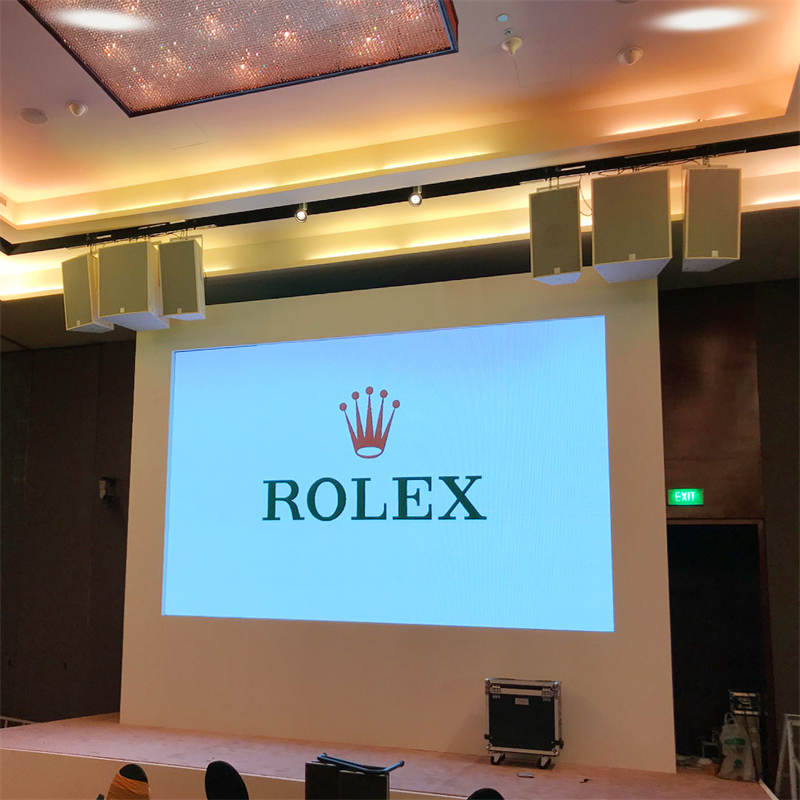
Dubai Luxury Retail Flagship
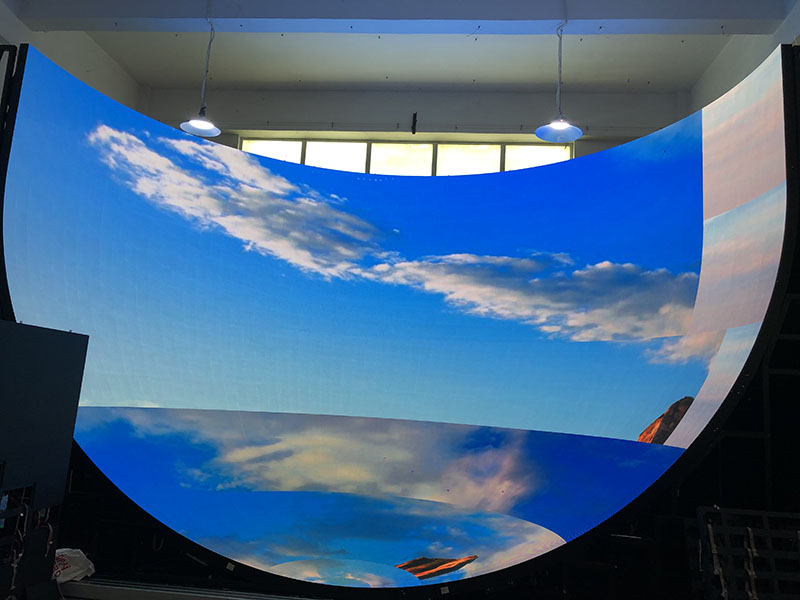
A 25㎡ P0.9 curved video wall immerses shoppers in a 360° brand experience. It reduces dwell time by 40%, sales of featured products doubled.
Singapore Government Command Center
A 40㎡ P0.9 wall displays real-time data and surveillance feeds 24/7. Zero failures in 18 months; operators praise the seamless, fatigue-free viewing.
Los Angeles Virtual Production Studio
A 100㎡ P0.9 COB LED volume replaces green screens. The 7680Hz refresh eliminates any moiré, saving thousands in post-production cleanup.
Conclusion:
A P0.9 LED display is the ultimate visual experience, but only if it’s built and installed correctly. By understanding the above information, you can make an informed decision. Ready to bring your vision to life? Contact us today.
FAQs:
What’s the price difference between P0.9 and P1.2? Is upgrading worth it?
P0.9 LED screen costs 80–120% more than P1.2. If viewing distance is under 2 meters, or if you need true 4K in a small space, P0.9 is worth the premium. For distances >3m, you can use P1.2 LED display.
Why do some P0.9 screens have better color uniformity than others?
It comes down to LED binning and calibration. SightLED use strictly binned LEDs and factory calibration per module to ensure consistent color across the entire wall.
How much does a P0.9 LED display cost per square meter?
The average P0.9 LED display price ranges from $4,000 to $9,000 per square meter.
Why is P0.9 LED display so expensive?
P0.9 displays require ultra-high pixel density and precise manufacturing, which increases production costs compared with larger pixel pitches.
What is the minimum viewing distance for P0.9 LED displays?
The minimum viewing distance is about 0.9 meters.
Is P0.9 better than P1.2 LED display?
P0.9 provides higher resolution and smoother images, but P1.2 is usually more cost-effective for viewing distances above 2 meters.
How many square meters is a typical P0.9 LED wall?
Most installations range between 4 and 15 square meters.
How much power does a P0.9 LED display consume?
Average power consumption is usually 250–350W per square meter during normal operation.
Can a P0.9 LED display achieve 4K resolution?
Yes. A 4K P0.9 LED wall usually requires a screen size of about 3.46m × 1.94m.
Where are P0.9 LED displays commonly used?
They are widely used in command centers, broadcast studios, control rooms, and executive boardrooms.
Is COB better than SMD for P0.9 displays?
COB technology offers better protection and durability, but it usually costs more than SMD.
How much does a 4K P0.9 LED wall cost?
A common 4K P0.9 LED wall costs between $33,000 and $60,000.
Can P0.9 LED displays replace LCD video walls?
Yes. LED displays offer seamless images, higher brightness, and flexible screen sizes, making them a strong alternative to LCD walls.
What refresh rate is recommended for P0.9 LED displays?
Most professional installations use 3840Hz or 7680Hz refresh rate for smoother visuals and better camera performance.
Are P0.9 LED displays suitable for meeting rooms?
Yes. Thanks to Their ultra-fine pixel pitch, they are perfect for high-end conference rooms and executive boardrooms.