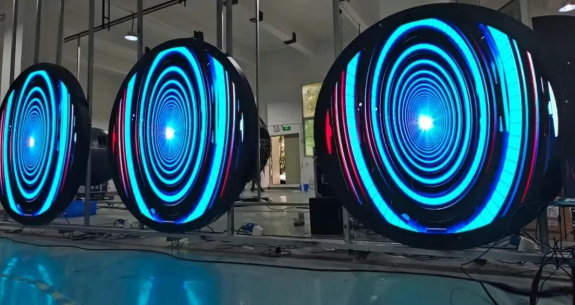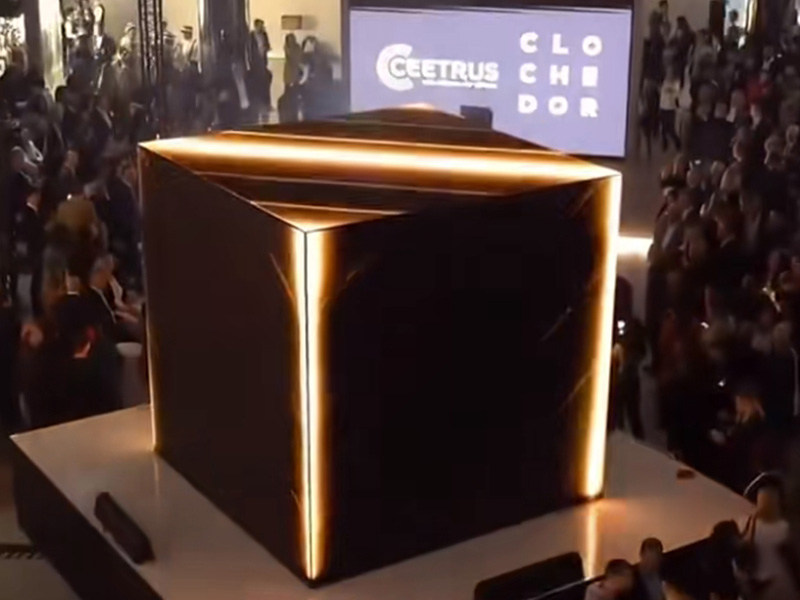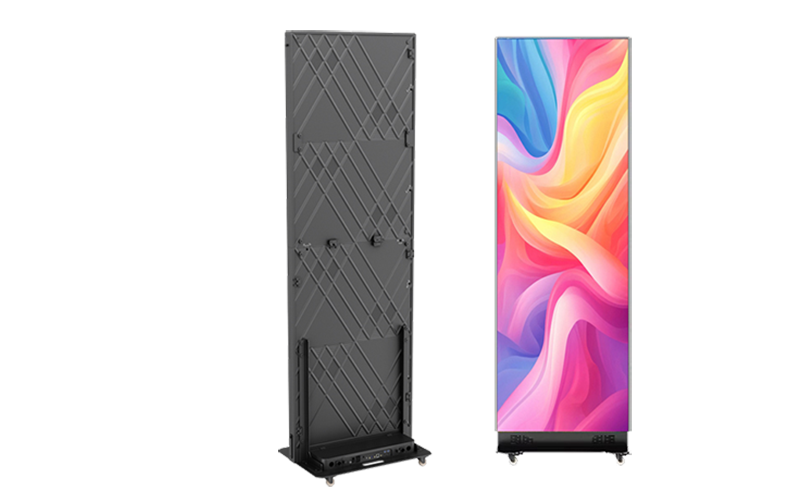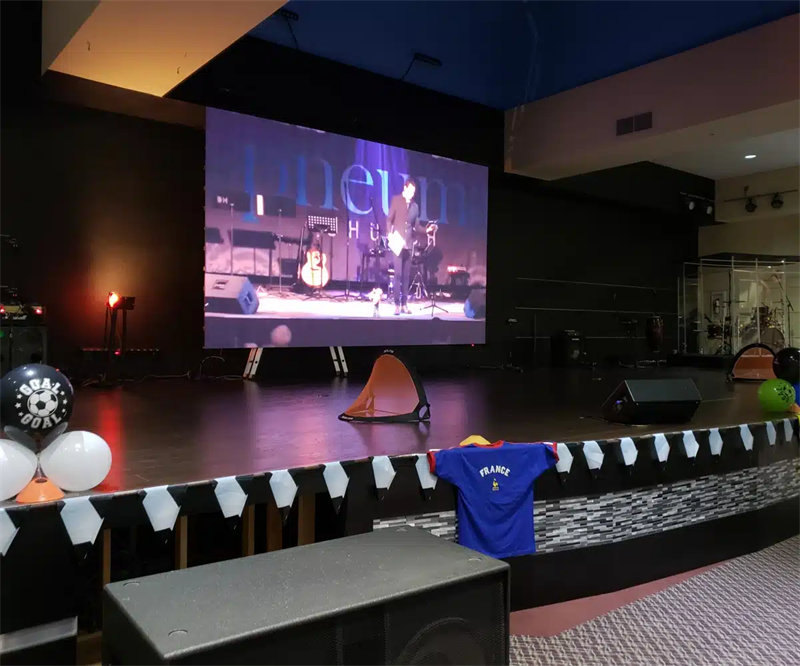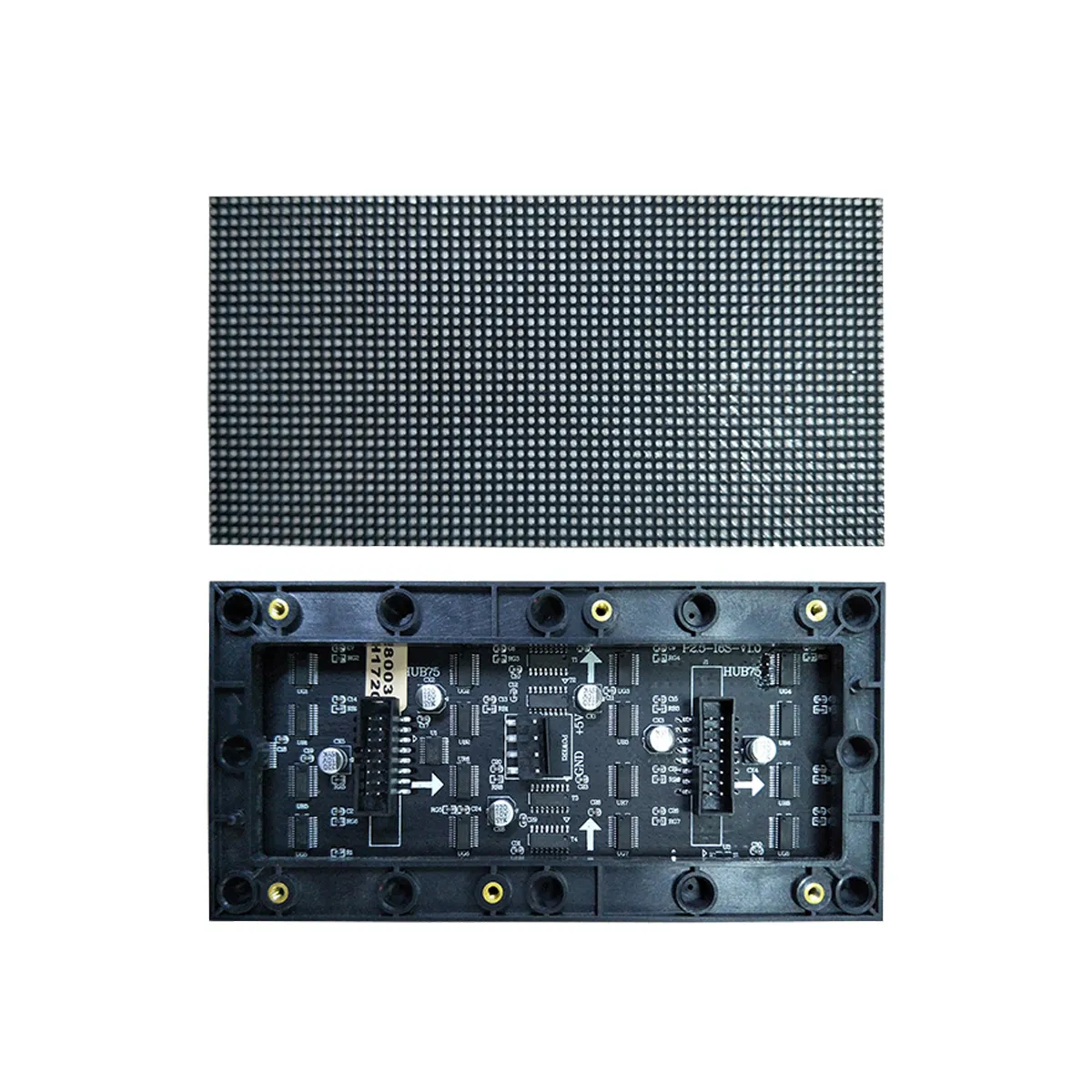
P2.5 LED display is the most commonly used indoor LED screen. With its high resolution, high brightness, high contrast and excellent color performance, it has been widely used in advertising media, conference display, stadiums, performing arts stages and other scenes. However, when you buy a P2.5 LED display, you will often find that the price difference is huge, making it difficult to choose. So, what exactly causes the huge difference in the price of P2.5 LED display? SightLED will guide you these details.
Why is P2.5 LED display price Difference?

Lamp quality and cost
As the core component of LED display, the quality of LED lamp beads directly determines the display effect and LED display service life. In the market, the P2.5 LED display lamp are mainly divided into two types: SMD 2121 lamp beads and SMD 1515 lamp beads.
SMD 2121 lamp beads: It has larger size and wider luminous area, so this type of lamp beads can bring higher brightness and better display effects. The materials and production processes of SMD 2121 lamp beads are more advanced, and have more stable luminous performance. Therefore, if the SMD 2121 P2.5 LED display cost is relatively high.
SMD 1515 lamp beads: It has Smaller size, although the brightness and display effect are slightly inferior to SMD 2121 lamp beads, but with its smaller size and lower production cost, the SMD 1515 P2.5 LED display is more competitive price. However, it should be noted that if the manufacturing process is not sophisticated enough, the 1515 lamp beads may have problems such as uneven light emission and color distortion, which will affect the display effect.
Scanning method and cost
The scanning method is one of the important factors affecting the price and performance of the P2.5 LED display. At present, there are mainly two scanning methods on the market: 32 scans and 64 scans.
32 scans: If P2.5 uses 32 scans, it means that more LED lights are lit at the same time, so it can bring a higher refresh rate and a more stable display effect. Especially when displaying high-speed moving images, the 32-scan P2.5 screen can effectively reduce blur and smearing, and improve the clarity and smoothness of the picture. However, high scanning frequency also increases production costs, so the 32-scan P2.5 LED display price is relatively high.
64-scan: Compared with 32-scan, 64-scan P2.5 LED screen has a lower scanning frequency, and the number of LED lights lit at the same time is also reduced by half. Therefore, 64-scan P2.5 LED display has more advantages in price. However, low scanning frequency may cause problems such as reduced brightness, performance loss and grayscale loss, which will affect the display effect. Especially in terms of refresh rate and display effect, 64-scan P2.5 LED screen will be inferior to 32-scan.
Visual effect
Visual effect is not only one of the important indicators to measure the quality of P2.5 LED display, but also one of the aspects that customers pay most attention to. Different scanning methods, lamp quality, and manufacturing processes and technologies will directly affect the visual effect.
Influence of scanning method: As mentioned above, 32-scan P2.5 LED display is superior to 64-scan in terms of refresh rate and display effect, and can bring clearer and smoother pictures. Therefore, in terms of visual effect, 32-scan P2.5 LED display has more advantages, but the price is also relatively high.
The influence of lamp bead quality: If the LED screen manufacturer uses high-quality Nationstar LED lamp beads from, then P2.5 LED video wall has higher brightness and better color performance. If you use more economical ulinseng lamp beads, there may be problems such as uneven light emission and color distortion, which will affect the visual effect. Therefore, the Nationstar high-quality lamp beads P2.5 LED display screen will also be more expensive.
The influence of manufacturing process and technology: Well-known LED screen manufacturers such as Sight LED use more advanced manufacturing processes and technologies to make every detail of our LED display screen reach the best state, which will increase the steps and inspection procedures and increase the corresponding costs. Using simpler manufacturing processes and technologies may cause various problems on the display screen, such as bright spots, dark spots, color blocks, etc., affecting the display effect.
Manufacturing process and technology
Different manufacturing processes and technologies will not only affect the display effect and service life , but also directly affect the production cost and price.
If GOB LED technology is used, it can not only significantly improve the waterproof performance of the display screen, but also the performance indicators such as brightness, contrast, color saturation and refresh rate, while reducing energy consumption and extending service life. However, these all require a lot of R&D costs and production equipment costs, which leads to a relatively high price for GOB P2.5 LED display.
Brand and after-sales service
Well-known brands, such as SightLED, have more complete R&D systems, production systems and after-sales service systems. Our LED screen quality, performance indicators, service life and other aspects have been strictly tested and verified. We also provide more complete after-sales services, such as technical support, repair services, warranty services, etc. Therefore, the price is usually higher.

Other cost factors:
In addition to the above factors, there are some other factors that will also affect the price of P2.5 LED display.
Core material: As mentioned above, the bracket material of LED lamp beads has a great influence on the thermal conductivity and electrical conductivity of the display. The copper bracket has a larger thermal conductivity, stronger thermal conductivity, faster heat dissipation, and a lower resistivity and better conductivity. Therefore, the copper bracket P2.5 LED display has more advantages in performance and stability, but the price is relatively high. The thermal conductivity and electrical conductivity of the iron bracket are relatively poor, which may affect the performance and service life of the display.
Auxiliary equipment and heat dissipation solutions: In addition to the display itself, if your area is very large and the installation environment is not easy to dissipate heat, you will also need some auxiliary equipment and heat dissipation solutions. Therefore, these will also directly affect the total cost of the P2.5 LED display.
P2.5 LED Display Module Price
If you’re looking for high-quality P2.5 LED display modules, we have a range of options to fit your needs and budget. Our LED display module can offer excellent display performance.The prices below are for reference only. If you need a prepared quote, please contact us.
160*80mm Economical P2.5 LED Display Module
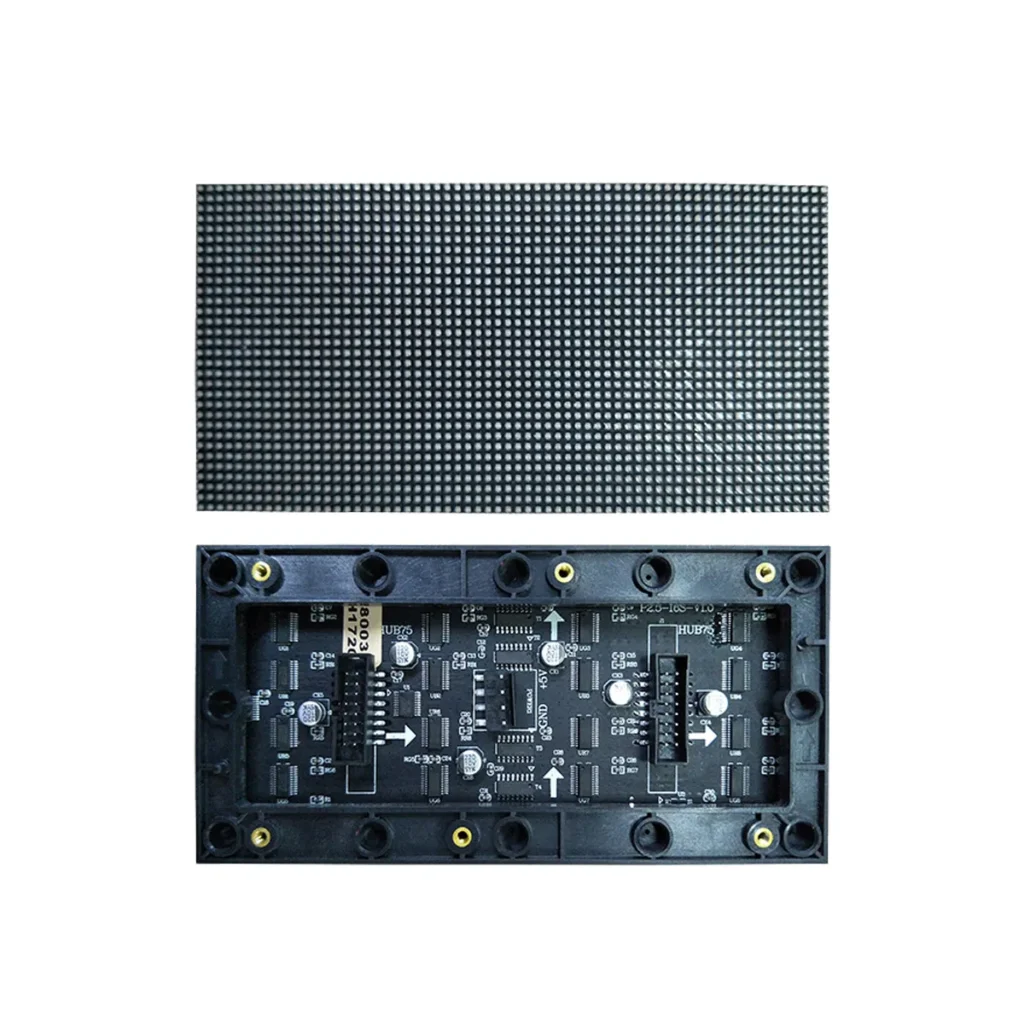
- LED+IC: HS/RS LED+DP/FM
- Pixel Pitch: 2.5mm
- LED Type: SMD1515
- Module Size: 160*80 mm
- Module Pixel: 64*32 Pixels
- $9.45
160*80mm Nationstar P2.5 LED Display Module
- LED+IC: NATIONSTAR+ICN
- Pixel Pitch: 2.5mm
- LED Type: SMD1515
- Module Size: 160*80 mm
- Module Pixel: 64*32 Pixels
- $15.25
160*160mm Economical P2.5 LED Display Module

- LED+IC: HS/RS LED+DP/FM
- Pixel Pitch: 2.5mm
- LED Type: SMD1515
- Module Size: 160*160 mm
- Module Pixel: 64*64 Pixels
- $10.55
160*160mm Nationstar P2.5 LED Display Module
- LED+IC: NATIONSTAR+ICN
- Pixel Pitch: 2.5mm
- LED Type: SMD1515
- Module Size: 160*160 mm
- Module Pixel: 64*64 Pixels
- $19.85
240*240mm Economical P2.5 LED Display Module
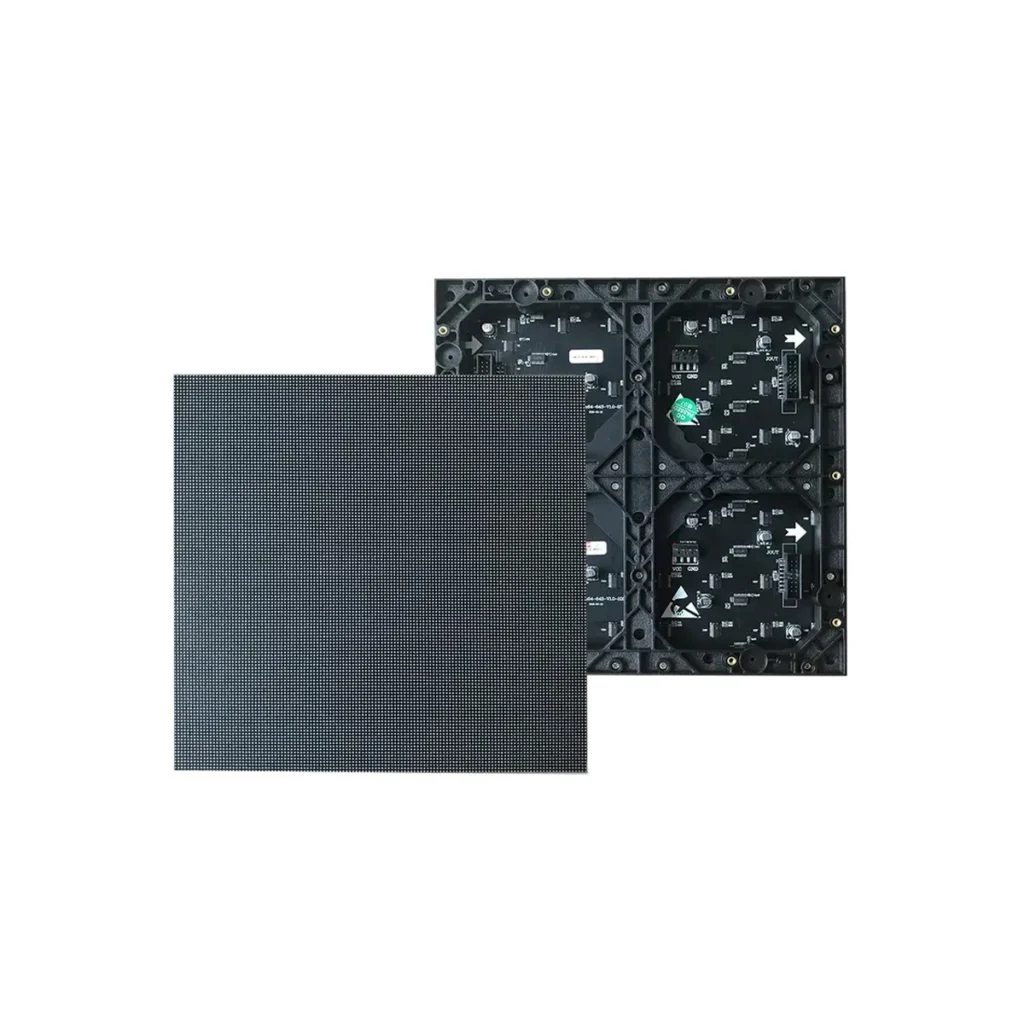
- LED+IC: HS/RS LED+DP/FM
- Pixel Pitch: 2.5mm
- LED Type: SMD1515
- Module Size: 240*240 mm
- Module Pixel: 96*96 Pixels
- $25.25
240*240mm Nationstar P2.5 LED Display Module
- LED+IC: NATIONSTAR+ICN
- Pixel Pitch: 2.5mm
- LED Type: SMD1515
- Module Size: 240*240 mm
- Module Pixel: 96*96 Pixels
- $41.75
320*160mm Economical P2.5 LED Display Module
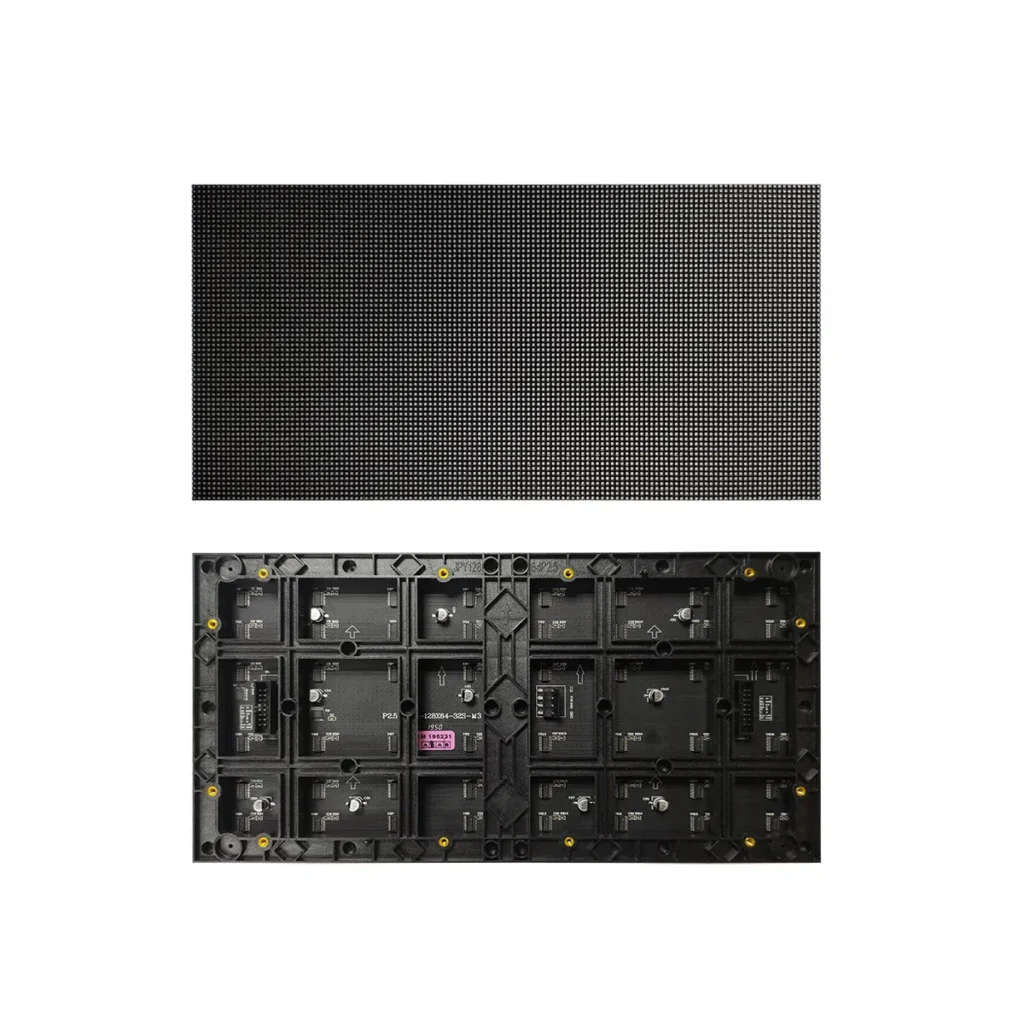
- LED+IC: HS/RS LED+DP/FM
- Pixel Pitch: 2.5mm
- LED Type: SMD1515
- Module Size: 320*160 mm
- Module Pixel: 128*64 Pixels
- $13.65
320*160mm Nationstar P2.5 LED Display Module
- LED+IC: NATIONSTAR+ICN
- Pixel Pitch: 2.5mm
- LED Type: SMD1515
- Module Size: 320*160 mm
- Module Pixel: 128*64 Pixels
- $30.75
P2.5 LED Display Price Per Square Meter:
While module prices provide a baseline,the cost per square meter is common. The industry standard module size of 320x160mm requires approximately 39 modules to cover one square meter.
Here is the calculated cost per square meter based on our latest module price:
Economy P2.5 LED Display Cost per sqm (HS/RS LED + 64-scan)
- Module Cost Calculation: $13.65 (per module) x 39 modules = $532.35 / sqm
- Estimated System Cost (including power supplies, cables, receiving cards): Add approx. $120 / sqm
- Total Estimated DIY Cost: ~$650 / sqm
- Best For: Temporary exhibitions, low-budget static signage, retail price tags where scanning frequency is less critical.
Standard High-Quality P2.5 LED Display Cost per sqm (Nationstar LED + 32-scan)
- Module Cost Calculation: $30.75 (per module) x 39 modules = $1,199.25 / sqm
- Estimated System Cost (including premium power supplies, receiving cards, and front-access LED frames): Add approx. $250 / sqm
- Total Estimated DIY Cost: ~$1,450 / sqm
- Best For: Corporate boardrooms, live streaming backgrounds, broadcast studios, high-end retail where camera compatibility and long-term reliability are required.
Budgeting for a 3m x 2m Conference Room Display Case Study
When customers search for “P2.5 LED display price,” they are looking for the total landed cost, not just the module price. Below is a realistic budget for a standard 6 square meter (3m Width x 2m Height) installation.
- Project Requirement: P2.5 LED Video Wall for Corporate Lobby/Meeting Room
- Screen Dimensions: 3.2m W x 1.92m H (6.14 sqm) – using 10×12 modules (320x160mm)
- Recommended Specification: Nationstar SMD1515, 32-scan, Novastar Control System
Detailed Bill of Materials & Labor Estimate:
- LED Modules (120 pcs of 320x160mm Nationstar P2.5): $30.75 x 120 = $3,690
- Power Supplies (5V 40A/60A units, quantity varies by layout): $280
- Receiving Cards (Novastar A5s or similar, Hub320 interface): $190
- Video Processor (Novastar VX400 or VX600 – Essential for seamless switching): $245
- Mounting Structure (Wall-mounted steel frame / aluminum rails): $450
- Main Cabling & Data Cables (Ethernet and 3-core power cables): $120
- Spare Parts Kit (2 spare modules, 1 spare PSU recommended): $85
- On-Site Installation Labor & Calibration (Estimated, varies by region): $1,200
Total Estimated Project Cost: $6,260 (Excluding freight and local taxes)
DIY Installation Alternative: If you have an in-house AV team capable of mounting the steel structure and configuring the Novastar software, you can reduce the project cost to approximately $4,900 (Materials Only).
2026 Insight: 32-Scan vs. 64-Scan – Why the Price Gap Matters for Video Performance
The scanning method directly impacts the visual result when viewed through a camera or smartphone. In 2026, with the prevalence of Zoom calls and social media live streaming, 32-scan modules are no longer just a “premium option”—they are a necessity for professional environments.
- 32-Scan P2.5: Delivers a refresh rate of ≥1920Hz. When you take a photo of the screen with an iPhone or professional camera, there are no black scan lines.
- 64-Scan P2.5: Typically achieves around 960Hz-1280Hz. While fine for the naked eye at a distance, it will show noticeable “water ripple” or “scan line” artifacts on camera feeds.
Recommendation: Unless the screen is strictly for text-only messages and will never be filmed, invest in the 32-scan version.
The Hidden Cost of Material Quality: Copper vs. Iron Bracket
A significant factor in the long-term reliability of a P2.5 LED display is the bracket material inside the LED lamp. Many economy modules use Iron Brackets to cut costs.
- Iron Bracket: Prone to rust and oxidation over 2-3 years, especially in humidity. This leads to dead pixels and “black spots” that cannot be repaired.
- Copper Bracket (Nationstar Gold Wire): Superior heat dissipation and corrosion resistance, ensuring brightness uniformity for over 5-7 years.
Pro Tip: You can test the back of the module connector pins with a magnet. If the magnet sticks strongly, the module contains iron bracket components. SightLED exclusively uses Copper Bracket technology in our Nationstar series to ensure zero pixel failure rate after 5,000 hours.
P2.5 vs Other Pixel Pitch LED Displays: Which Resolution Is Right for Your Project?
While P2.5 is often considered the “sweet spot” for indoor commercial displays, you also know its closest competitors: P3, P2, and P1.86. Below is a detailed technical and cost comparison based on 2026 market data.
Comparison Table: P2.5 vs. P3 vs. P2 vs. P1.86
| Specification | P3 LED Display | P2.5 LED Display | P2 LED Display | P1.86 LED Display |
| Pixels per Square Meter | 111,111 pixels | 160,000 pixels | 250,000 pixels | 289,000+ pixels |
| Optimal Viewing Distance | ≥3.0 meters (10 ft) | ≥2.5 meters (8.2 ft) | ≥2.0 meters (6.5 ft) | ≥1.8 meters (6 ft) |
| Typical Module Size | 192x192mm | 320x160mm | 256x128mm / 320x160mm | 320x160mm |
| Relative Cost per sqm | Low (450−800) | Medium (650−1,450) | High (1,100−2,200) | Very High ($1,800+) |
| Best Application | Large retail signage, Churches | Conference rooms, Retail windows | Control rooms, TV studios | Luxury showrooms, High-end broadcast |
P2.5 vs. P3 LED Display: When Saving Money Costs You Clarity
– Resolution Impact: Moving from P3 to P2.5 nearly doubles the pixel density from 111k to 160k pixels/sqm. This is immediately noticeable when displaying small text or detailed logos.
– Viewing Distance Reality: A P3 screen viewed at 2 meters will show visible “screen door effect”. P2.5 remains smooth and seamless at this distance.
– 2026 Market Verdict: The price gap between P3 and economy-grade P2.5 has narrowed significantly due to improved SMD 1515 manufacturing yields.
Recommendation: Unless the screen is over 50 square meters and always viewed from 5+ meters away, the upgrade to P2.5 is worth the modest price increase for future-proofing your content.
P2.5 vs. P2 LED Display: The Diminishing Returns Debate
– Visual Difference: The jump from P2.5 (160k dots/sqm) to P2 (250k dots/sqm) is noticeable but subtle in standard meeting room lighting. The human eye struggles to resolve the individual pixels of a P2.5 screen at 2.5 meters.
– Cabinet Compatibility: A crucial hidden cost factor is that P2.5. P2 modules often use different PCB layouts and IC drivers. You cannot simply mix P2 and P2.5 modules on the same receiving card setup without significant configuration and visual mismatch.
– Cost-Benefit Analysis: P2 modules are typically 60-80% more expensive per square meter than equivalent Nationstar P2.5 modules, yet require more expensive video processors to drive the higher bandwidth. Recommendation: Stick with P2.5 unless the screen is permanently installed at a viewing distance of less than 2 meters.
P2.5 vs. P1.86 LED Display: When Ultra-High Definition Is Necessary
– The “All-in-One” Alternative: For applications demanding P1.86 , many installers are now comparing the cost of a custom P1.86 LED wall against a pre-packaged 108-inch All-in-One LED Display. In many cases, the All-in-One unit is cheaper and easier to maintain than a custom-built P1.86 video wall.
– Content Consideration: P1.86 requires true 4K source content to look its best. If you are only displaying PowerPoint slides or 1080p Zoom calls on a P1.86 screen, you are not utilizing the extra pixels you paid for.
– Recommendation: P2.5 is the ideal solution for 90% of indoor commercial applications. P1.86 should be reserved for environments where the audience is within arm’s reach and the content is visually critical .
Summary:
P2.5 occupies the “Goldilocks Zone” of LED display technology. It provides sufficient resolution to eliminate the “grainy” look of P3 while avoiding the steep cost curve and high bandwidth requirements of P2 and P1.86. For conference rooms, houses of worship, and retail environments in 2026, P2.5 offers the highest ROI per square meter.
Conclusion
In summary, the P2.5 LED display price difference is the result of the combined effect of multiple factors. When you choose a P2.5 LED screen, you should pay more attention to the quality, performance, after-sales service. As a professional LED screen manufacturer, SightLED provides a variety of P2.5 LED screen solutions. If you need it, please feel free to contact us.
FAQs:
Q1: How much does a P2.5 LED screen cost per square meter in 2026?
A: As of April 2026, the cost ranges from $600 to $1,600 per square meter for materials. Fully installed systems average $1,000 – $2,200 per sqm.
Q2: What is the difference between P2.5 SMD 1515 and SMD 2121?
A: 1515 is the industry standard for P2.5 indoor modules due to its smaller pixel pitch compatibility. 2121 is physically larger and typically reserved for P3 or P4 outdoor screens. For P2.5 indoor, high-quality 1515 Gold Wire LEDs are optimal.
Q3: P2.5 32-scan vs 64-scan: Which one should I choose for video walls?
A: Choose 32-scan for video walls or camera broadcast (above 1920Hz refresh rate). Choose 64-scan only for static text or extremely tight budgets, as it produces visible scan lines on camera recordings.
Q4: How many P2.5 LED modules fit in one square meter?
A: With the standard 320x160mm module size, exactly 39.06 modules make up 1 square meter.
Q5: What is the best viewing distance for a P2.5 LED screen?
A: The optimal viewing distance is 2.5 meters (8.2 ft) or further. Closer than that, individual pixels may become visible to the naked eye.
Q6: Can I use P2.5 LED modules for outdoor rental events?
A: Standard P2.5 modules are NOT waterproof. For outdoor use, you must order a specific GOB coated P2.5 module to protect against moisture and accidental impact.
Q7: Why is the price of Nationstar P2.5 modules double the economy version?
A: Nationstar uses Gold Wire bonding and larger die chips, resulting in 30% higher brightness stability and significantly less color shift after 5,000 hours of use compared to budget LEDs.
Q8: What is the pixel resolution of a 320x160mm P2.5 module?
A: It is 128 pixels (Width) x 64 pixels (Height). That is 8,192 pixels per module.
Q9: How much power does a P2.5 LED module consume?
A: A standard 320x160mm P2.5 module consumes approximately 25W-30W at maximum brightness. Average video playback consumption is around 10W-12W per module.
Q10: What size cabinet is best for P2.5 installation?
A: For rental or easy front maintenance, you can use 640x480mm die-cast aluminum cabinets. For fixed wall installation, you can simply mount the 320x160mm modules directly on magnetic rails to save cost.
Q11: Are P2.5 LED modules compatible with Novastar receiving cards?
A: Yes. Most standard P2.5 modules use Hub75 or Hub320 interfaces, which are fully compatible with Novastar MRV or DH series receiving cards.
Q12: How do I calculate the total screen size based on modules?
A: Module Width = Number of Modules x 0.32m. Module Height = Number of Modules x 0.16m. Example: 10 modules wide x 10 modules high = 3.2m x 1.6m screen.
Q13: What is the typical lifespan of a P2.5 indoor LED display?
A: High-quality P2.5 modules using Nationstar LEDs have a half-brightness lifespan of 100,000 hours . Economy modules may show visible degradation after 30,000 hours.
Q14: Do I need a video processor for a small P2.5 screen?
A: Yes. Even for small screens, you need a processor ,like Novastar VX400 or VX600.
Q15: How do I clean a P2.5 LED module mask?
A: Use a soft anti-static brush or a microfiber cloth lightly dampened with 75% isopropyl alcohol. Never spray water or cleaning fluid directly onto the module surface while powered on.