Many people confuse XR and VP virtual production. They actually differ greatly in technology and application. SightLED explains the key distinctions below.
What is XR Virtual Production?
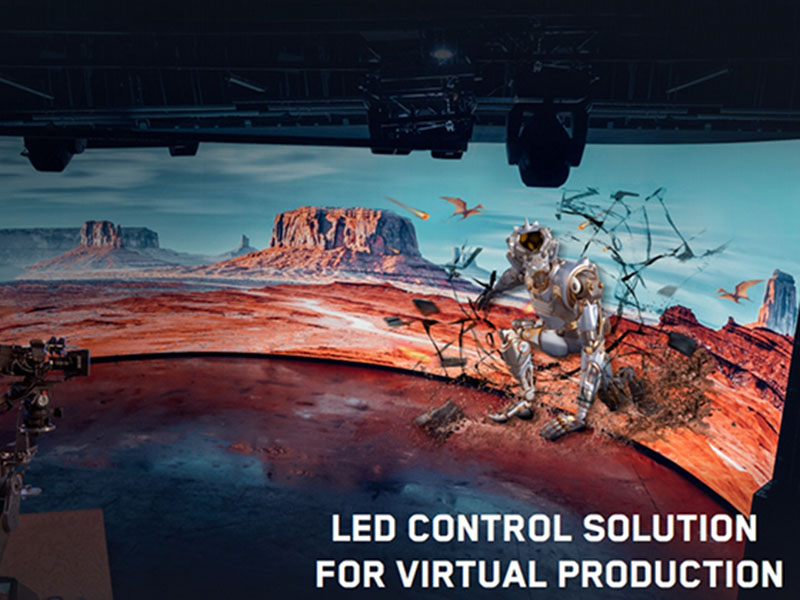
XR (Extended Reality) merges virtual elements with the real world. It creates entirely new virtual environments. Users wear head-mounted displays and tracking sensors. This immersion lets them interact with blended realities.
Artists build 3D virtual scenes and characters first. Then they integrate these with live-action footage. Real-time rendering engines power instant visual feedback. Consequently, XR delivers seamless immersive experiences during filming.
What is VP Virtual Production?
VP (Virtual Production) overlays digital content onto real environments. Teams typically use green/blue screens for background replacement. Later, editors composite virtual elements into shots.
VP dominates film, TV, and advertising production. Studios create limitless virtual settings this way. Actors perform alongside digital characters on set. They also interact with CGI environments physically. Crucially, VP enables real-time previews of final visuals. Directors thus adjust scenes immediately.
Key Differences Between XR and VP Virtual Production

1. Hardware Setup:
- XR requires LED walls for backgrounds and floors. Additionally, it uses AR/VR headsets or mobile devices. Viewers experience scenes through these screens. Rendering servers extend environments beyond camera sightlines. This creates complete 360° virtual worlds.
- VP primarily uses LED screens or green screens. However, physical sets often cover the studio floor. Cameras capture everything directly. Therefore, VP needs no external screen extensions.
2. Creative Approach:
- XR emphasizes real-world interaction. Sensors track user movements continuously. Then the system adjusts virtual objects dynamically. Everything responds to physical actions instantly.
- VP simulates reality through digital artistry. It crafts impossible real-world visuals freely. Editors refine scenes extensively during post-production.
3. Technical Complexity:
- XR demands sophisticated real-time processing. It renders heavy graphics data instantly. Therefore, it requires substantial computing power. Multiple devices and sensors support its operation. Setup involves complex calibration.
- VP uses simpler workflows comparatively. It needs moderate rendering resources typically. Standard cameras and software often suffice.
4. Application Scope:
- XR excels in live events and interactive experiences. For example, broadcast studios use it for real-time AR graphics. Theme parks deploy it for immersive rides.
- VP dominates narrative filmmaking. Blockbusters like The Mandalorian rely on its LED volumes. Commercials also leverage its rapid prototyping.
Which Technology is Better?
Neither universally outperforms the other. They serve different creative goals.
Choose XR when:
- You need user-environment interaction (e.g., VR training).
- Real-time immersion is essential (e.g., interactive exhibits).
- Budget allows for advanced rendering systems.
Choose VP when:
- Filming realistic CGI-background sequences (e.g., fantasy films).
- Real-time on-set visualization matters (e.g., director monitoring).
- Resources prioritize efficiency over immersion.
SightLED XR Virtual Production Solutions
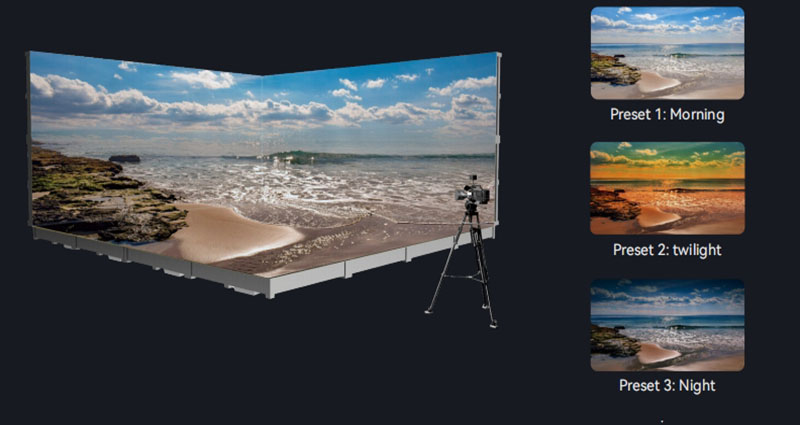
XR blends physical and virtual worlds using AR and MR technologies in real time. We build immersive production environments that feel real.
To begin, we use motion capture systems and video cameras for accurate scene tracking. Then, the media server and game engine handle real-time content rendering and editing. Finally, the LED control system sends the content to the LED screen for display.
Our Key Components Include:
- Controller: MCTRL 4K
- Receiving Cards: A8s, A10s Plus
- Transmission Accessories: CVT4K, CVT10
This full system perfectly supports XR production.
SightLED XR Workflow

We designed this XR workflow specifically for camera-based virtual shoots. It eliminates scan lines and black field problems during filming.
Our industry-leading image boost technology enhances realism in every shot. The VMP control platform combines design, monitoring, and management in one. You gain total control over the entire display system.
XR System Configuration
- LED Screen
We use high-color, high-grayscale LED screens with wide viewing angles and precise shading. They ensure seamless background display in every scene. - LED Controller
The controller delivers the rendered video to the LED screen. It supports shutter fit, phase offset, and frame multiplexing. You get smooth playback, even during fast camera movements. - XR Media Server
This server runs 3D modeling software and syncs multiple video signals. It outputs real-time XR effects with precise rendering. - Camera
Use a camera that supports Genlock and initial phase adjustment. It must sync perfectly with the LED wall and other systems. - Camera Tracking System
It tracks the real camera’s 3D position and syncs it to the virtual camera. This ensures accurate rendering of motion and perspective. - Motion Capture System
It captures foreground AR objects like hands or props. When actors move, their actions trigger real-time visual effects. - Render Engine
It creates dynamic video content based on camera movement. Rendered visuals then feed directly into the media server. - Sync Signal Generator
It links LED, camera, and render systems through a unified sync signal. This ensures frame-accurate coordination across all components.
Advanced XR LED Screen Functions
- One-Shot, Multi-Camera Output
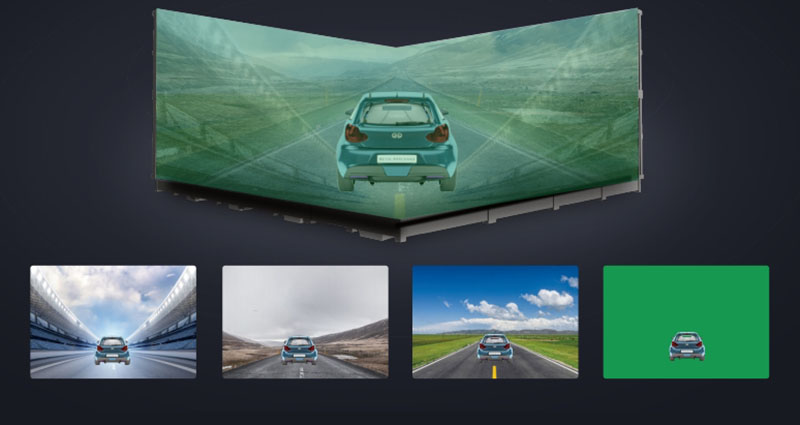
We support frame multiplexing for multiple camera angles in one take. Insert different backgrounds or use green screen for post-production. - Scene Presets and Quick Switching
Save up to 50 display presets. Switch brightness, Gamma, or color with one click during production.
Why Choose SightLED XR Solution?
We built the COEX control system for XR’s unique needs. It removes scan lines, color shifts, and image distortion. Every frame appears sharp, clear, and color-accurate.
With our VMP platform, you design, monitor, manage, and debug in one interface. It’s your one-stop solution for full control and smooth operation.
Highlighted Features
- 240Hz HFR
Enjoy ultra-smooth visuals up to 240Hz for fast action scenes. - Frame Multiplexing
Output different effects from multiple cameras in one session. - Phase Offset
Match LED and camera precisely to remove black fields and tearing. - Shutter Fit
Sync refresh rate and shutter speed to eliminate scan lines. - Color Replacement
Replace any color precisely with minimal impact on others. - 14-Channel Color Correction
Adjust hue, saturation, and brightness of all color layers with fine control. - Contrast and Black Level Tuning
Separate control of light and shadow prevents overexposure and preserves detail. - Image + Dynamic Booster
Our MX Series uses Booster 2.0 to enhance grayscale, contrast, and color depth. You get richer, more immersive visuals—perfect for XR production.
Conclusion
XR merges physical and digital realms interactively. VP enhances reality with controlled virtual backgrounds. XR offers deeper immersion but costs more. VP delivers proven efficiency for filmmakers. Your project’s goals determine the ideal solution. SightLED tailors both technologies to client needs.