If you are selecting or maintaining an LED display, you know those tiny light sources: the LED lamp beads. Their specifications, quality, and suitability directly determine everything. Today, let’s guide you the LED lamp beads details.
Core Specifications of SMD LED Beads
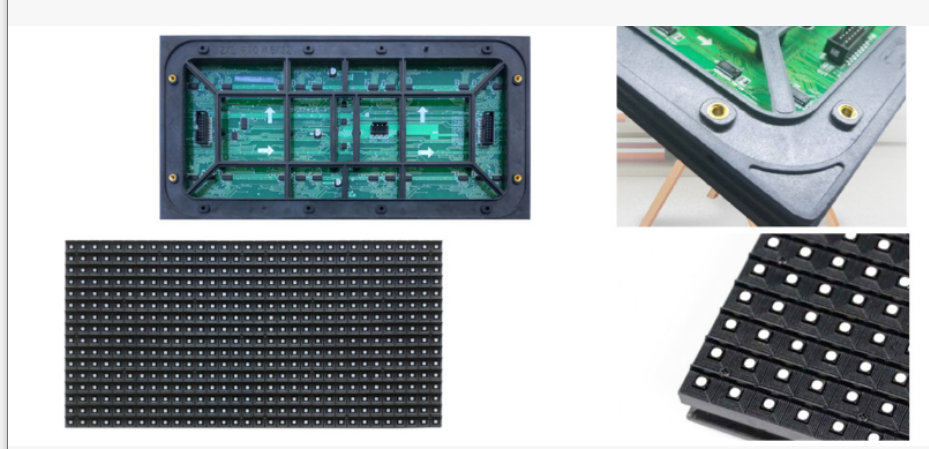
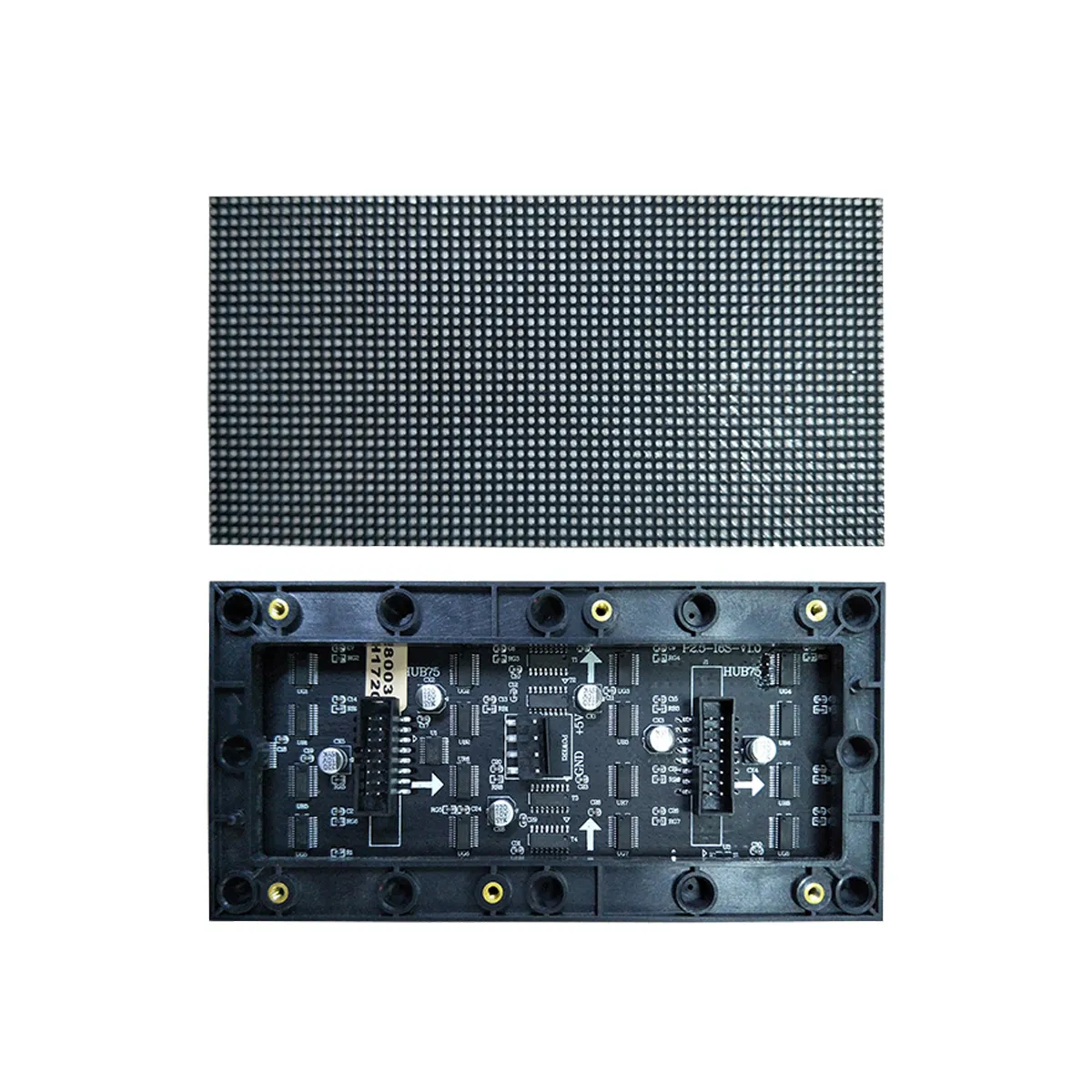
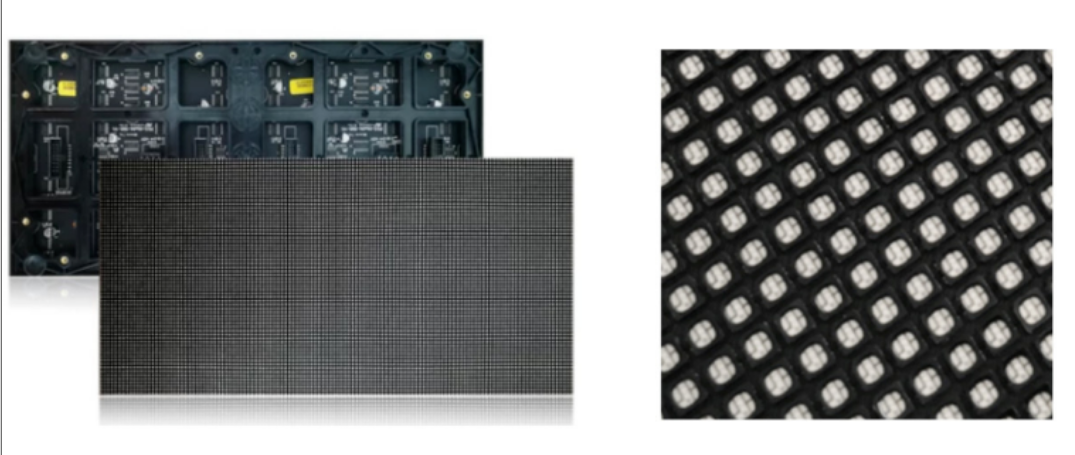
SMD LED display beads are either a cubic or rectangular shape. The core specifications cover a range of types, including 3535, 3528, 2835, 2727 (also known as 2525), 2121, 1921, 1515, and 1010. Their packaging process is highly refined. You embed the chip into a metal bracket, fill the assembly with glue, and cure it. These beads emit light from a single front surface, which concentrates the light and ensures stable display performance.
For compatibility, you’ll use PCBs with soldering surfaces. You can directly solder the bead’s leads to the corresponding pads on the PCB.
It is not only convenient but also creates a reliable connection. A key point to note: the numbers in the specs represent the length and width of the LED light-emitting component. They’re compatible with both imperial and metric units.
For example, a 0505 bead means both length and width are 0.05 inches. These small beads are mainly used in mini-LED displays, such as pitch below 0.9mm. It can meet the demand for high-precision imaging.
Indoor vs. Outdoor: Which Specs Fit Your Scenario?
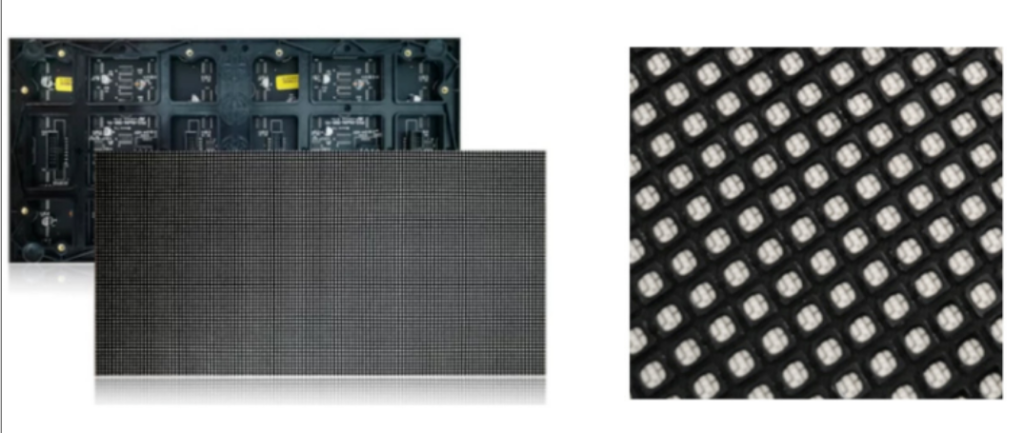
The environment dictates the best bead specs. Indoor displays prioritize fine detail and color vibrancy. It often use smaller beads. The most common indoor specs include 0505, 1010, 1515, 2121, and 3528.
However, Outdoor displays need larger, more robust beads to withstand harsh weather , such as rain, dust, extreme temperatures. It also needs high brightness. For outdoor use, The mainstream choices include 1921, 2525, 2727, 3535, and 5050 etc.
Mainstream Specifications LED display Beads
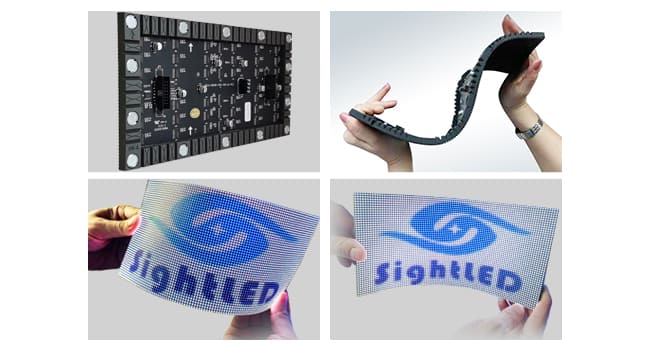
To help you match specs to your needs, here’s a closer look at the most widely used LED bead sizes:
– 0505: Metric size 0.5mm × 0.5mm. This ultra-mini bead is a top choice for ultra-fine-pitch mini-LED displays. You’ll find it in high-end indoor applications, like control rooms, luxury retail showcases, and broadcast studios.
– 1010: Metric size 1.0mm × 1.0mm. Slightly larger than the 0505. this spec balances precision and cost-effectiveness. It’s popular for indoor displays with a pitch between 1.0mm and 2.0mm, such as corporate conference rooms and museum exhibits.
– 2121: Metric size 2.1mm × 2.1mm. It is a versatile option for both indoor and outdoor displays. It works well for mid-pitch indoor screens , such as 2.0mm to 3.0mm. It is used for small outdoor displays like storefront digital signs, which need a mix of detail and brightness.
– 3528: Metric size 3.5mm × 2.8mm. One of the most common indoor specs, it’s used in displays with a pitch of 2.5mm to 5.0mm. You can used for shopping mall kiosks, restaurant menu boards, and office notice boards etc.
– 5050: Metric size 5.0mm * 5.0mm. It is a heavy-duty option for outdoor displays. It has high brightness and excellent durability. Therefore, it is perfect for large outdoor billboards, stadium screens, and street signs with a pitch of 5.0mm–10.0mm.
Leading Global and China LED Bead Manufacturers
The quality of LED beads largely hinges on the manufacturer. The market impoves a mix of global giants and domestic powerhouses. Let’s categorize them by region to help you find the right partner for your project.
Overseas and Taiwan, China Manufacturers
Europe (Germany)
– Osram: It is a globally renowned lighting and semiconductor company. Osram produces LED beads with exceptional stability and strong technical capabilities. It’s a trusted choice for high-end industrial and automotive display applications.
United States
– Cree: It is a benchmark brand in LED chips and beads. Cree excels in high luminous efficiency and long lifespan. These beads are ideal for high-brightness outdoor displays and premium indoor setups that demand durability.
– Luminus: Specializing in high-power LED products, Luminus caters specifically to the needs of bright outdoor displays like stadium scoreboards and large-format billboards.
– Seoul Viosys: With outstanding R&D capabilities, Seoul Viosys offers a full range of bead specifications, covering both indoor and outdoor applications.
– GE: A diversified industrial giant, GE’s LED beads combine quality and versatility. They are suitable for general-purpose indoor and outdoor displays.
Asia (Japan)
– Nichia: AIt is a pioneer in core LED technology. Nichia leads the industry in color reproduction and reliability. It is the top choice for high-end displays. If you need high color accuracy , such as art museums and broadcast studios.
– Toshiba: A cross-industry tech giant, Toshiba’s LED beads adapt to a wide range of display scenarios, from small indoor screens to medium-sized outdoor displays.
– Hitachi: With deep technical accumulation, Hitachi’s beads excel in stability and durability. They’re perfect for displays that run 24/7, like security monitoring screens.
Asia (South Korea)
– Seoul Semiconductor: South Korea’s leading LED company, it offers cost-effective beads with solid performance. It’s popular among mid-range display manufacturers.
– Samsung: It is a global tech giant. Samsung’s beads shine in small-pitch, high-resolution displays. You’ll find them in mini-LED TV backdrops and high-end retail showcases.
Taiwan, China
– Formosa Epitaxy: Focused on LED packaging, its beads suit both indoor and outdoor displays. It offers a good balance of quality and cost.
– Lite-On: A well-known electronic component brand, Lite-On’s beads combine stability and affordability, making them ideal for mass-market displays.
– Everlight: It is a global LED packaging leader. Everlight offers a complete range of bead specifications. It can adapt to almost all display scenarios, from basic indoor signs to complex outdoor installations.
Within Mainland China
The industry is vast and geographically clustered. You can choose everything from budget to high-end options.
Pearl River Delta (The Core Hub): Shenzhen is the epicenter, hosting countless firms like Jiangxi Lianchuang, Nationstar, Jufei, and Leyard. The area’s strength lies in complete supply chains and rapid innovation, especially for fine-pitch LEDs. Foshan is home to Nationstar, a packaging leader, and Zhongshan has MLS, a volume manufacturer known for strong cost performance.
Yangtze River Delta: Companies often focus on specific niches. Shanghai has firms targeting mid-to-high-end R&D for applications like MINI-LED. Suzhou’s Dongshan Precision excels in packaging processes, and Yangzhou’s Huaxia Integration specializes in outdoor, high-power beads.
Central China: Wuhan is significant with HC Semitek, a key LED chipmaker with vertical integration, and Diyuan Optoelectronics. Jiangxi is known for Jingneng Optoelectronic and its energy-efficient GaN-on-substrate LED technology.
Packaging, Polarity, and Practical Application
Understanding a bead goes beyond its size code. Its packaging type and basic properties are crucial for installation and application.
Packaging Types & Colors:
Beyond SMDs, other common packages include:
- DIP : The traditional “bullet” shape with two long leads.
- High-Power LEDs: Single, large packages designed for high lumen output.
- COB : The multiple chips are mounted directly on a substrate. It can create a dense, seamless light source.
The color palette available is vast:red, green, blue, amber, cyan, white, and even pink or purple. You can build creative and brand-specific display designs.
Identifying Anode and Cathode:
Connecting an LED correctly is non-negotiable. Here’s how to figure out the polarity:
Visual Inspection: You should Look for a small green dot, triangle, or a notch on the bead body. This marks the cathode (negative). Often, the anode (positive) pin is slightly longer.
Using a Multimeter: Set your multimeter to the diode test function. You cam touch the probes to the two pins. When the LED lights up slightly, the probe touching the anode is positive, and the other is negative. If it doesn’t light, reverse the probes.
Matching Beads to Applications:
DIP LEDs: Their structure limits how close they can be packed. They are primarily used for larger pitch displays application from P6 to P20 ,like P10, P16 signs. Thanks to Their sealed design, it offers superior waterproofing. It is better choice than the traditional choice for rugged outdoor displays.
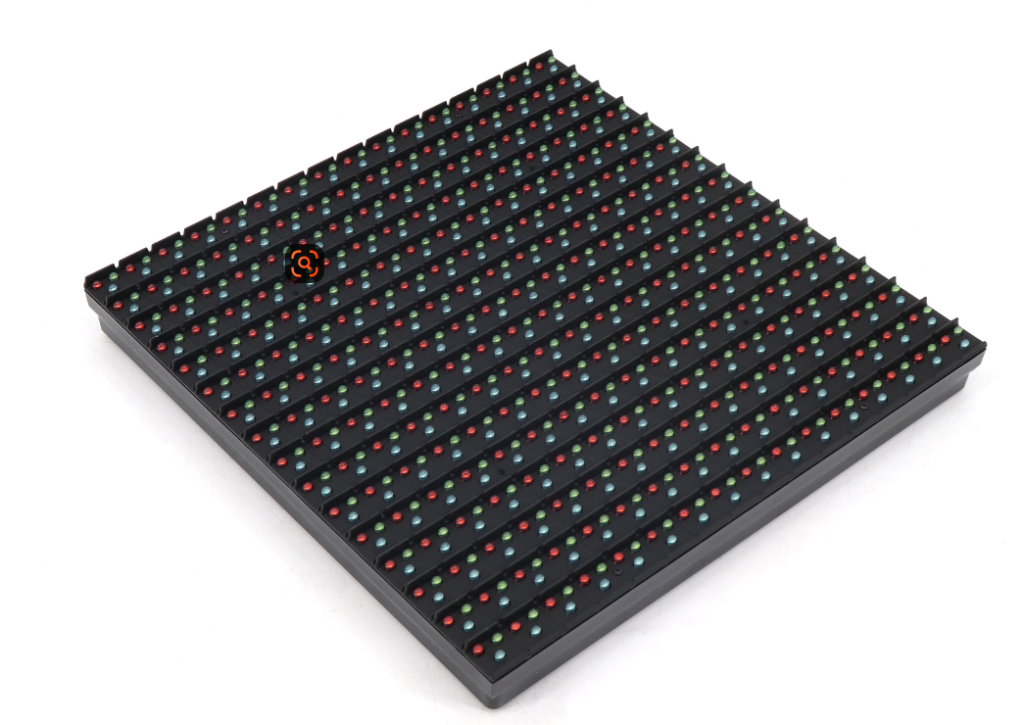
SMD LEDs: This is the versatile category. Their flat, regular structure allows for tight packing on flexible metal bracket. Consequently, they cover a massive range:
Outdoor: From P2.5 up to P13.33.
Indoor: From fine-pitch P1.0 up to P10.
Essentially, for almost any application from giant outdoor billboards to ultra-high-definition indoor control rooms, there’s an SMD LED specification designed for it.
Final Thoughts
Selecting the right LED lamp bead isn’t just about picking a size from a chart. It’s a decision that balances pixel pitch requirements, environmental conditions, desired brightness and color performance, budget, and long-term reliability.
If you can understand the logic behind the codes, you will know the key players in the market. We hope this guide will help you.If you need an LED screen, feel free to contact us.