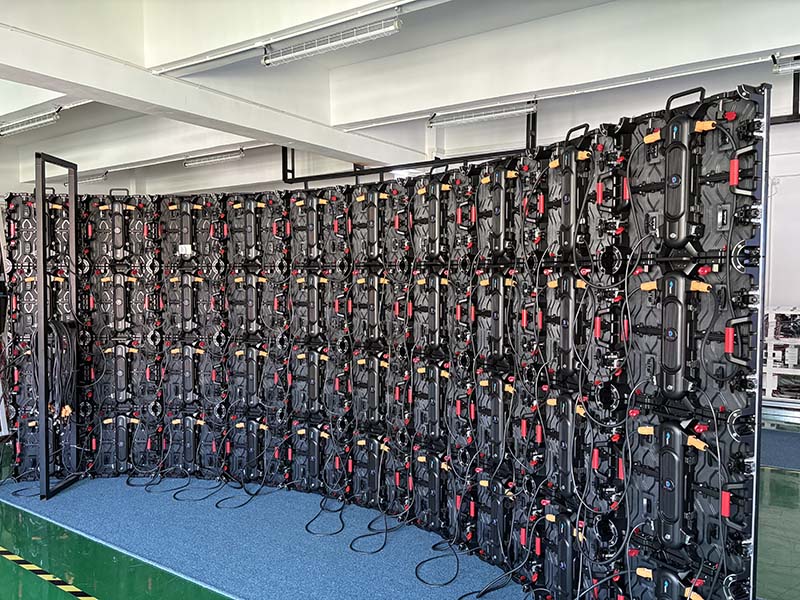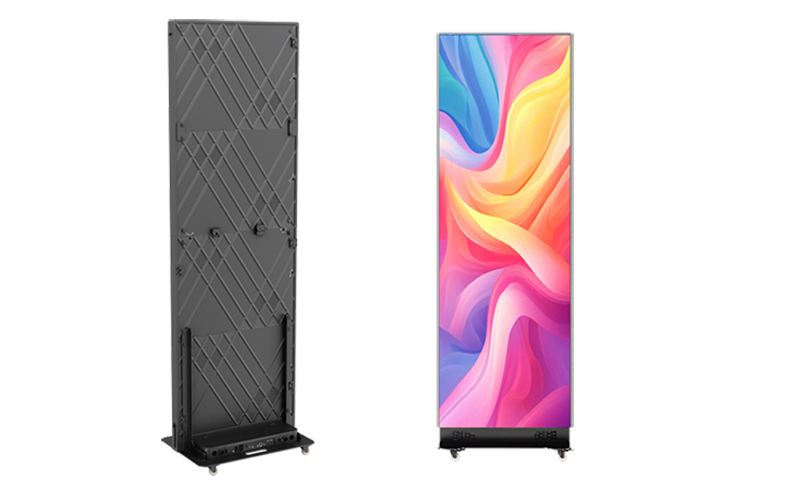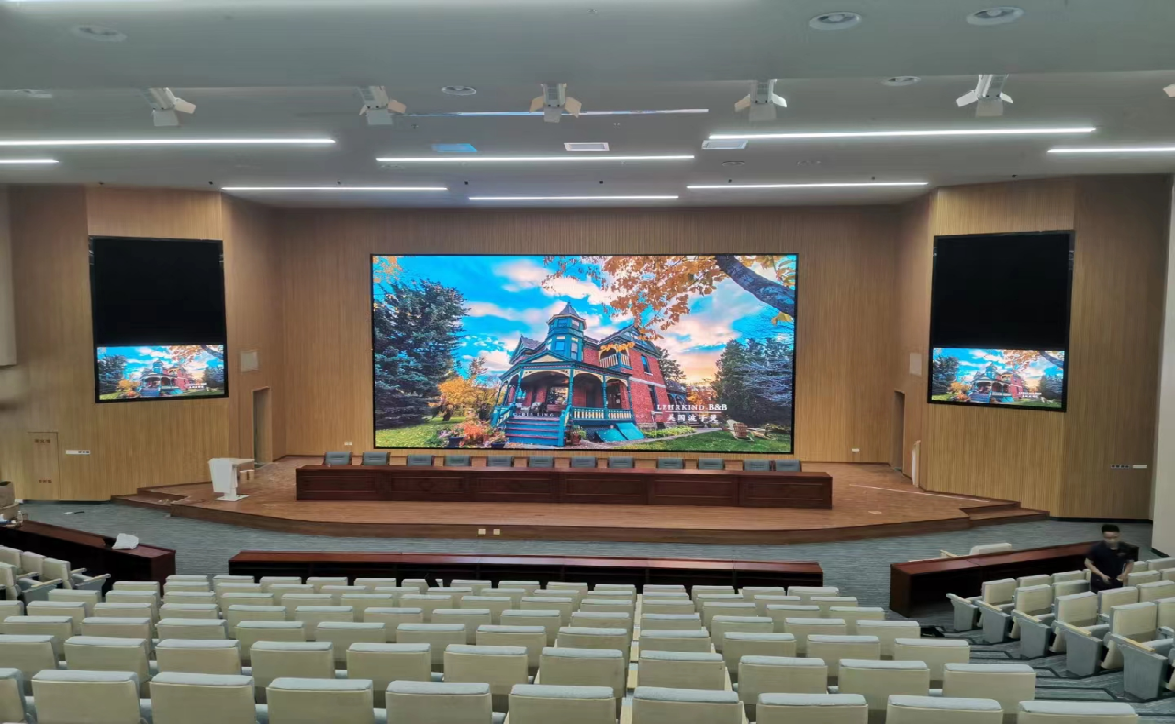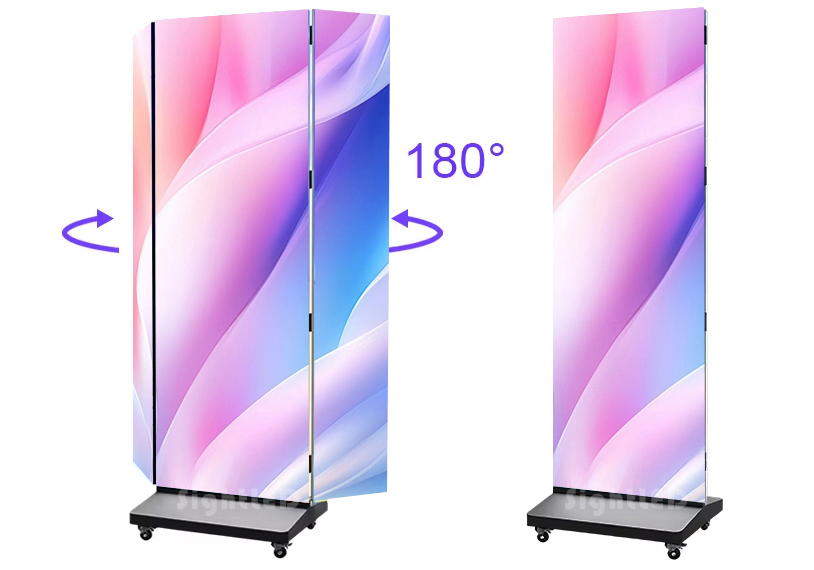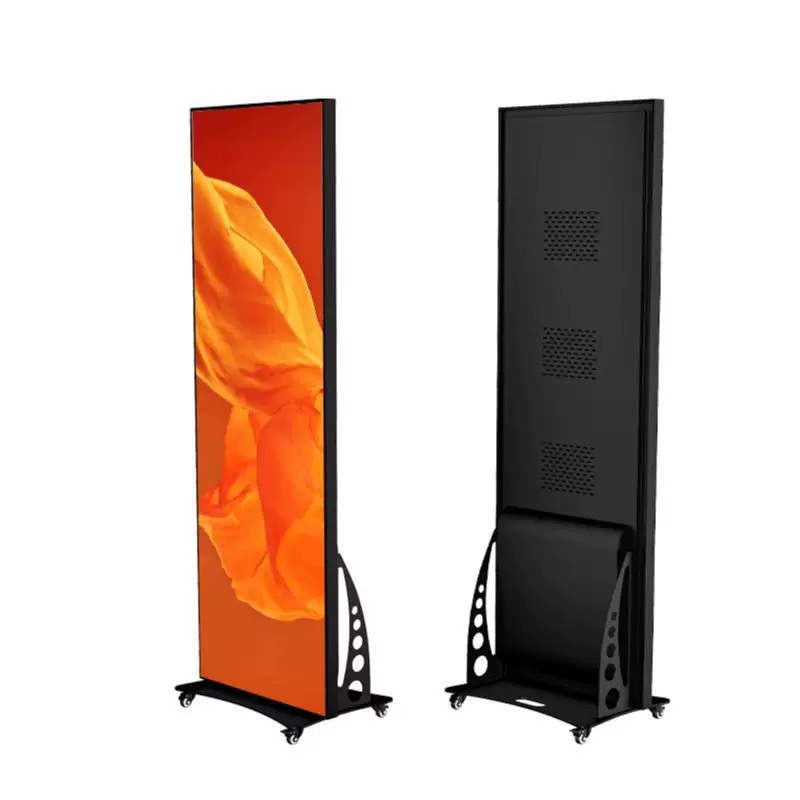
LED posters have rapidly become one of the most versatile and eye-catching tools for digital advertising. From retail stores and shopping malls to outdoor events and smart lamp post screens, LED posters have high brightness, vivid colors, and dynamic content. But one of the most common questions buyers ask is: How much does an LED poster cost? The answer depends on multiple factors, such as pixel pitch, LED packaging type, brightness, size etc. Today, SightLED will guide you the price details.
Common LED Poster Packaging Technologies
SMD
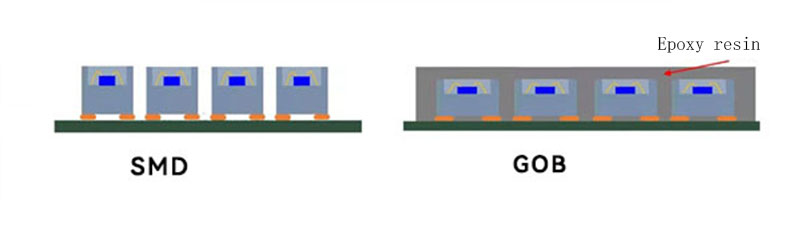
SMD technology is the industry standard for LED posters. It offers Cost-effective, performance, and visual quality. SMD technology combines red, green, and blue diodes into a single package, mounted directly onto the circuit board.
So, it can offer vibrant colors and wide viewing angles, typically up to 140 degrees. Additionally, SMD technology is versatile, supporting both indoor and outdoor applications.
Advantages:
- Smooth and uniform image quality
- Slim cabinet design
- Excellent color reproduction for indoor and semi-outdoor environments
- Cost-effective for mid- to high-resolution applications
GOB
GOB technology enhances SMD by adding a protective epoxy resin layer over the LEDs. It can improve durability and resistance to dust, moisture, and impact. Therefore, GOB ideal for high-traffic environments or outdoor harsh conditions.
The glue layer also enhances contrast, deeper blacks and sharper images, which is better for advertising. However, GOB posters are pricier than standard SMD, depending on specifications.
Advantages:
- Strong protection against dust, water, and physical damage
- Extended lifespan in high-traffic environments
- Ideal for rental, transportation, and outdoor applications
While GOB LED posters are usually more expensive than SMD models, they significantly reduce maintenance costs over time. In addition to the above two main technologies, there are other factors that affect their prices.
Realted:
SMD Poster Vs GOB LED Poster: Differences & How to Choose?
Main Factors Affecting LED Poster Prices
Pixel Pitch
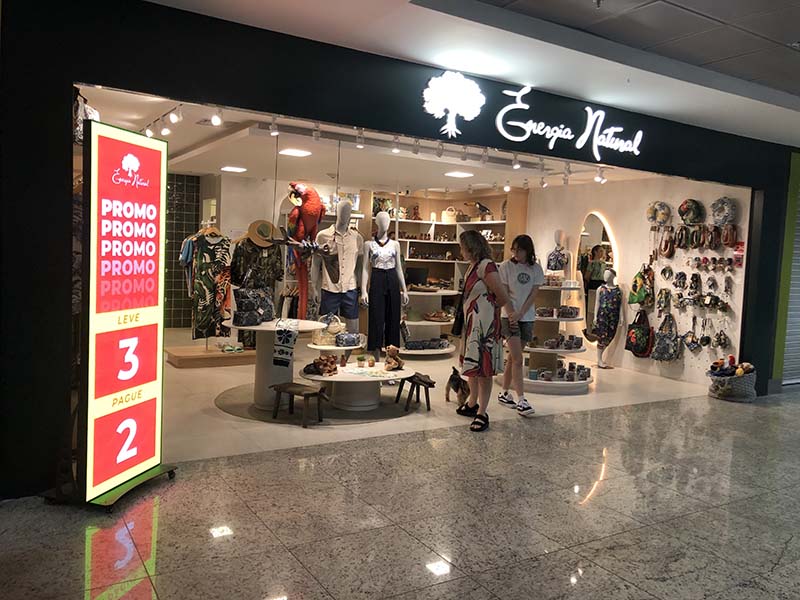
Pixel pitch determines resolution and viewing distance. Smaller pixel pitches provide sharper images but cost more due to the higher LED density. For example, a P1.8 LED poster will cost 20–30% more than a P2.5 display poster at the same size.
Brightness
Indoor LED posters typically have 800–1200 nits, while outdoor models can range from 4500–7000 nits for visibility in direct sunlight. Higher brightness requires more powerful LEDs. It will increase cost and power consumption.
Size
LED poster have common single-unit sizes, like 640×1920 mm, start at $1,500, while larger 896×2240 mm units can exceed $5,000. In addition, you can also chosoe splic configurations, such as 3-unit (1920×1920 mm) or 6-unit (3840×1920 mm) setups.
Indoor vs. Outdoor
Outdoor LED posters require IP65 or higher waterproof and dustproof designs , stronger cabinets, and higher brightness. These upgrades usually make outdoor versions 20–40% more expensive than their indoor counterparts.
Other Features
- Wi-Fi / 4G / 5G remote control
- Cloud-based content management systems
- Touchscreen capability
- Built-in speakers
- Custom cabinet colors and branding
- Battery-powered energy-saving designs
How to Calculate LED Poster Price: A Simple Formula
When planning your budget, you can know how LED poster prices are calculated.
The Basic Formula
Total Price = Screen Area (㎡) × Price per Square Meter (㎡)
Step 1: Calculate the Screen Area
Measure the visible display area—not the cabinet or frame.
- Single-unit poster: width × height
- Spliced configuration: total width × total height
Example:
A 640 mm × 1920 mm LED poster
= 0.64 m × 1.92 m
= 1.23 ㎡
Step 2: Determine the Price per Square Meter
The price per square meter varies based on three key factors:
| Factor | How It Affects Price |
|---|---|
| Pixel Pitch | Smaller pitch (e.g., P1.8) costs 20–40% more than larger pitch (e.g., P2.5) due to higher LED density |
| Packaging Technology | GOB adds 20–30% over SMD for the same pixel pitch |
| Environment | Outdoor adds 30–50% over indoor due to waterproofing and higher brightness |
Step 3: Multiply to Get the Total
Example 1: Indoor P2.5 SMD Poster
- Area: 1.23 ㎡
- Price per ㎡: $1,200 (typical for P2.5 indoor SMD)
- Total ≈ $1,476
Example 2: Indoor P1.8 GOB Poster
- Area: 1.23 ㎡
- Price per ㎡: $3,000 (typical for P1.8 GOB indoor)
- Total ≈ $3,690
Example 3: Outdoor P3 SMD Poster (640×1920mm)
- Area: 1.23 ㎡
- Price per ㎡: $2,800–$3,500 (outdoor adds 30–40%)
- Total ≈ $3,444–$4,305
Typical Price per Square Meter by Configuration
Use this reference table to quickly estimate your budget:
| Configuration | Typical Price per ㎡ (USD) |
|---|---|
| Indoor P3–P4 SMD | $800–$1,200 |
| Indoor P2.5 SMD | $1,200–$1,800 |
| Indoor P1.8 SMD | $1,800–$2,500 |
| Indoor P1.8–P2.0 GOB | $2,500–$3,500 |
| Outdoor P3–P4 SMD | $2,200–$3,200 |
| Outdoor P2.5 GOB | $3,000–$4,000 |
| Outdoor P1.8–P2.0 GOB | $4,000–$5,500 |
Note: These are average ranges. Final pricing depends on order quantity, custom branding, and additional features like touchscreen or battery backup.
How to Estimate Custom Sizes
If your project requires a non-standard size, the same formula applies,but you may encounter a customization premium. Non-standard cabinets require additional engineering and tooling, typically adding 15–25% to the base price per square meter.
Example: Custom 800×2000mm Indoor P2.5 SMD Poster
- Area: 0.8 × 2.0 = 1.6 ㎡
- Base price per ㎡: $1,500
- Custom size premium: +20% = $1,800/㎡
- Total ≈ $2,880
Quick Budget Reference by Application
| Use Case | Typical Total Cost (per unit) |
|---|---|
| Entry-level indoor poster (P3, SMD, standard size) | $1,200–$2,000 |
| Mid-range commercial use (P2.5, SMD, standard size) | $2,000–$4,000 |
| High-end indoor / GOB protection (P1.8–P2.0, GOB) | $3,500–$6,000 |
| Outdoor poster / lamp pole screen (P3–P4, high brightness) | $3,000–$6,000 |
| Premium outdoor GOB poster (P2.5 or smaller) | $5,000–$9,000 |
| Spliced multi-unit configuration (3–6 units) | $5,000–$20,000 |
Estimating LED Poster Costs by Specifications and Sizes
LED poster prices vary based on size, pixel pitch, and encapsulation type. Below is a common dislay poster configurations and their estimated costs.
Indoor Common LED Poster Sizes & Price
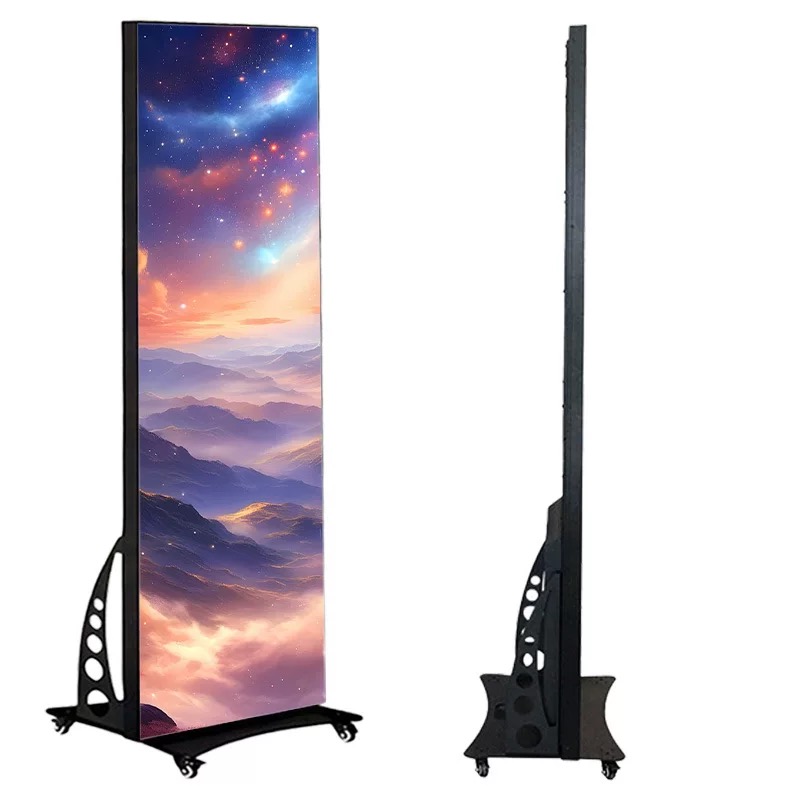
LED posters are typically sized by their visible display area, not individual modules.
Indoor Standard sizes include:
Single-Unit Standard Sizes
- 640×1920 mm: It is the most popular size, close to an 80-inch display ratio. It is Ideal for standalone retail or event displays. Indoor P3 SMD psoter price is about $1,500,while P1.8 GOB is about $4,000 per unit.
- 576×1920 mm: The size is slightly narrower, suited for compact spaces. P3 poster prices start at $1,300, with lower weight reducing transport costs.
- 768×1920 mm: With wider for greater visual impact, it is used in retail or stage backgrounds. These size indoor LED poster costs range from $2,000-$5,000.
- 896×2240 mm: Large, high-brightness models for airports or exhibitions. Their price is about $3,500-$7,000 with robust stands.
Spliced Configurations
- 3 Units (1920×1920 mm): Near-square. It is ideal for large indoor displays.P3 to P1.5 Poster price range from $4,500-$12,000.
- 6 Units (3840×1920 mm): Approaches 4K width. It is used for stage backgrounds. Prices range from $9,000-$20,000.
- 10 Units: Custom ultra-wide or stage setups.These posters often use P2.0 or P2.51. Their price is about $15,000-$30,000.
Customized Sizes
In addition to the above standard sizes, you can also custom heights up to 2160 mm or 2304 mm, or widths like 512 mm or 1024 mm for specific venues.
Related:
P1.25, P1.53, P1.86, and P2.5 LED Tri-Fold Poster: Innovate Digital Signage
Outdoor LED Poster and Lamp Pole Screen Sizes

Outdoor LED posters and lamp pole screens are used for durability and high brightness. These Outdoor high-brightness models have thicker cabinets, increasing costs by 30-50%.
Outdoor LED Poster Sizes
- 640×1920 mm: Common for mall entrances.Outdoor P3 display poster is about $3,500-$4,500.
- 768×1920 mm: Wider. It is ideal for outdoor retail, costing $4,000-$6,000.
- 896×2240 mm: Large, high-brightness for plazas, costing $5,000-$8,000.
- 512×1920 mm: Narrow for sidewalks, costing $3,000-$4,500.
Lamp Pole Screens
- 640×1280 mm: Lightweight It is common for street poles, P3 to P6 outdor poster price is about$2,000-$4,000 per unit
- 768×1536 mm: Larger for main roads. P4 to P6 outdor poster price is about $2,500-$5,000.
- 896×1536 mm: For highways, P4 to P6 outdor poster price is about $3,000-$6,000.
- 512×1024 mm: Economical for dense pole setup. P4 to P6 outdor poster price is about $1,500-$3,500.
Size Selection Guidelines
- Sidewalks/Street Poles: 640×1280 mm or 512×1024 mm lamp pole screens.
- Mall Entrances/Storefronts: 640×1920 mm or 768×1920 mm.
- Plazas/Stage Backgrounds: 896×2240 mm or spliced units.
- Highways/Large Hubs: 768×1536 mm or larger custom sizes.
LED Poster Price by Application Scenarios
LED posters are not one-size-fits-all solutions. The ideal configuration depends heavily on where and how you plan to use them. Below we guide you the most common application scenarios.
1. Retail Stores & Shopping Malls
Best for: Storefronts, window displays, in‑store promotions, mall corridors, and brand boutiques.
| Specification | Recommendation |
|---|---|
| Pixel Pitch | P2.5, P2.0, or P1.8 |
| Packaging | SMD (cost‑effective) or GOB (if high foot traffic) |
| Brightness | 800–1500 nits (indoor) |
| Common Size | 640×1920 mm, 768×1920 mm |
| Mounting | Floor stand or wall mount |
Budget Range: $1,500 – $4,000 per unit
Why This Configuration?
- Balance between clarity and cost: P2.5 offers excellent image quality at a reasonable price. For premium stores that display fine text or luxury branding, P1.8 provides sharper visuals but adds 20–30% to the cost.
- SMD is sufficient for most retail environments where the screen is out of reach from customers. However, if the poster is placed in a high‑traffic area (e.g., mall corridor where people may touch it), GOB protection is worth the extra investment to prevent accidental damage.
- Standard single‑unit sizes fit perfectly in storefronts and are easy to install without structural modifications.
Cost Example:
| Configuration | Area | Price per ㎡ | Total |
|---|---|---|---|
| P2.5 SMD, 640×1920mm | 1.23㎡ | $1,200–$1,500 | $1,476–$1,845 |
| P1.8 SMD, 640×1920mm | 1.23㎡ | $2,000–$2,500 | $2,460–$3,075 |
| P1.8 GOB, 640×1920mm | 1.23㎡ | $2,800–$3,200 | $3,444–$3,936 |
Additional Considerations for Retail:
- Content management: Look for cloud‑based CMS to update promotions across multiple store locations remotely.
- Energy efficiency: Retail stores operate 10–14 hours daily. Choose energy‑saving LED drivers to reduce long‑term electricity costs.
2. Events, Exhibitions & Trade Shows
Best for: Stage backgrounds, exhibition booths, product launches, conferences, and temporary installations.
| Specification | Recommendation |
|---|---|
| Pixel Pitch | P2.5, P2.0, or P1.8 (depending on viewing distance) |
| Packaging | SMD (rental‑grade) or GOB (for durability) |
| Brightness | 1000–2000 nits (indoor) |
| Common Size | Spliced configurations: 3 units (1920×1920mm), 6 units (3840×1920mm), or custom arrays |
| Mounting | Modular frames, trussing systems, or freestanding structures |
Budget Range: $5,000 – $20,000 per setup (depending on number of units)
Why This Configuration?
- Large visual impact: Events demand attention. Spliced configurations create expansive displays that serve as focal points for audiences.
- Flexible setup: Modular designs allow quick assembly, disassembly, and reconfiguration for different event layouts.
- Pitch selection: If the audience will be close to the screen (e.g., booth interaction), P1.8 or P2.0 ensures sharp detail. For stage backgrounds viewed from a distance, P2.5 or P3 is sufficient and more budget‑friendly.
Cost Example:
| Configuration | Total Area | Typical Price Range |
|---|---|---|
| 3‑unit spliced (1920×1920mm) | 3.69㎡ | $4,500–$8,000 |
| 6‑unit spliced (3840×1920mm) | 7.37㎡ | $9,000–$15,000 |
| Custom array (10+ units) | Varies | $15,000–$30,000+ |
Additional Considerations for Events:
- Rental‑grade cabinets: Look for lightweight aluminum cabinets with quick‑lock mechanisms to reduce setup time and shipping costs.
- Protection: Events involve frequent handling. GOB or rental‑grade SMD with reinforced corners is recommended to withstand repeated transport.
- Accessories: Budget for trussing, rigging, and professional installation services if the setup is complex.
3. Outdoor Advertising & Storefronts
Best for: Building facades, roadside billboards, mall entrances, drive‑thru menus, and high‑visibility outdoor locations.
| Specification | Recommendation |
|---|---|
| Pixel Pitch | P3, P4, or P5 (larger pitch for longer viewing distances) |
| Packaging | SMD with IP65+ waterproof rating, or GOB for enhanced durability |
| Brightness | 4500–7000 nits (essential for direct sunlight visibility) |
| Common Size | 640×1920 mm, 768×1920 mm, 896×2240 mm |
| Mounting | Pole mount, wall mount, or custom steel frames |
Budget Range: $3,500 – $8,000 per unit
Why This Configuration?
- Sunlight visibility: Outdoor posters must overcome ambient light. Brightness below 4000 nits will appear washed out during daytime.
- Weather protection: IP65 or higher rating ensures the screen withstands rain, dust, and temperature fluctuations. Outdoor cabinets also feature anti‑corrosion coatings.
- Pitch trade‑off: Outdoor viewers typically see the screen from a distance, so P3 or P4 provides adequate clarity without the cost of ultra‑fine pitch.
Cost Example:
| Configuration | Area | Price per ㎡ | Total |
|---|---|---|---|
| P3 SMD outdoor, 640×1920mm | 1.23㎡ | $2,500–$3,200 | $3,075–$3,936 |
| P2.5 GOB outdoor, 640×1920mm | 1.23㎡ | $3,500–$4,200 | $4,305–$5,166 |
| P4 SMD outdoor, 896×2240mm | 2.01㎡ | $2,200–$2,800 | $4,422–$5,628 |
Additional Considerations for Outdoor:
- Power supply: Outdoor units consume more power. Verify local electrical capacity before installation.
- Thermal management: High‑brightness LEDs generate heat. Look for units with efficient heat dissipation (aluminum fins or built‑in fans).
- Warranty: Ensure outdoor warranty explicitly covers weather‑related issues.
4. Smart City & Lamp Pole Screens
Best for: Street lighting poles, bus stops, pedestrian walkways, urban information displays, and municipal advertising networks.
| Specification | Recommendation |
|---|---|
| Pixel Pitch | P4, P5, or P6 |
| Packaging | SMD with IP65 waterproof rating |
| Brightness | 4500–6000 nits |
| Common Size | 640×1280 mm, 512×1024 mm, 768×1536 mm |
| Mounting | Pole clamps, side brackets, or hanging systems |
Budget Range: $2,000 – $5,000 per unit
Why This Configuration?
- Cost‑efficiency for large‑scale deployment: Cities and infrastructure projects require dozens or hundreds of units. Larger pixel pitches (P4–P6) significantly reduce per‑unit cost while maintaining acceptable clarity for pedestrians and passing vehicles.
- Lightweight design: Lamp pole screens must be light enough to avoid stressing existing poles. Standard sizes like 640×1280mm are engineered for safe mounting.
- Remote management: Smart city applications rely on 4G/5G connectivity for centralized content updates across an entire city network.
Cost Breakdown Example:
| Configuration | Area | Price per ㎡ | Total |
|---|---|---|---|
| P4 SMD, 640×1280mm (lamp pole) | 0.82㎡ | $2,200–$2,800 | $1,804–$2,296 |
| P5 SMD, 768×1536mm (main road) | 1.18㎡ | $2,000–$2,500 | $2,360–$2,950 |
| P3 GOB, 512×1024mm (high‑traffic pole) | 0.52㎡ | $3,000–$3,800 | $1,560–$1,976 |
Additional Considerations for Smart City Projects:
- Network integration: Confirm that the CMS can integrate with municipal systems and supports remote diagnostics to minimize field maintenance.
- Installation scale: For projects involving 50+ units, request bulk pricing—typically 10–15% discounts.
- Power sourcing: Lamp pole screens often tap into existing street light power. Verify voltage compatibility (usually 110V–277V AC) and consider solar‑assisted options for remote locations.
5. Other Common Applications
While the four scenarios above cover most LED poster deployments, here are additional applications with their typical configurations:
| Application | Recommended Pitch | Environment | Typical Budget |
|---|---|---|---|
| Hotel Lobbies | P2.0–P1.8 | Indoor | $2,500–$5,000 |
| Corporate Reception | P1.8–P1.5 | Indoor | $3,000–$6,000 |
| Restaurant Menus | P2.5–P3 | Indoor (semi‑outdoor for patios) | $1,200–$2,500 |
| Transportation Hubs | P2.5–P3 | Indoor or weather‑protected | $2,000–$5,000 |
| Gas Station Canopies | P4–P6 | Outdoor (high‑brightness) | $2,500–$4,500 |
| Drive‑Thru Order Boards | P3–P4 | Outdoor (waterproof) | $2,000–$4,000 |
Quick Selection Guide by Application
Use this table to quickly match your application to the recommended configuration and budget:
| Application | Pixel Pitch | Tech | Brightness | Typical Size | Budget Range |
|---|---|---|---|---|---|
| Retail Store | P2.5–P1.8 | SMD/GOB | 800–1500 nits | 640×1920mm | $1,500–$4,000 |
| Events/Exhibitions | P2.5–P1.8 | SMD (rental) | 1000–2000 nits | Spliced (3–10 units) | $5,000–$20,000 |
| Outdoor Advertising | P3–P5 | SMD IP65 | 4500–7000 nits | 640×1920mm or larger | $3,500–$8,000 |
| Lamp Pole Screens | P4–P6 | SMD IP65 | 4500–6000 nits | 640×1280mm | $2,000–$5,000 |
| Corporate Reception | P1.8–P1.5 | GOB/SMD | 800–1200 nits | 640×1920mm | $3,000–$6,000 |
How to Choose Based on Your Scenario
When selecting an LED poster for your specific application, ask yourself these three questions:
- What is the viewing distance?
- Close (1–3 meters): Choose P1.8–P2.0
- Medium (3–8 meters): Choose P2.5–P3
- Far (8+ meters): Choose P4–P6
- Where will it be installed?
- Indoor, protected: SMD is sufficient
- Indoor, high‑touch areas: GOB recommended
- Outdoor, any location: IP65 minimum, high brightness required
- What is the deployment scale?
- Single unit: Focus on quality and warranty
- Multiple units (5–50): Negotiate bulk pricing
- Large‑scale (50+ units): Consider direct factory partnerships for best pricing and unified management software
💡 Need help selecting the right configuration for your project? Contact our team with your application details, and we’ll provide a tailored recommendation and quote within 24 hours.
Cost Estimates by Configuration
| Size (mm) | Pixel Pitch | Encapsulation | Brightness (nits) | Estimated Cost (USD) |
|---|---|---|---|---|
| 640×1920 | P2.5 | SMD | 1,000 (Indoor) | $1,500-$2,500 |
| 640×1920 | P2.0 | GOB | 5,000 (Outdoor) | $3,000-$4,500 |
| 768×1920 | P1.8 | GOB | 1,500 (Indoor) | $3,500-$5,000 |
| 896×2240 | P3 | SMD | 6,000 (Outdoor) | $4,000-$7,000 |
| 640×1280 (Pole) | P2.5 | GOB | 6,000 (Outdoor) | $2,500-$4,000 |
Beyond the Initial Price: Total Cost of Ownership (TCO)
While the upfront cost is important, you should evaluate the Total Cost of Ownership (TCO) over 3–5 years. You can consider Two key factors heavily influence TCO:
Energy Cost Comparison
A typical indoor LED poster consumes 150–250W per square meter. For a 640×1920mm (≈1.23㎡) unit running 12 hours daily, annual electricity cost ranges from $80 to $150 depending on local rates. Outdoor models with higher brightness consume more, but modern energy‑efficient drivers can cut costs by up to 30%.
Maintenance Cost: SMD vs. GOB
| Technology | Average Failure Rate (3 years) | Typical Repair Cost | TCO Impact |
|---|---|---|---|
| SMD | 2–5% of pixels (moderate) | $150–$400 per service call | Higher if multiple failures occur |
| GOB | <1% of pixels (low) | $100–$250 per service call | Lower due to durability |
Verdict: Although GOB models cost 20–30% more upfront, their lower failure rate and reduced maintenance expenses often result in a lower TCO within 2–3 years for high‑traffic or outdoor installations.
LED Poster vs LCD Digital Signage: Which One Should You Choose?
When planning a digital display investment, many buyers find themselves comparing LED posters with traditional LCD digital signage. You can read these determine which solution best fits your specific needs.
Quick Overview: LED Poster vs LCD Display
| Feature | LED Poster | LCD Display |
|---|---|---|
| Initial Price | Higher ($1,500–$8,000+) | Lower ($500–$2,500) |
| Brightness | 800–7,000 nits | 300–700 nits |
| Lifespan | 80,000–100,000 hours | 30,000–50,000 hours |
| Outdoor Suitability | Excellent (IP65 rated) | Poor (not recommended) |
| Seamless Splicing | Yes, bezel-free | Limited, visible bezels |
| Size Flexibility | Custom sizes available | Fixed sizes (32″, 55″, 75″, etc.) |
| Power Consumption | Moderate (150–300W/㎡) | Lower per unit, but scales poorly |
| Viewing Angle | 140–160 degrees | 178 degrees (IPS) |
| Color Performance | Excellent, vibrant | Good, but backlight bleed possible |
| Maintenance | Modular, easy repair | Full unit replacement often required |
Detailed Comparison by Key Factors
1. Initial Purchase Price
LCD Digital Signage
- Typical cost: $500 – $2,500 per unit
- Examples:
- 55-inch commercial LCD: $800–$1,500
- 75-inch commercial LCD: $1,500–$2,500
- 86-inch commercial LCD: $2,500–$4,000
LED Poster
- Typical cost: $1,500 – $8,000 per unit
- Examples:
- P2.5 indoor SMD, 640×1920mm: $1,500–$2,500
- P1.8 indoor GOB, 640×1920mm: $3,500–$5,000
- P3 outdoor high‑brightness, 640×1920mm: $3,500–$5,500
Verdict: LCD has a clear advantage in upfront cost for single‑unit purchases. However, when comparing cost per square meter for larger displays, LED becomes more competitive.
2. Brightness & Visibility
LCD Digital Signage
- Typical brightness: 300–700 nits
- Performance: Excellent for indoor environments with controlled lighting. Becomes difficult to read in direct sunlight or bright outdoor conditions.
- Anti‑glare options: Available but reduce contrast and clarity.
LED Poster
- Typical brightness: Indoor 800–1,500 nits; Outdoor 4,500–7,000 nits
- Performance: Maintains excellent visibility even in direct sunlight. Outdoor models are specifically designed for harsh lighting conditions.
- Auto‑brightness: Many models include ambient light sensors that automatically adjust brightness to match surrounding conditions.
Verdict: LED posters are the clear winner for any application involving direct sunlight, storefront windows with strong backlighting, or outdoor installations. For standard indoor environments, LCD is sufficient.
3. Lifespan & Durability
LCD Digital Signage
- Lifespan: 30,000–50,000 hours (approximately 3–6 years of 24/7 operation)
- Degradation: Backlight dims over time; color accuracy shifts
- Repairability: Difficult—often requires full unit replacement when major components fail
- Durability: Not designed for vibration, dust, or moisture exposure
LED Poster
- Lifespan: 80,000–100,000 hours (approximately 9–11 years of 24/7 operation)
- Degradation: Gradual brightness decline; consistent color performance
- Repairability: Highly modular—individual LED modules, power supplies, and receiving cards can be replaced on‑site
- Durability: GOB models offer impact resistance; outdoor models feature IP65 waterproofing and dust protection
Verdict: LED posters offer significantly longer lifespan and easier repairability, making them more cost‑effective over the long term despite higher upfront costs.
4. Outdoor Suitability
LCD Digital Signage
- Outdoor use: Not recommended unless specifically built as an “outdoor LCD” with high‑brightness backlight (2,000–3,500 nits) and weatherproof enclosure
- Outdoor LCD cost: $3,000–$8,000 for a weatherproof unit—approaching LED poster pricing
- Challenges: Limited to standard sizes; bulky enclosures; heat management issues
LED Poster
- Outdoor use: Designed from the ground up for outdoor environments
- Standard features: IP65 waterproof rating, 5,000–7,000 nits brightness, UV‑resistant materials, wide operating temperature range (-20°C to 50°C)
- Form factor: Slim cabinets that integrate seamlessly into outdoor spaces
Verdict: For outdoor applications, LED posters are the superior choice. While outdoor LCDs exist, they often cost as much as LED posters while offering less flexibility and shorter lifespan.
5. Seamless Splicing & Size Flexibility
LCD Digital Signage
- Splicing: Multiple LCD screens can be tiled, but bezels create visible gaps (typically 3.5mm–12mm between screens)
- Size options: Limited to standard sizes—32″, 43″, 49″, 55″, 65″, 75″, 86″
- Custom sizes: Not available; must accept standard aspect ratios
LED Poster
- Splicing: Completely seamless—modules fit together with no visible gaps, creating a single continuous canvas
- Size options: Highly flexible—standard sizes (640×1920mm, 768×1920mm) plus fully custom dimensions
- Aspect ratio: Can be tailored to any requirement, including ultra‑wide or square configurations
Verdict: LED posters win decisively for applications requiring large, seamless displays or custom sizes. LCD tiling always leaves visible bezels that break the visual experience.
6. Power Consumption
LCD Digital Signage
- Typical consumption: 60–200 watts per unit (55″ LCD: ~100W; 86″ LCD: ~250W)
- Per‑square‑meter comparison: Approximately 200–400W/㎡ for larger displays
- Standby power: Usually less than 1W
LED Poster
- Typical consumption: 150–300W per square meter
- 640×1920mm unit (1.23㎡): 185–370W
- Energy‑saving features: Modern LED drivers offer up to 30% power reduction compared to older models
Verdict: For small‑to‑medium single units, LCD consumes less power. For large displays (over 2㎡), the efficiency gap narrows, and LED often becomes competitive.
7. Maintenance & Total Cost of Ownership
| Factor | LCD Display | LED Poster |
|---|---|---|
| Repair Cost | High; often requires full replacement | Low; individual modules replaceable |
| Downtime | Days to weeks for replacement | Hours for module swap |
| Spare Parts | Whole units needed | Small modules, power supplies, cards |
| Long‑Term Cost | Higher due to shorter lifespan | Lower due to durability and repairability |
5‑Year TCO Comparison (Indoor, 1.2㎡ display)
| Cost Component | LCD Display (55″) | LED Poster (P2.5 SMD) |
|---|---|---|
| Initial Purchase | $800 | $1,800 |
| Energy (12h/day) | $150/year × 5 = $750 | $200/year × 5 = $1,000 |
| Maintenance | $0–$400 (if failure) | $0–$200 (module replacement) |
| Replacement Risk | Possible at year 4–5 | Unlikely before year 8–10 |
| 5‑Year Total | $1,550 – $1,950 | $2,800 – $3,000 |
Note: While the 5‑year TCO for LED is higher, its lifespan extends far beyond 5 years. Over a 10‑year period, LCD may require replacement, making LED the more economical long‑term choice.
When to Choose LCD Digital Signage
LCD is the right choice when:
| Scenario | Why |
|---|---|
| Budget‑sensitive single installations | Lower upfront cost fits tight budgets |
| Indoor environments with controlled lighting | 300–700 nits is sufficient for offices, waiting rooms, or dim retail |
| Standard sizes work for your application | 32″–86″ sizes fit your space |
| Content is mostly static or low‑movement | LCD excels for menus, schedules, and basic signage |
| Short‑term or temporary use | For pop‑up events or short campaigns, lower investment reduces risk |
| You already have an existing LCD infrastructure | Standardizing on one platform simplifies management |
When to Choose LED Posters
LED posters are the better investment when:
| Scenario | Why |
|---|---|
| Outdoor or storefront installation | High brightness and weather protection are essential |
| High‑traffic or public areas | GOB protection prevents damage from accidental contact |
| Large‑format or custom sizes | Seamless splicing creates impressive visual impact |
| 24/7 operation required | Longer lifespan and repairability reduce downtime risk |
| Premium brand image is critical | Vibrant colors, high brightness, and modern aesthetics convey quality |
| Scalable multi‑location deployment | Standardized sizing and remote CMS simplify management across locations |
| Long‑term investment (5+ years) | Lower total cost of ownership over extended periods |
Side‑by‑Side Cost Comparison by Application
| Application | Recommended Solution | Price Range | Key Reason |
|---|---|---|---|
| Restaurant Menu Board | LCD | $500–$1,500 | Indoor, standard size, content changes infrequently |
| Retail Storefront Window | LED Poster | $1,500–$4,000 | High brightness to overcome daylight |
| Corporate Reception Lobby | LED Poster | $3,000–$6,000 | Premium appearance, seamless design |
| Bus Stop Information | LED Poster (P4–P6) | $2,000–$4,000 | Outdoor durability, remote management |
| Trade Show Booth | LED Poster (spliced) | $5,000–$15,000 | Large format, impressive visuals |
| Office Meeting Room | LCD | $800–$2,000 | Standard size, controlled lighting |
| Gas Station Pricing Sign | LED Poster (outdoor) | $3,000–$5,000 | High brightness, weather resistance |
| Shopping Mall Corridor | LED Poster | $2,500–$5,000 | High foot traffic, visibility from distance |
Choose LCD Digital Signage if:
- Your budget is under $2,000 per display
- The installation is strictly indoor with controlled lighting
- You need standard sizes (32″–86″)
- You don’t require outdoor or high‑brightness capability
- You prefer a familiar, widely available technology
Choose LED Posters if:
- You need outdoor or storefront visibility
- You want a seamless, modern aesthetic
- Your project requires custom sizes or large formats
- You’re planning for long‑term use (5+ years)
- You need durability in high‑traffic environments
- You’re deploying multiple units and want consistent remote management
Conclusion
The LED poster can range from $1,200 for a small indoor post screen to over $5,000 for a large, high-brightness outdoor poster. Your final investment will depend on factors like pixel pitch, packaging type, brightness, size, and installation environment. If you are planning to buy cost-effective LED posters, feel free to contact us.
FAQs:
1. What is the average price range for a single LED poster screen?
For P2.5 SMD indoor standard sizes like 640x1920mm , the price typically ranges from $1,200 to $2,500 per unit. For GOB outdoor high-brightness models , prices usually start from $3,000 to $5,000 depending on specifications.
2. Are there any hidden costs besides the LED poster itself?
Yes. In addition to the screen price, you should budget for shipping/freight costs, installation structures , customs duties, and potential annual maintenance contracts. Installation costs often add 10-15% to the total project cost.
3. What is cheaper: SMD or GOB LED posters?
SMD technology is significantly cheaper upfront. However, GOB is more expensive because it adds a protective epoxy layer. While SMD saves initial capital, GOB usually offers a lower total cost of ownership (TCO) due to lower failure rates in high-traffic areas.
4. How does pixel pitch affect the price?
The smaller the pixel pitch, the higher the price. A P1.8 poster can cost 20% to 40% more than a P2.5 poster of the same size.
5. Can I use an indoor LED poster outside to save money?
No. Indoor posters lack the necessary IP rating and brightness . Using them outdoors will void the warranty and lead to rapid failure from moisture or sun damage.
6. What are the most cost-effective sizes for LED posters?
Standard sizes like 640x1920mm and 576x1920mm are the most cost-effective.
7. How much does it cost to ship an LED poster internationally?
Shipping costs vary by volume. For small quantities (1-5 units), air freight may cost $500-$1,500 depending on urgency. For bulk orders, sea freight is cheaper, typically costing $200-$600 per cubic meter, though it takes 30-40 days.
8. Do LED posters consume a lot of electricity?
No. Sight’s LED posters are energy-efficient. A typical indoor P2.5 poster consumes about 150-250 watts per square meter. Compared to traditional lightboxes or LCD video walls, LED posters usually reduce energy consumption by 40-60%.
9. What is the warranty period for LED posters, and does it cover labor?
We offer a 2-3 year warranty.
10. Can I control the LED poster remotely without a computer?
Yes. Sightled’s LED posters come with built-in 4G, Wi-Fi, or Ethernet connectivity. You can manage content through a cloud-based CMS via your phone or laptop.
11. Are there battery-powered or solar-powered LED posters available?
Yes, but they are niche products. Battery-powered options are available for temporary events or remote areas.
12. How do I choose between a single-unit poster and a spliced configuration?
If you need a compact solution for a storefront, a single-unit (640x1920mm) is the most cost-effective. If you require a large stage background or a high-impact lobby display, spliced configurations (3 units or 6 units) offer better visual impact without the engineering costs of fully custom-built large screens.
13. What is the typical lead time for custom LED posters?
For standard sizes, lead time is usually 10-15 working days after payment confirmation. For fully customized sizes , lead time can extend to 25-35 working days.
14. Which is better for a high-traffic retail store: SMD or GOB?
For high-traffic environments like subway stations or crowded retail stores, GOB is better. The protective glue layer prevents damage from accidental impacts, dust, and moisture.
15. Do you offer samples or demo units before bulk purchase?
SightLED offers sample orders. You can usually purchase a single unit as a demo to test brightness, software usability, and build quality before committing to a large bulk order.